

 ADVERTISEMENT
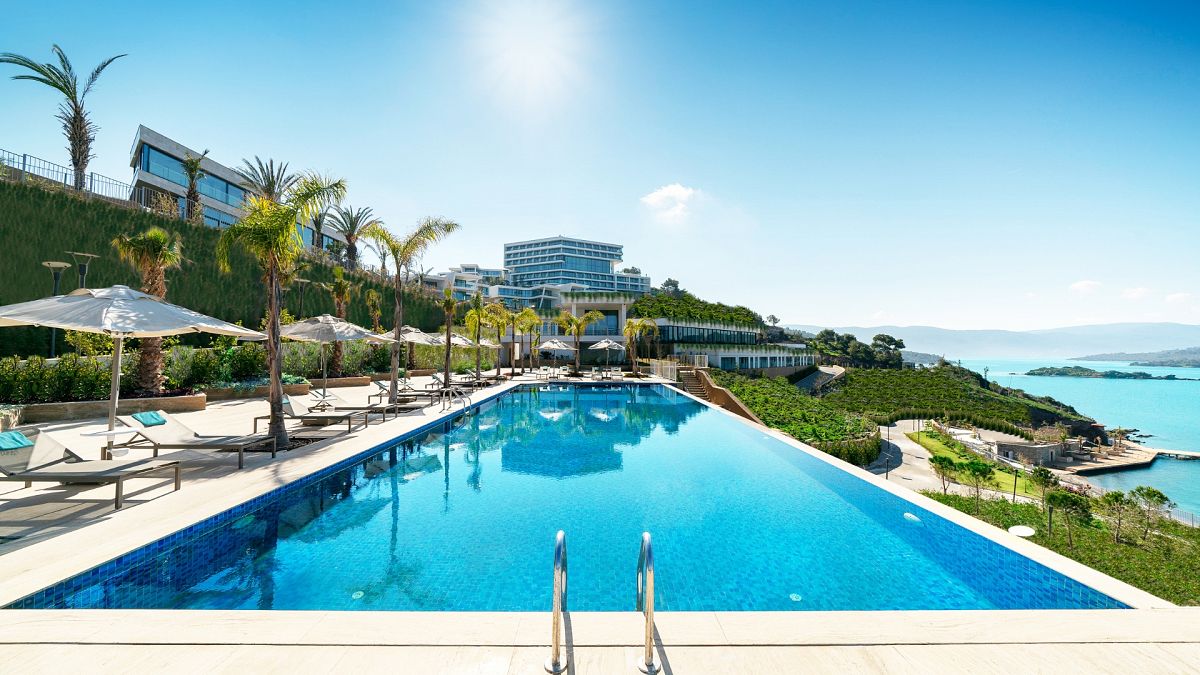
Hotel pools in Greece could be filled with seawater this summer as the country’s parliament debates new legislation to tackle drought.
It proposes regulations for installing pipelines to pump seawater in and out of swimming pools at coastal hotels. The goal is to provide the option of saving water that could be used for other urban uses in areas that are facing shortages.
“This (legislation) regulates the framework for carrying out seawater extraction and pumping it for swimming pools,” Elena Rapti, a deputy minister of tourism told a parliament committee.
“The focus, of course, is to conserve water resources.”
Why does Greece need to save water?
Over the last two years, Greece has been suffering under acute drought conditions. The country has seen its annual rainfall decrease by around 12 per cent between 1971 and 2020 compared to 1901 to 1970, according to a recent study from the National Observatory of Athens.
The drought conditions show little sign of relenting and the upcoming tourism season will add further strain to resources - especially on islands that are popular holiday destinations. The Aegean Islands and Crete are some of the worst affected with a fifth of their rainfall having disappeared.
Last year, Greece attracted almost 33 million visitors, generating €28.5 billion in revenue.
Like a number of other European countries, tourists were targeted by overtourism protests in 2024 with Greek workers saying they were at breaking point. The climate crisis is also making the country’s tourism model increasingly unsustainable.
The government has come under increasing pressure to reimagine what tourism will look like in the future.
Hotels won’t be forced to fill their pools with seawater but the proposed regulations would make it easier for them to construct the infrastructure to do so if water usage restrictions are put in place.
Why are some people against the plan to save water?
The plan to conserve water has critics concerned about environmental damage from what might be pumped out back into the sea.
There are no quality standards for the discharge of water in the proposal - despite seawater pools still needing to be disinfected with chemicals.
Chlorine, commonly used to disinfect pools, is toxic to fish and other animals and the chlorinated saltwater discharge could upset the balance of the marine environment by altering salt levels, they say.
As well as this, the proposal fails to guarantee that sewage won’t end up in the water. Constructing the pipelines could also do damage to the seafloor.
Some also argue that the impact of pools on critical resources has been overstated with studies showing that on islands like Mykonos and Paros, pools consume just 6 per cent of available water.