

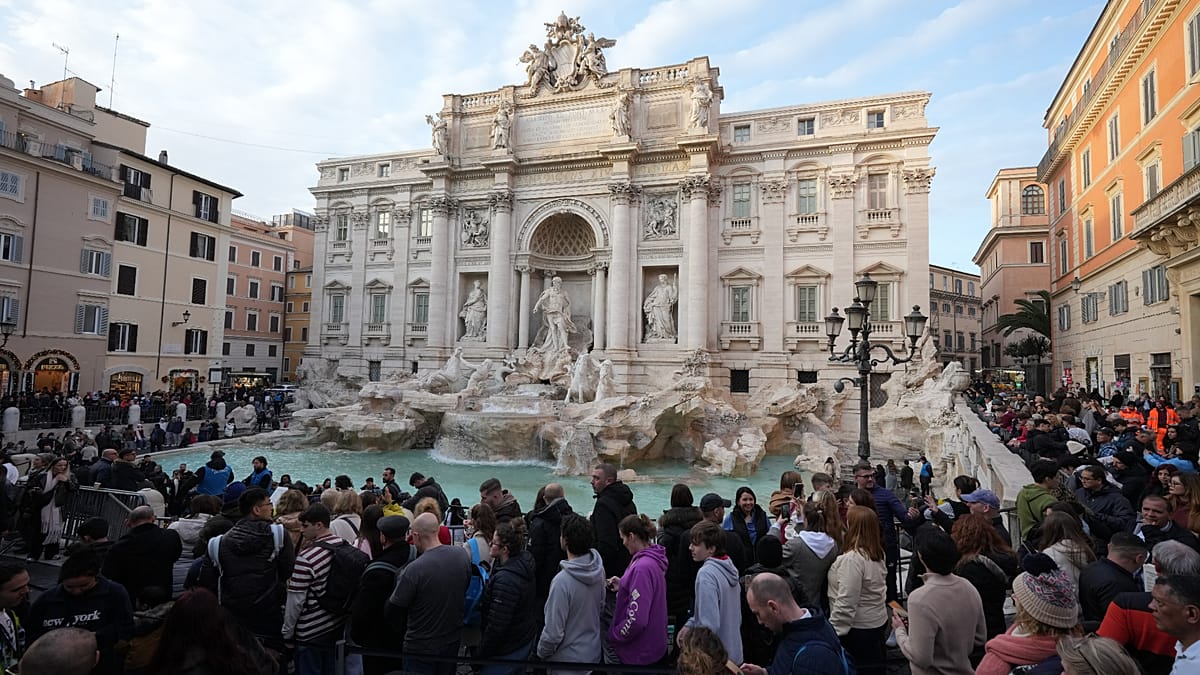
Visitors to Rome’s Trevi Fountain now have to pay a fee to get up close to the iconic monument.
From 2 February 2026, the Italian capital has introduced €2 tickets for tourists to descend the steps to the area around the water-filled basin - from where it is customary to toss a coin into the fountain.
Viewing the aquatic masterpiece from the piazza above remains free.
Why is Rome introducing a fee to visit the Trevi Fountain?
In 2024, authorities in the Eternal City floated the idea of a ticketing scheme at the Trevi Fountain as part of ongoing plans to both reduce crowds and promote "sustainable tourism".
The 18th-century fountain has long been a ‘must visit’ for tourists to the Eternal City, but it is frequently overcrowded and rife with pickpockets.
"Personally I would be in favour of looking at a new form of access, limited and timed, to the Trevi Fountain," Alessandro Onorato, Rome’s city councillor responsible for tourism, told Italian newspaper Corriere della Sera at the time.
He said the goal of the charge is not to raise money, but to lessen and control crowds, while stopping them from "eating ice cream or pizza on a monument that deserves the proper respect.”
Announcing the new fee, Rome’s authorities added that proceeds would go towards enhancing the visitor experience and funding maintenance of the city’s innumerable cultural treasures.
Officials estimate the charge could generate an additional €6.5 million annually.
When do visitors have to pay to get up close to the Trevi Fountain?
Tickets grant access during prime-time daylight hours to the immediate area around the fountain’s basin, which has been restricted since 2024.
Authorities say they have seen positive results already from the yearlong experiment to stagger and limit the number of visitors who can reach the front edge of the fountain by imposing lines and an entrance and exit pathway.
Last year, around 10 million people have waited in line to get that close-up visit, with as many as 70,000 passing through on some days, Rome Mayor Roberto Gualtieri said.
Now, visitors additionally have to pay for that access from during certain hours: on Monday and Friday from 11.30am to 10pm; on all other days 9am to 10pm.
The exception is today, 2 February, when the measure is in place from 9am to 10pm.
Last admission for all days is at 9pm. After nightfall, access is open and free.
Visitors can purchase tickets via online apps and a dedicated website, as well as at hotels and establishments that choose to sell them.
Those who don’t wish to pay the fee will still be able to appreciate the late-Baroque masterpiece from further back.
At the news conference in December, Claudio Parisi Presicce, Rome’s chief art official, said that “the view of the fountain will not be obstructed in any way”.
Residents of Rome are exempt from paying the entrance ticket.
They will also not be subject to the new €5 fee being introduced at five lesser-known sites in the city, including the Villa of Maxentius on the Appian Way.
The Trevi Fountain charge, which has beendiscussed and debated for more than a year, follows a similar ticketing system at Rome’s Pantheon monument and the more complicated tourist day-tripper tax that the lagoon city of Venice imposed last year in a bid to ease overtourism and make the city more liveable for residents.