

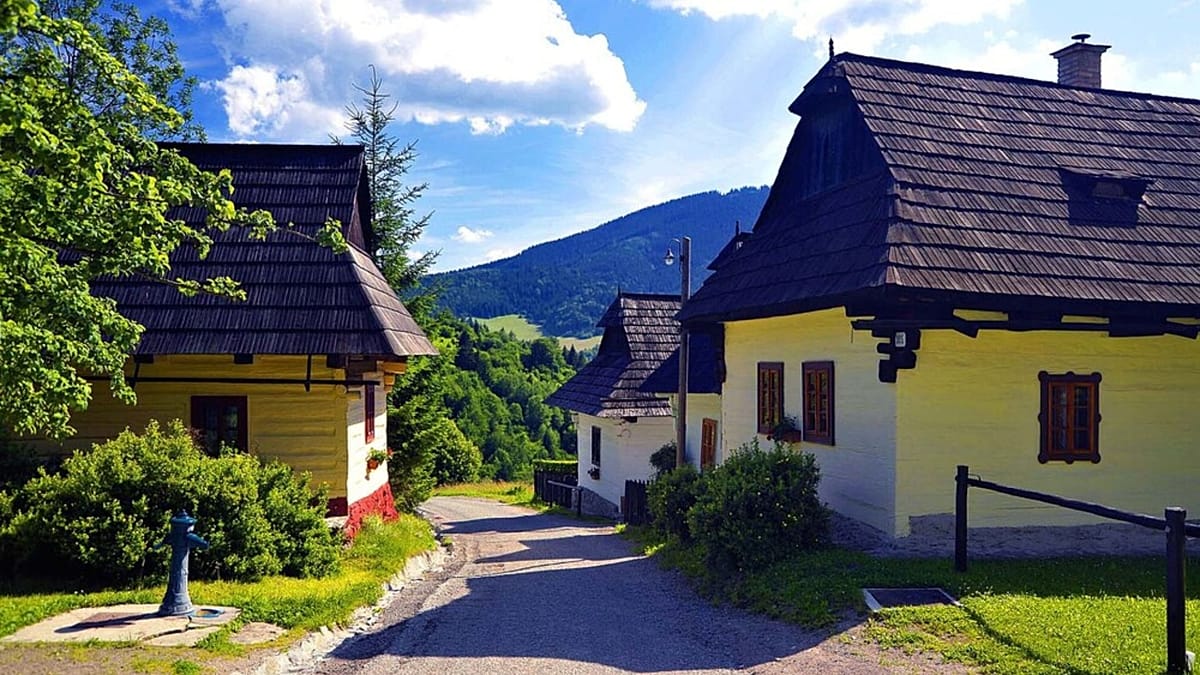
When UNESCO announces its latest additions to the World Heritage List each year, it’s big news.
There are hundreds of sites tentatively waiting for their call up, and being added to the list doesn’t just mean greater protection – it almost guarantees an influx of tourists, all with money to spend.
While that can be great for the local economy, some residents find that being bombarded with visitors causes more issues than it’s worth.
Vlkolínec residents: ‘We would live better if UNESCO crossed us off the list'
Vlkolínec, a village in Slovakia around a three-hour drive from the capital Bratislava, was inscribed on the UNESCO World Heritage List in 1993.
Praised as a remarkably intact example of a central European village, its traditional log houses and bell tower dating back to 1770 draw around 100,000 visitors annually.
Now some residents want its UNESCO status removed due to the amount of tourists passing through the village who are intruding on their privacy.
“We would live better if UNESCO crossed us off the list,” Anton Sabucha told Slovak daily newspaper Denník N.
Visitors strolling along the idyllic main street are greeted with ‘private property’ signs and other messages warning against photography.
Hels Dainty, a full-time digital nomad who shares her travels on Instagram, visited Vlkolínec in November 2025, having seen the UNESCO-listed village in a Lonely Planet guide.
“I would rather something was preserved, even if that means a new use for it had to be found and it turned into a tourist attraction, than it just becoming a ghost town,” she tells Euronews Travel.
“I’m happy that in some ways it’s still a lived-in village. I would suggest people try and visit outside of heavy tourist periods, respect the wishes of the people in the village, and buy something from the local shop to show some support.”
Can World Heritage Sites be removed from the list?
UNESCO has delisted just three sites since the initiative was launched in 1978: The Arabian Oryx Sanctuary in Oman, the Dresden Elbe Valley in Germany, and Liverpool Maritime Mercantile City in the UK.
In each case, the sites were removed because of new developments in the area, rather than the wishes of local residents.
For example, the Dresden Elbe Valley was removed after the construction of the Waldschlösschen Bridge river crossing.
“Once a site is inscribed, UNESCO stands ready to assist Member States at both national and local levels when they face challenges or difficulties in managing the properties under their responsibility,” a UNESCO spokesperson says.
“In the case of Vlkolínec, it is noteworthy that while inscription on the World Heritage List increases the site’s visibility, the recent rise in visitor numbers reflects broader tourism trends and travel patterns globally rather than being the direct effect of inscription itself, which took place more than three decades ago.
“Overall, UNESCO has as well developed specific tools to manage tourism pressure in World Heritage sites. The organisation also encourages continued dialogue between the competent authorities and the local communities to address them in a way that protects the site’s exceptional value while respecting the needs and well-being of the local communities.”