

 ADVERTISEMENT
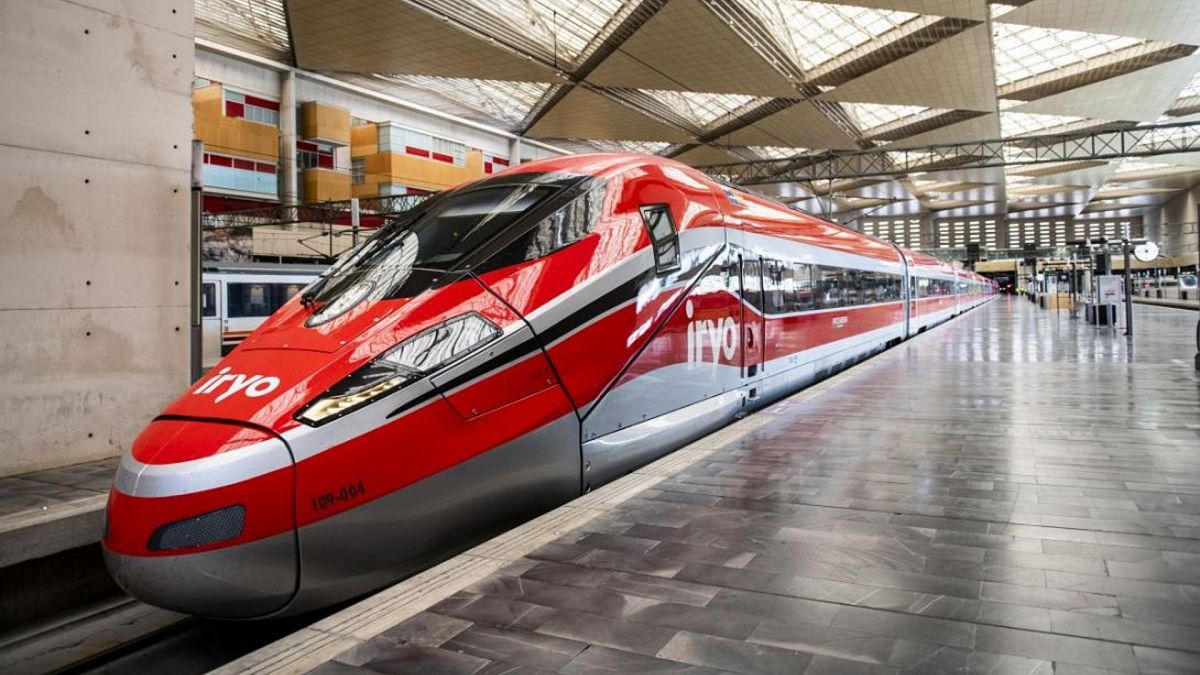
A new high-speed train is set to link Barcelona and Malaga in under six hours.
Launching this winter, the north-south route is an extension of Iryo’s Barcelona to Seville line, which debuted last December.
The new service from the low-cost private rail operator will compete with Renfe’s existing premier AVE service, expanding the timetable while reducing ticket prices.
With trains departing daily, travellers can easily take in Barcelona’s Gaudí architecture and Malaga’s beautiful south coast beaches in one trip.
How much will Iryo’s Barcelona-Malaga service cost?
Tickets for Iryo’s Barcelona-Madrid trains are already on sale, showing significant savings for passengers wanting to travel between Catalonia and Andalusia.
Currently, they start from as little as €24 for a single in December. A direct train on similar dates with AVE currently costs from €62.
AVE’s services take between six hours and six hours and 45 minutes, while Iryo’s will take five hours and 50 minutes.
The new service builds on a promising trend for sustainable travel in Spain and beyond, with low-cost rail operators bringing competition to the market.
Along with companies like France’s Ouigo and Spain’s Avlo, Iryo is helping trains compete with budget flights.
Return flights between the two cities in December are currently available for €42 with Ryanair. However, these only include an under-seat bag, with a cabin bag charged at an additional €6.60 or a large checked bag at €21 each way.
Iryo’s basic fare includes a small carry-on bag and a cabin suitcase. Large suitcases can be added for €5 each way.
When will Iryo’s Barcelona-Malaga service be available?
Iryo’s service launches on 15 December, with one trip per day in each direction.
The service will depart from Barcelona at 11.50am, stopping in Zaragoza, Madrid for 20 minutes, and Cordoba along the way. In the opposite direction, trains will leave Malaga at 11.35am.
Tickets for 2025 are already on sale, making it easy to plan your travel ahead of time.
Since launching in November 2022, Iryo has established train services connecting Albacete, Alicante, Antequera, Barcelona, Cuenca, Cordoba, Madrid, Malaga, Seville, Tarragona, Valencia and Zaragoza.
ADVERTISEMENTNew Madrid-Murcia train service slashes price of travel
AVE also faces new competition on its Murcia-Madrid route, which launched at the end of 2022 ending the southeast region's "isolation".
French low-cost train operator Ouigo launched a twice-daily service between the two cities on 5 September, with tickets costing as little as €9.
With a total journey time of two hours and 45 minutes, the service stops at Elche in Alicante along the way.