

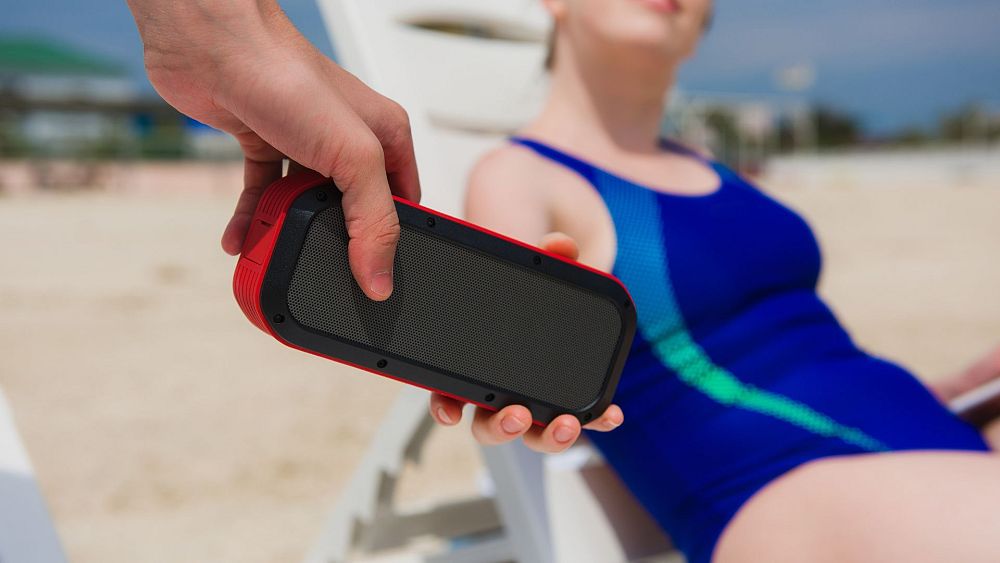
Beachgoers in Portugal have been warned that they could face fines of up to €36,000 for playing their music too loudly.
Portable speakers blasting out tunes at high volumes which bother locals and tourists have been have been banned by the country’s National Maritime Authority (AMN).
New restrictions were confirmed just as peak tourism season is about to kick off in Portugal’s most popular beach destinations.
How much is the fine for playing music on the beach in Portugal?
Announced last month by AMN, the regulation prohibits the “use of sound equipment and noise-generating activities which, under the terms of the law, may cause discomfort”.
While it is not clear what, if any, volume is officially classed as a disturbance, beachgoers can make noise complaints to the local Maritime Police responsible for the beach they are on.
The fines could be anywhere between €200 and €4,000 for individuals and between €2,000 and €36,000 for groups. The offending ‘accessory’ - such as a speaker - could also be confiscated.
The AMN’s beach edict lists various other activities that are forbidden on Portugal’s shores. These include playing ball games outside of designated areas, camping outside of campsites, and making fires.
Disruptive tourists are being targeted across Europe
This isn’t the first time antisocial behaviour has been regulated on Europe’s beaches.
Last summer, Barcelona in Spain banned cigarettes on its shores to shield beachgoers from second-hand smoke and discarded cigarette butts.
From Portugal to Croatia, rules and restrictions are being introduced to make popular tourist destinations more liveable for locals.
Last month, Dubrovnik announced plans for a luggage drop-off system to reduce the noise of wheel-along suitcases in its historic, cobbled Old Town.
Greece has introduced a time slot system for visitors to the Acropolis in an attempt to manage hoards of tourists, while Rome’s Pantheon introduced an entry fee this week.
Many countries, including Portugal, are also tightening restrictions on short-term rentals to combat inflation in the housing market.