

You'll Never Guess Which Mobile Browser Is The Worst For Data Collection
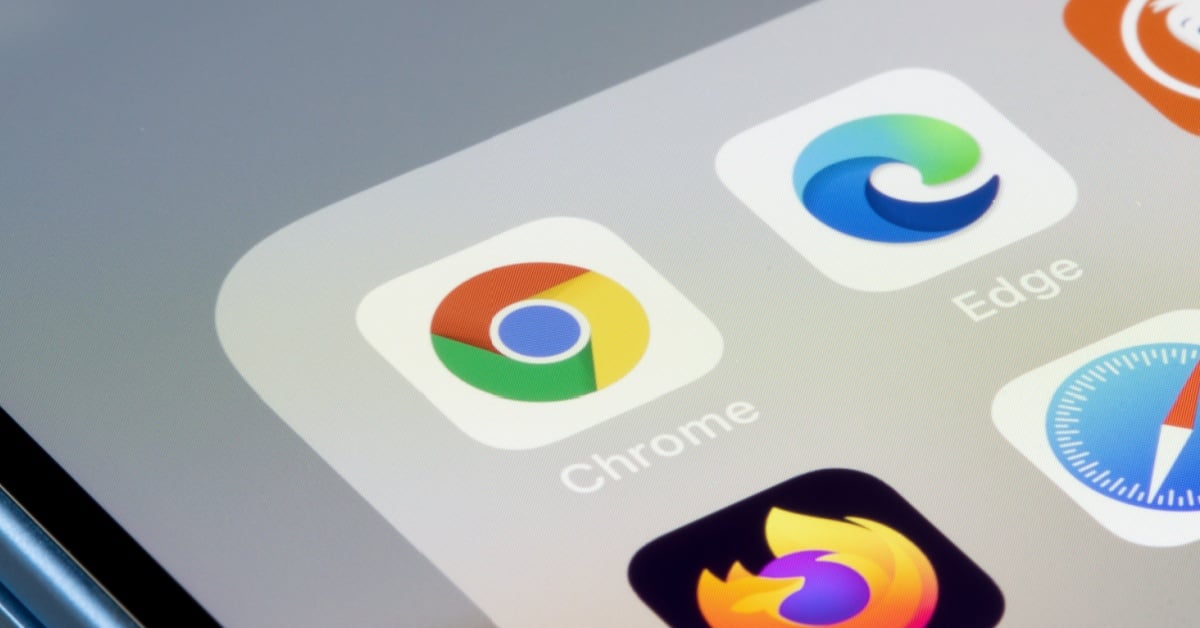
Mirror, mirror on the wall, who is the slurpiest mobile browser of them all? The answer, according to VPN vendor Surfshark, is Chrome.
Surfshark's research focused on the top ten browsers based on AppMagic rankings. This included Safari due to it being the default browser on iPhones.
Between them, Chrome and Safari account for almost 90 percent of the mobile browser market, according to Statcounter, while also being among the top for data collection.
At first glance, it doesn't look good for Chrome. According to Surfshark, the browser collects 20 different data types, including contact info, financial details, location, browsing history, search history, user content, identifiers, usage data, and diagnostics. Surfshark noted that it was the only app that collected financial details, although it also pointed out that users might choose to allow the browser to save the data for convenience.
It is also worth considering that much of the data captured by Chrome is by Google's services, such as Search and Maps.
Second place was the Bing app, which collects 12 data types, followed by Pi Browser (nine types), and Safari and Firefox (eight types each).
- Hey Google, if Chrome is going to be single soon, OpenAI is interested
- RIP, Google Privacy Sandbox
- Google wins 1-1: Judge rules ad giant broke some antitrust law
- Chrome to patch decades-old flaw that let sites peek at your history
The data types are important. For example, while Safari, Chrome, Opera, and Bing all collect the user's location, only Bing collects their precise location data. Bing, Opera, and Pi Browser also collect data for third-party advertising, whether for showing ads in the app or sharing the data.
Edge, Bing, and Pi Browser also collect data that could be used to track users. Such data could potentially be sold to data brokers or used for targeted advertisements.
The slurping habits of mobile browsers are not secret; Surfshark analyzed the privacy details of these apps on the Apple App Store.
However, the findings highlight the amount of data collected by mobile browsers and what a seemingly innocent sign-in to get access to other services might do. Surfshark noted that the most commonly used browsers tended to be the ones that collect the most data, while others with lower usage, such as Brave and Tor, collect the least.
"Brave collects a limited set of data types, specifically identifiers and usage data. Tor goes even further, standing out as the most privacy-centric browser by collecting no data at all," Surfshark said. ®
From Chip War To Cloud War: The Next Frontier In Global Tech Competition
The global chip war, characterized by intense competition among nations and corporations for supremacy in semiconductor ... Read more
The High Stakes Of Tech Regulation: Security Risks And Market Dynamics
The influence of tech giants in the global economy continues to grow, raising crucial questions about how to balance sec... Read more
The Tyranny Of Instagram Interiors: Why It's Time To Break Free From Algorithm-Driven Aesthetics
Instagram has become a dominant force in shaping interior design trends, offering a seemingly endless stream of inspirat... Read more
The Data Crunch In AI: Strategies For Sustainability
Exploring solutions to the imminent exhaustion of internet data for AI training.As the artificial intelligence (AI) indu... Read more
Google Abandons Four-Year Effort To Remove Cookies From Chrome Browser
After four years of dedicated effort, Google has decided to abandon its plan to remove third-party cookies from its Chro... Read more
LinkedIn Embraces AI And Gamification To Drive User Engagement And Revenue
In an effort to tackle slowing revenue growth and enhance user engagement, LinkedIn is turning to artificial intelligenc... Read more