

Trump Administration Announces Tariffs That May Make Plenty Of Tech More Expensive From August 1
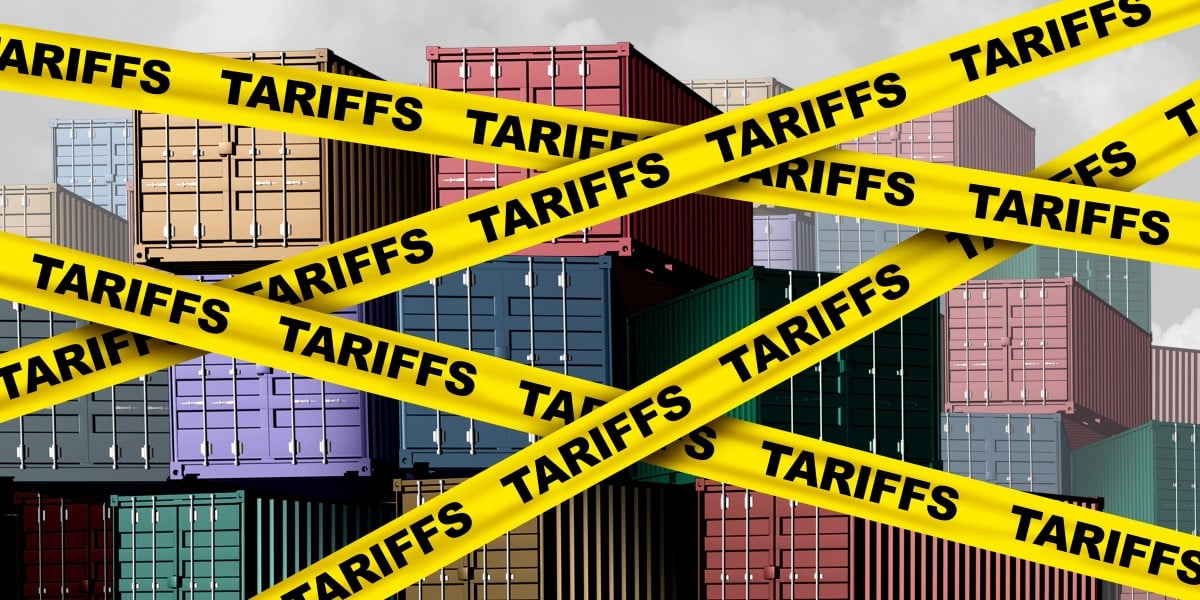
World War Fee The Trump administration on Monday announced the tariff rates it will impose on fourteen nations starting on August 1st, and several big technology-producing nations made the list.
A White House fact sheet delivered news that the administration plans 25 percent tariffs on goods from Japan, Malaysia, and South Korea, and a 36 impost on imports from Thailand.
The Register mentions those countries because they’re major sources of digital technology.
The likes of SK Hynix and Samsung manufacture memory and solid-state disks in South Korea. Intel, GlobalFoundries and Infineon produce semiconductors in Malaysia, which is a major hub for Dell. Japan’s contributions to tech supply chains are so numerous a summary can’t do them justice.
Thailand is a hub for hard disk manufacturing.
President Trump announced the tariff rates on his own social network, Truth Social, where he posted letters to heads of state that “Invite you to participate in the extraordinary Economy of the United States, the Number One Market in the World, by far.” The letters frame the tariffs as necessary to address trade deficits caused by “Tariff, and Non Tariff, Policies and Trade Barriers.”
The letters and fact sheet state that countries can avoid the new tariffs in two ways. One is moving operations to the USA, a decision the administration promises to expedite with swift approval of new manufacturing facilities on American soil.
The other is for tariffed nations to change their own trade policies in ways that make it easier for US companies to export.
- Tariffs and trade turmoil driving up cost and build times for datacenters
- Trump tariff turmoil hurting global smartphone market, but hitting US hardest
- Trump threatens to add formal Apple Tax on top of the 'Apple tax'
- Siri? Will tariffs hurt Apple? Tim Cook says brace for a $900M whack, for starters
President Trump has framed these charges as “reciprocal tariffs” and suggested they are intended to cause economic pain to nations and businesses that export to the USA so they change their ways. That’s an accurate prediction as products imported to the USA will become more expensive and therefore less attractive to US buyers – when a locally made alternative is available.
However, electronics are enormously complex devices that often include components that are only made in a handful of locations outside the USA. Plants that make such products can take years to build and bring up to speed, meaning these tariffs have the potential to increase prices for American manufacturers that import components and for stateside consumers.
Major US securities indices fell almost one percent after the administration announced the tariffs.
The administration gave the nations on its tariff list until August 1st to do a deal. The US first announced its tariff plan on April 2nd but later paused the tax rollout for 90 days to create more time for negotiations. In the time since, just two nations – Vietnam and the UK – have inked trade deals.
US Treasury Secretary Scott Bessent used his X account to predict “more countries [will] to come to the table this week and finalize their respective deals in good faith.” ®
From Chip War To Cloud War: The Next Frontier In Global Tech Competition
The global chip war, characterized by intense competition among nations and corporations for supremacy in semiconductor ... Read more
The High Stakes Of Tech Regulation: Security Risks And Market Dynamics
The influence of tech giants in the global economy continues to grow, raising crucial questions about how to balance sec... Read more
The Tyranny Of Instagram Interiors: Why It's Time To Break Free From Algorithm-Driven Aesthetics
Instagram has become a dominant force in shaping interior design trends, offering a seemingly endless stream of inspirat... Read more
The Data Crunch In AI: Strategies For Sustainability
Exploring solutions to the imminent exhaustion of internet data for AI training.As the artificial intelligence (AI) indu... Read more
Google Abandons Four-Year Effort To Remove Cookies From Chrome Browser
After four years of dedicated effort, Google has decided to abandon its plan to remove third-party cookies from its Chro... Read more
LinkedIn Embraces AI And Gamification To Drive User Engagement And Revenue
In an effort to tackle slowing revenue growth and enhance user engagement, LinkedIn is turning to artificial intelligenc... Read more