

Sky-high Budget Gap: FAA Launches Air Traffic Overhaul, Lacks Cash To Finish It
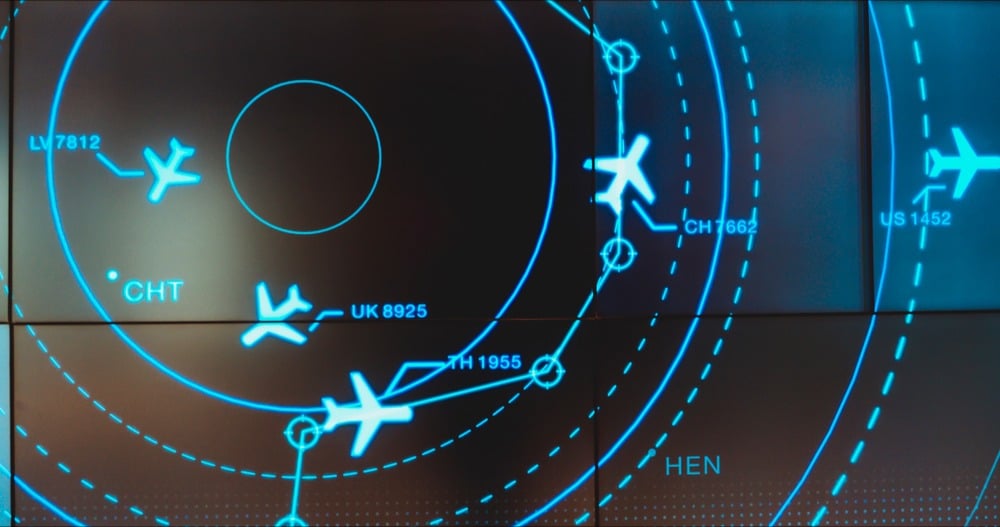
Get ready to start flying American skies with a renewed sense of confidence, at least eventually, as the Federal Aviation Administration has finally decided to start soliciting ideas for an overhaul of the US' antiquated air traffic control systems. In classic Trump administration style, the FAA wants a single private-sector integrator to run the overhaul, with the public footing the bill.
The FAA published its request for solutions (RFS) for the aptly-if-not-awkwardly named Brand New Air Traffic Control System (BNATCS) last week, and it appears to want to move fast with the overhaul. In an accompanying press release, the agency said that it wants the project - which the RFS noted will involve modernizing more than 74,000 pieces of equipment as well as "multiple legacy systems" - completed "within 3-4 years," though it's not even clear if the cash is available to fully fund the overhaul.
The project will be substantial, and the FAA doesn't appear to actually want to manage much of the work itself, as the RFS seeks to find a single "qualified integrator to lead, facilitate, and execute the FAA's [BNATCS]," according to the document.
"The Integrator will be responsible for executing all necessary efforts to deliver the BNATCS to meet the NEEDS of the FAA," the document continued. "This includes upgrading facilities, acquiring and deploying advanced technologies, managing integration across diverse systems, and coordinating with stakeholders to deconflict parallel efforts across the NAS."
In other words, the FAA really wants this done, but it doesn't seem to want to - or perhaps it can't at this point - do the work itself.
But good god, is it necessary?
Sure, the majority of flights into, out of, and around the US take off and land safely despite antiquated systems, but when problems occur, things go seriously wrong.
Take early 2023 when the FAA's Notice to Air Missions (NOTAM) system went offline and grounded flights across the US. NOTAM provides update on changes to airspace or airport safety to pilots in advance of liftoff, and was broken when someone fat-fingered a database file.
In May 2025, all the air traffic systems - including backups - were knocked offline for 90 seconds at Newark Liberty International Airport in New Jersey because of a short caused by an unsheathed copper wire at an air traffic control facility in Philadelphia more than 80 miles away.
Beyond NOTAMs and the poor condition of facilities, government auditors said last year that a full 51 of the FAA's 138 air traffic control systems were entirely unsustainable because they were so old that parts were no longer available, or because a lack of funding meant that parts couldn't be replaced. They classified a further 54 systems as potentially unsustainable.
Some FAA systems are so old, according to testimony former FAA administrator Chris Rocheleau gave to Congress over the summer, that they are still running on floppy disks and paper strips.
In other words, it's about time someone throws some cash at a full-scale overhaul.
Anatomy of an overhaul attempt
The FAA wants whatever integrator it picks to modernize hardware and software over two phases, the first of which "addresses critical vulnerabilities in the [National Airspace System] NAS by replacing existing outdated, antiquated equipment or facilities."
The second phase will entail preparing US NAS management systems for the future by establishing a series of new Air Route Traffic Control Centers "and a common automation platform to be fully integrated" into six such new facilities.
All that new stuff must be "deliverable at rapid speed with minimal interruption to service," the FAA demanded. The agency mentions incentives for speedy results, but will also hold the integrator accountable "for any missed deadlines."
If those terms and conditions aren't appealing enough, there's also no telling whether BNATCS will actually be fully funded to completion.
As noted by Congressman Sam Graves (R-MO), Trump's "big beautiful" reconciliation bill allocated $12.5 billion to jump start the FAA's air traffic control system overhaul - but that's it for now.
"Thanks to the One Big Beautiful Bill, we have the down payment to start building a new system," FAA administrator Bryan Bedford said of the status of BNATCS. "The next step is getting the integrator on board, and we are on track."
- Report claims FAA ignores most whistleblower complaints
- US Transpo Sec wants air traffic control rebuild in 3 years, asks Congress for blank check
- US warns aging air-traffic control code won't be fixed until 2030
- Please don't cut funds for space traffic control, industry begs Congress
Unfortunately that leaves the FAA around $19 billion short of the $31.5 billion that Transportation Secretary Sean Duffy told Congress the FAA would need for the whole of its air traffic overhaul. Congress doesn't appear to have fully funded the overhaul in its recent markup of the FAA's FY 2026 budget request, with just $10 billion earmarked for air traffic control operations, much of which will be spent to continue operating current systems. An additional $5 billion was earmarked for facilities and equipment.
We reached out to the FAA to get an idea of how it expects everything to be done in 3-4 years by handing control of the overhaul to a private company, all without full funding allocated for the program, but the FAA wouldn't directly answer any of our questions.
Instead, it directed us to an op-ed that Duffy wrote for Fox News, published prior to the markup of the FAA's 2026 budget. Duffy mentioned the $12.5 billion "down payment" that accused the Biden administration of being obsessed with identity politics, which delayed upgrades to air traffic control systems.
"Elvis and the Rolling Stones were still pumping out Billboard hits when our current air traffic control network was integrated," Duffy said. "It's unacceptable, and it's lead [sic] to years of glitches, delays, and cancellations in our airspace."
Duffy said that the $12.5 billion would allow the FAA to start making changes, but admitted that the agency would need more money, money he didn't indicate has been allocated, and which the FAA didn't clear up.
"It's not the all-new system President Trump wants, and America deserves, but it's an important down payment to get the job finished," Duffy said. "We will need more money." ®
From Chip War To Cloud War: The Next Frontier In Global Tech Competition
The global chip war, characterized by intense competition among nations and corporations for supremacy in semiconductor ... Read more
The High Stakes Of Tech Regulation: Security Risks And Market Dynamics
The influence of tech giants in the global economy continues to grow, raising crucial questions about how to balance sec... Read more
The Tyranny Of Instagram Interiors: Why It's Time To Break Free From Algorithm-Driven Aesthetics
Instagram has become a dominant force in shaping interior design trends, offering a seemingly endless stream of inspirat... Read more
The Data Crunch In AI: Strategies For Sustainability
Exploring solutions to the imminent exhaustion of internet data for AI training.As the artificial intelligence (AI) indu... Read more
Google Abandons Four-Year Effort To Remove Cookies From Chrome Browser
After four years of dedicated effort, Google has decided to abandon its plan to remove third-party cookies from its Chro... Read more
LinkedIn Embraces AI And Gamification To Drive User Engagement And Revenue
In an effort to tackle slowing revenue growth and enhance user engagement, LinkedIn is turning to artificial intelligenc... Read more