

ServiceNow Signs Uncle Sam's Latest Short-term AI Discount Deal
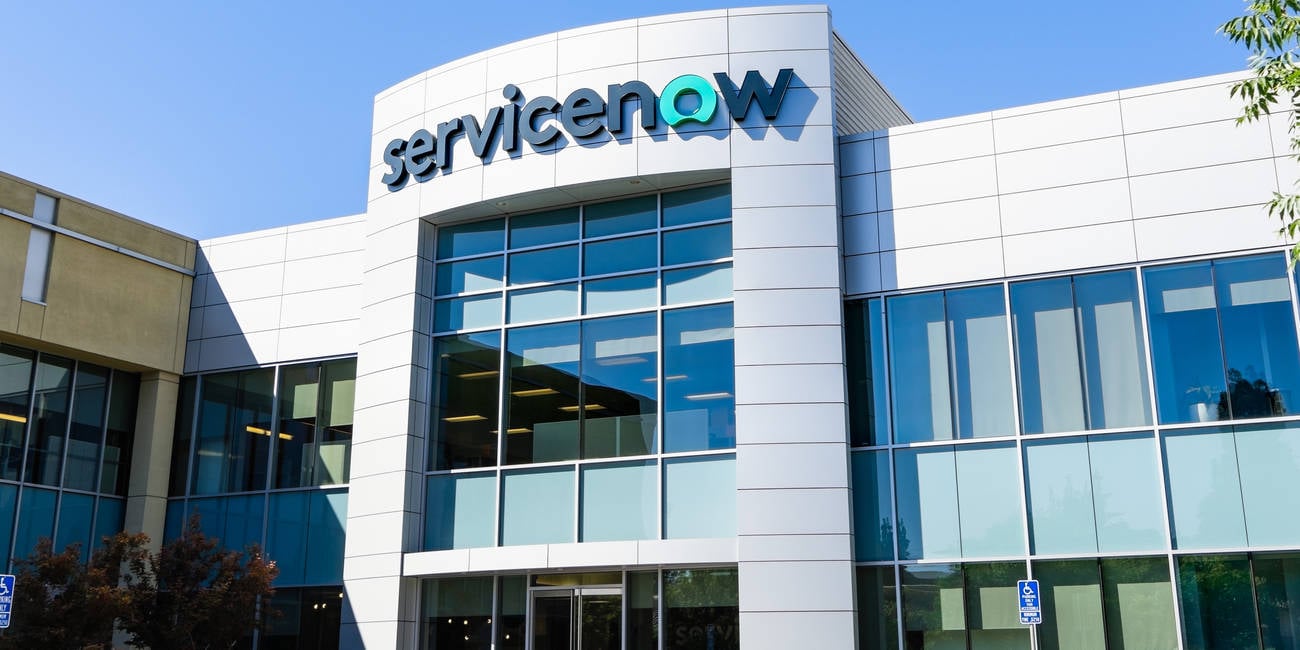
Not wanting to miss the opportunity to grow its federal footprint, ServiceNow has signed a deal to offer the US government discounts on its latest AI innovations.
The US General Services Administration (GSA) announced its latest OneGov deal with the workflow automation software firm on Wednesday, describing the arrangement as one that will allow it "to streamline a wide range of business processes." If the mysteriously unsourced "projections" mentioned by the GSA are correct, widespread adoption of ServiceNow AI tools could increase agency workflow efficiency by up to 30 percent.
Wednesday's agreement is the most recent in a series of deals the GSA has made with IT vendors to offer discounted services to the federal government as part of the OneGov initiative. The program aims to standardize IT purchasing contracts for the entire federal government so that any agency in need of services can acquire them without needing to negotiate terms.
As is the case with the previous deals, today's announcement was light on specific pricing, only noting that "eligible federal customers" will be able to save up to 70 percent off of the list price on upgrades to ServiceNow's Information Technology Service Management Pro or ITSM Pro Plus bundles. The deal also involves a 40 percent discount on upgrades to a standalone version of ITSM Pro.
The ITSM Pro and Pro Plus bundles are described as being "designed for faster adoption of ITSM's AI features," which include both a "unified architecture for intelligent automation across government" and "thousands of out-of-the-box AI agents," according to GSA. Agencies can get the 70 percent discount on those services as part of a one-year agreement throughout the duration of the contract period, which ends in September 2028.
The discounted ITSM Pro standalone upgrade option will only be available through September 2026.
ServiceNow introduced an AI-heavy upgrade early last year, and since then, it has been on a mission to plug generative and agentic AI into every corner of its ecosystem, much like other big tech companies in the past few years. The company said over the summer it expects about $100 million in headcount savings in 2025 from its internal use of AI.
The GSA noted that ServiceNow's AI products are already in use among federal agencies, where they "drive more than 200 million government tasks annually." What those tasks are wasn't mentioned, and the GSA didn't respond to questions for this story.
Analysts have estimated that ServiceNow currently derives around 10 percent of its revenue from the public sector, giving the company a lot of room to grow in government operations through deals like this.
The lock-in express connects another car
ServiceNow may have a hard time competing with other big IT players in the public sector space, as the GSA's OneGov marathon has seen a lot of top-tier firms offer significantly better deals.
OpenAI and Anthropic both signed OneGov deals last month that saw them offer AI products to federal agencies for just $1 for a year, which was undercut by Google with a $0.47 deal and Microsoft's own OneGov agreement to just hand out Copilot to federal agencies for free, along with steep discounts on its other cloud products.
- Enterprise software giants weaponize AI to kill discounts and deepen lock-in
- Cloud vendor lock-in is shocking, but there's a get out of jail card
- Uncle Sam speedruns AI chatbot adoption for federal workers
- Uncle Sam asks industry if it has AI that'll make procurement suck less
Box also made a OneGov deal to offer discounted agentic AI tools to federal agencies. Outside of AI, AWS signed a deal to offer discounted cloud services, and Oracle has agreed to 75 percent price cuts on its products for the US government as well.
Where all these deals get complicated is their short-term duration: with the exception of some longer-running Microsoft discounts and the 2028 expiration for ServiceNow's ITSM bundles, most of the other OneGov agreements wrap up by late 2026, while Oracle's ends even sooner in 2025. As we've noted in our other OneGov coverage, these contracts might look good at first glance, but they could quickly lead to agencies faced with steep cost increases for software they've grown dependent on, forcing them to spend money in an inefficient and wasteful manner.
We've asked the GSA for details on whether discounts may be extended, what pricing federal agencies might be stuck with once OneGov contracts expire, and whether they've been considering the potential of lock-in with these new deals. As in the previous cases, we didn't receive any response beyond an automated acknowledgement of our questions.
We also reached out to ServiceNow, but didn't hear anything back. ®
From Chip War To Cloud War: The Next Frontier In Global Tech Competition
The global chip war, characterized by intense competition among nations and corporations for supremacy in semiconductor ... Read more
The High Stakes Of Tech Regulation: Security Risks And Market Dynamics
The influence of tech giants in the global economy continues to grow, raising crucial questions about how to balance sec... Read more
The Tyranny Of Instagram Interiors: Why It's Time To Break Free From Algorithm-Driven Aesthetics
Instagram has become a dominant force in shaping interior design trends, offering a seemingly endless stream of inspirat... Read more
The Data Crunch In AI: Strategies For Sustainability
Exploring solutions to the imminent exhaustion of internet data for AI training.As the artificial intelligence (AI) indu... Read more
Google Abandons Four-Year Effort To Remove Cookies From Chrome Browser
After four years of dedicated effort, Google has decided to abandon its plan to remove third-party cookies from its Chro... Read more
LinkedIn Embraces AI And Gamification To Drive User Engagement And Revenue
In an effort to tackle slowing revenue growth and enhance user engagement, LinkedIn is turning to artificial intelligenc... Read more