

India Hails 'first' Home-grown Chip As A Milestone Despite Very Modest Specs
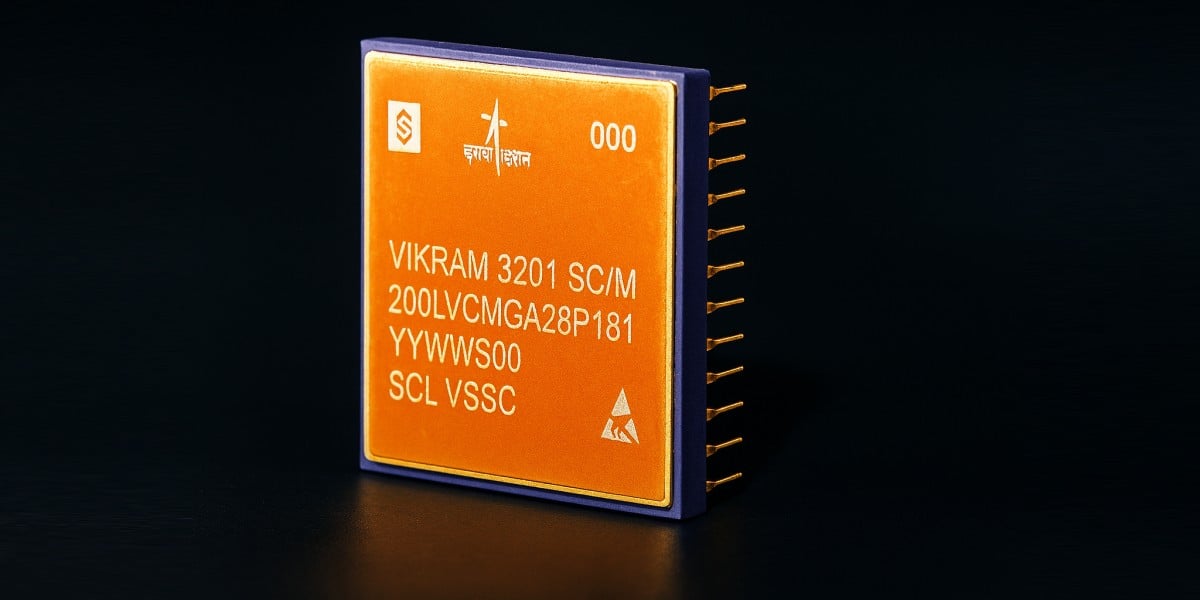
India’s government yesterday celebrated an “important milestone” in the development of its semiconductor industry, and therefore the nation’s ambition to become a global contender, but the celebrations seem premature because the chip that was the star of the show is nothing special.
The outpouring of enthusiasm took place at an event called the Semicon India 2025 conference, where IT minister Ashwini Vaishnaw handed prime minister Narendra Modi a locally developed and manufactured processor – the Vikram 3201.
Developed by India’s Semiconductor Lab (SCL), which has ties to the nation’s Space Research Organisation (ISRO), the processor has already been to space on several successful missions. At the conference, Modi and Vaishnaw suggested the chip’s success indicates India’s semiconductor industry is ready to fly.
A spec sheet [PDF] suggests it’s not going to help India’s chip industry fly very far or fast: a 100Mhz, 32-bit chip, built on a 180nm process and using a proprietary instruction set is not going to excite offshore buyers. Nor does it demonstrate the exceptional manufacturing capabilities, or the ability to produce chips at scale that foundry customers seek. VIKRAM-3201 is also not a chip that will help India achieve silicon self-sufficiency.
Modi and Vaishnaw also appear not to have told the Semicon India 2025 conference that the ISRO and SCL launched the chip six months ago, or that India has already created its own RISC-V processors.
- India's PM laments missing out on global chipmaking dominance – in 1964!
- India won't become a semiconductor superpower anytime soon, says think tank
- Well that escalated quickly: India demos homebrew mobile OS
- India eats China's lunch in US smartphone manufacturing
Vaishnaw also pointed to Indian policies that have lured several major semiconductor players to the country and has previously enthused about the joint venture between Taiwan's Powerchip and India's Tata that he expects will start operating in 2026 and become India’s first large-scale fabrication plant. That plant, and others under construction in India, will also make modest silicon rather than the high-margin kit that powers AI systems and servers.
India, however, has been a source of semiconductor design talent for years. But exporting services is an established part of the Indian economy. Showing off chips, even slow ones for very niche applications, is a better photo opportunity than trying to excite the populace by showing them techies toiling in a cubicle farm. ®
From Chip War To Cloud War: The Next Frontier In Global Tech Competition
The global chip war, characterized by intense competition among nations and corporations for supremacy in semiconductor ... Read more
The High Stakes Of Tech Regulation: Security Risks And Market Dynamics
The influence of tech giants in the global economy continues to grow, raising crucial questions about how to balance sec... Read more
The Tyranny Of Instagram Interiors: Why It's Time To Break Free From Algorithm-Driven Aesthetics
Instagram has become a dominant force in shaping interior design trends, offering a seemingly endless stream of inspirat... Read more
The Data Crunch In AI: Strategies For Sustainability
Exploring solutions to the imminent exhaustion of internet data for AI training.As the artificial intelligence (AI) indu... Read more
Google Abandons Four-Year Effort To Remove Cookies From Chrome Browser
After four years of dedicated effort, Google has decided to abandon its plan to remove third-party cookies from its Chro... Read more
LinkedIn Embraces AI And Gamification To Drive User Engagement And Revenue
In an effort to tackle slowing revenue growth and enhance user engagement, LinkedIn is turning to artificial intelligenc... Read more