

IFixit Gives New Fairphone 6 Top Marks For Repairability: 10/10
The sixth generation of the Fairphone repairable mobile was launched at the end of June. Now spudger-flingers iFixit have got their hands on it, and liked the result.
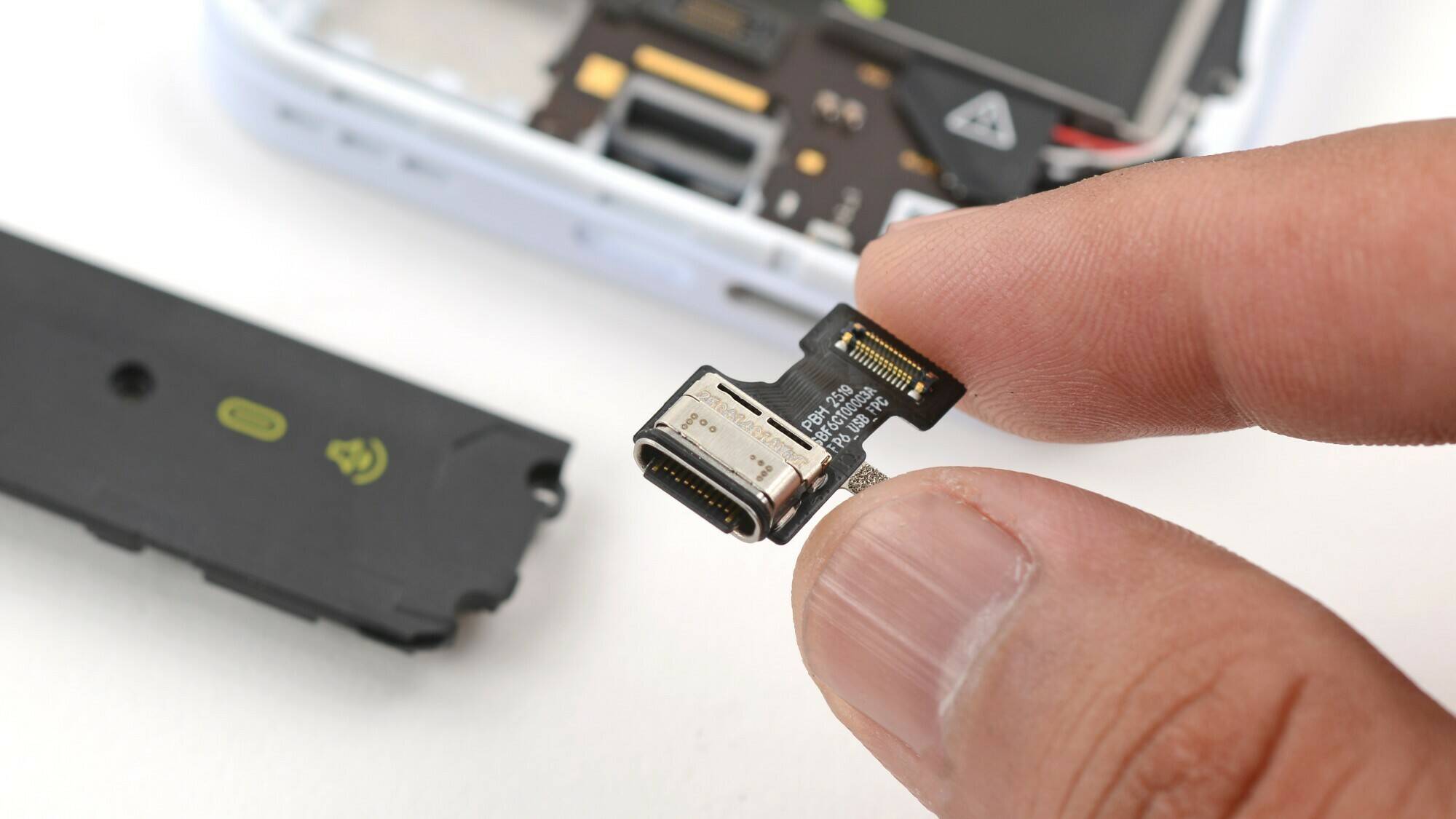
The pleasure of an easy charge port swap (click to enlarge) – image courtesy iFixit
The iFixit site is a top resource for most of us trying to repair or upgrade a computer – especially if it's a Mac. Fewer dare to try to fix their own phones, but iFixit reckons you'll be able to if you spring for a Fairphone, and the newest model gets a perfect 10.
Remove two screws to slide the back off. You will need a screwdriver to swap the battery, though — no more tool-free battery swaps. It's now held in by four screws and a cable. (It is, however, glued onto a metal backing strip, replaced with it.). Eight more screws hold the screen in place. In part because it's not glued together, it only has an IP55 rating for dust and water resistance, not the IP68 some devices boast, but that's still not bad. A nifty touch is a modular USB-C connector, which you can replace on its own if damaged. In total, 12 components are replaceable.
Away from the tech specs, iFixit gives it still more credit: the warranty is an impressive five years, with updates and spares available until 2033, including a promised seven Android version upgrades. That's hard to beat. The theory is that your new Fairphone should last much longer than most other phones. If you keep using it for five years, that should lower its carbon footprint by nearly a third.
Fairphone's Generation 6 handset launched on 25 June. GSMArena has full specs. We don't have one to play with, but it looks like a decent enough mobe: 6.31 inch screen, 8 GB of RAM and 256 MB of storage plus a microSD slot, and a 50 MP rear camera. It's €599, which translates to $870 or £535.
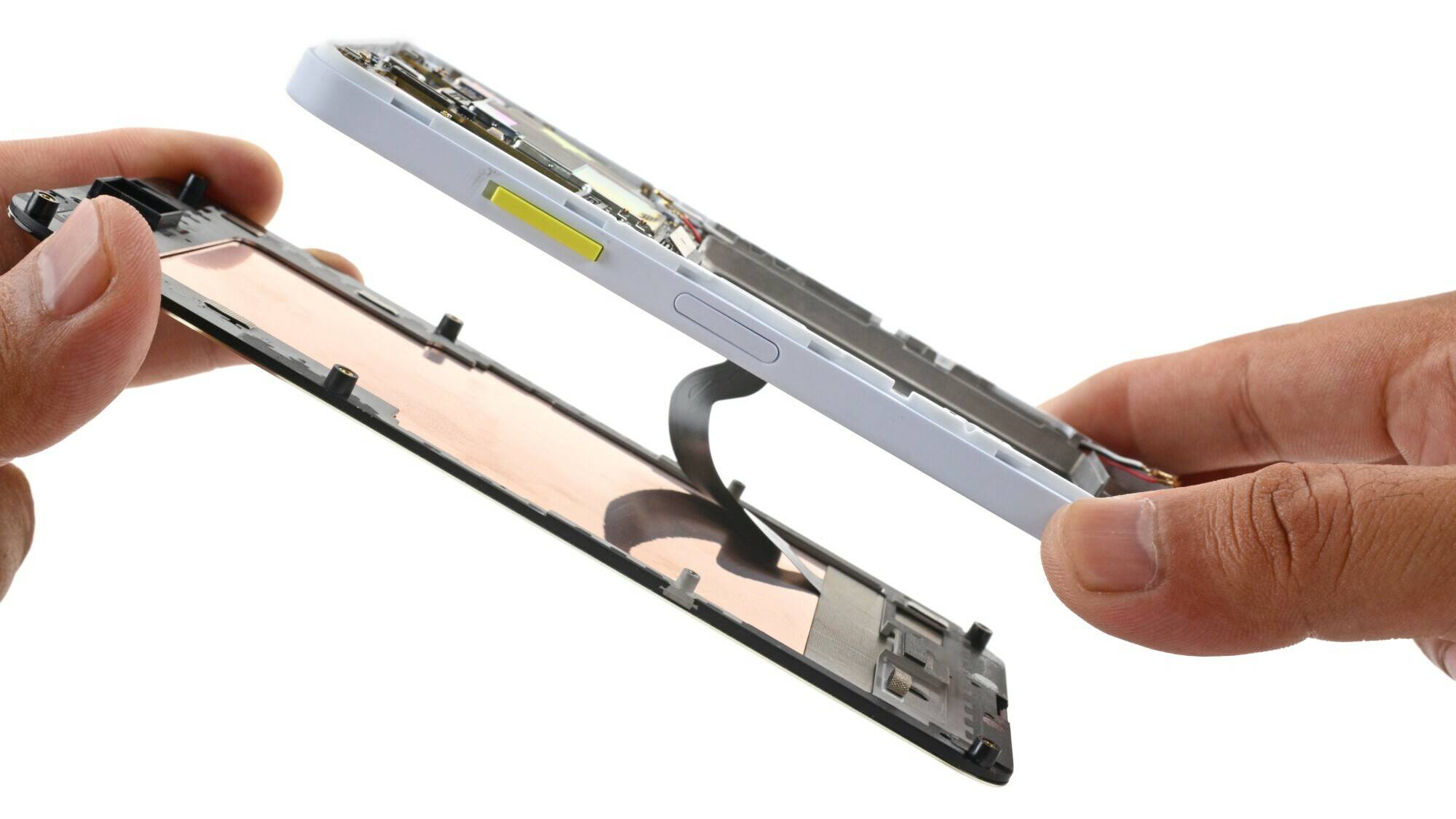
Headache-free screen swap (image courtesy iFixit)
The manufacturer says it's Fairphone's most sustainable ever. Half of it is made from recycled or ethically-sourced materials, which genuinely does matter. As The Register pointed out way back in 2001, many of the important materials in phones come from ecologically disastrous sources. In 2010, El Reg looked at the problems of "coltan" and the "3Ts plus gold" from the Eastern Congo region. Avoiding that, recycling the substances wherever and whenever possible, is seriously important, both to people and to mountain gorillas, as well as less charismatic wildlife.
All that means that it costs more, though. It's a perfectly capable phone, but you don't get an amazing spec for the money. It has a slightly smaller screen than its predecessor, the Fairphone 5, which incidentally also got a perfect 10 score a couple of years ago. There's no headphone socket, and only one physical SIM slot, although it can support an eSIM as well. The battery is slightly more capacious at 4415 mAh, and with a 30 W charger it can get to half full in half an hour. As with most phones now, this happens through a USB-C port – but if you hook it up to your PC, this only operates at USB 2 speeds.
- US Navy backs right to repair after $13B carrier crew left half-fed by contractor-locked ovens
- M4 MacBook Air keeps ports modular, locks tight – still a headache to repair
- Framework Desktop wows iFixit – even with the soldered RAM
- Laptop makers stalled on repairability improvements
There is a big lime-green colored switch on the side that enables what the company calls Fairphone Moments mode which strips the UI down to five apps, reduces digital distractions, mutes the on-screen colors and so on. There is a built-in Google Gemini LLM-bot "assistant", but you can turn it off.
If you, like the Reg FOSS desk, are powerfully averse to such gimmicks, the same phone is also available with Murena /e/ OS instead. We looked at version 3 last month, and it does allay a lot of Google-related privacy concerns, at the price of some features and convenience. With the Fairphone, there's a less metaphorical price, too: it costs €150 more than the base model. ®
From Chip War To Cloud War: The Next Frontier In Global Tech Competition
The global chip war, characterized by intense competition among nations and corporations for supremacy in semiconductor ... Read more
The High Stakes Of Tech Regulation: Security Risks And Market Dynamics
The influence of tech giants in the global economy continues to grow, raising crucial questions about how to balance sec... Read more
The Tyranny Of Instagram Interiors: Why It's Time To Break Free From Algorithm-Driven Aesthetics
Instagram has become a dominant force in shaping interior design trends, offering a seemingly endless stream of inspirat... Read more
The Data Crunch In AI: Strategies For Sustainability
Exploring solutions to the imminent exhaustion of internet data for AI training.As the artificial intelligence (AI) indu... Read more
Google Abandons Four-Year Effort To Remove Cookies From Chrome Browser
After four years of dedicated effort, Google has decided to abandon its plan to remove third-party cookies from its Chro... Read more
LinkedIn Embraces AI And Gamification To Drive User Engagement And Revenue
In an effort to tackle slowing revenue growth and enhance user engagement, LinkedIn is turning to artificial intelligenc... Read more