

I Spy With My Little Pi: Upgraded Cameras For Single Board Computer
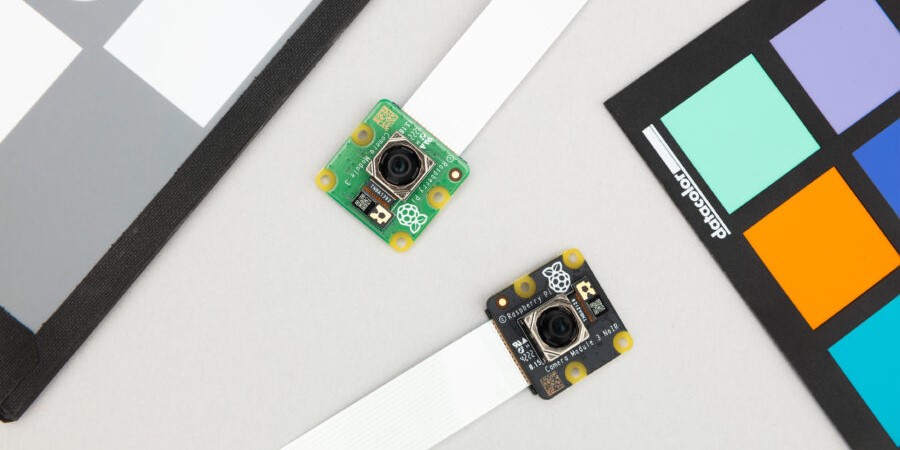
The Raspberry Pi has new cameras to capture images, attention, cash... and maybe your affection and/or admiration.
Raspboss Eben Upton on Monday announced the availability of Camera Module 3.
"The Camera Module was our very first official Raspberry Pi accessory," Upton wrote, noting that its 2013 launch produced "instant success" and led to a NoIR infrared-sensitive variant and then to 2016's 8MP Camera Module 2.
The Pi tribe shifted over two million units of the Camera Module 2.
"But time, and CMOS image sensor technology, marches on," Upton wrote.
Camera Module 3 therefore packs Sony's back-illuminated IMX708 sensor to offer 12MP of image capturing action with its 4,608 x 2,592 array of 1.40μm pixels.
This time around, buyers have four options. All include a new capability, powered autofocus, that can produce "crisp images of objects from around 5cm out to infinity," Upton wrote.
Here's the autofocus in action.
The Camera Module 3 captures visible light and is available in a model with a standard 66° field of view (FoV) and another with a wide 102° horizontal FoV. Upton wrote that the sensor's "higher linear resolution translates directly into higher angular resolution, and a more detailed picture" in the standard FV models.
The wide FoV models "spread IMX708's higher linear resolution over a larger angle, yielding a slightly lower angular resolution than Camera Module 2, but enabling interesting new applications including digital panning."
- Don’t expect a Raspberry Pi 5 in 2023, says Raspboss Eben Upton
- Raspberry Pi supply chain loosens just in time for the holiday season
- The Raspberry Pi Pico goes wireless with the $6 W
- New batch of AstroPis relieve Ed and Izzy of duty on board the International Space Station
The Camera Module 3 NoIR offers the same pair of FoV options, but can work with infrared light.
Upton rates high dynamic range (HDR) as "the most exciting feature of Camera Module 3" as it means the devices don't pick a single exposure time for the entire image, but instead take multiple simultaneous exposures with different exposure times.
"We can then select the exposure which best captures the detail in each region of the image, and apply a tone mapping process to compress the dynamic range of the result for display or storage," Upton explained. The resulting images have a lesser resolution, but Upton thinks they look better.
The standard FoV models cost $25 apiece. The wide view models cost $35.
The new cameras work with all rPi models other than the rPi 400 and the launch edition of the Pi Zero.
Board dimensions and mounting hole positions are identical to Camera Module 2, but changes to the size and position of the sensor module mean it won't fit in the camera lid for the Raspberry Pi Zero Case.
The Pi team has also launched a variant of the High Quality Camera with a native M12 mount at $50. "This eliminates the need for an adapter, and supports a much broader selection of lenses due to the increased back focus flexibility," Upton wrote. ®
From Chip War To Cloud War: The Next Frontier In Global Tech Competition
The global chip war, characterized by intense competition among nations and corporations for supremacy in semiconductor ... Read more
The High Stakes Of Tech Regulation: Security Risks And Market Dynamics
The influence of tech giants in the global economy continues to grow, raising crucial questions about how to balance sec... Read more
The Tyranny Of Instagram Interiors: Why It's Time To Break Free From Algorithm-Driven Aesthetics
Instagram has become a dominant force in shaping interior design trends, offering a seemingly endless stream of inspirat... Read more
The Data Crunch In AI: Strategies For Sustainability
Exploring solutions to the imminent exhaustion of internet data for AI training.As the artificial intelligence (AI) indu... Read more
Google Abandons Four-Year Effort To Remove Cookies From Chrome Browser
After four years of dedicated effort, Google has decided to abandon its plan to remove third-party cookies from its Chro... Read more
LinkedIn Embraces AI And Gamification To Drive User Engagement And Revenue
In an effort to tackle slowing revenue growth and enhance user engagement, LinkedIn is turning to artificial intelligenc... Read more