

Europe's Exascale Dreams Inch Closer As SiPearl Finally Tapes Out Rhea1 Chip
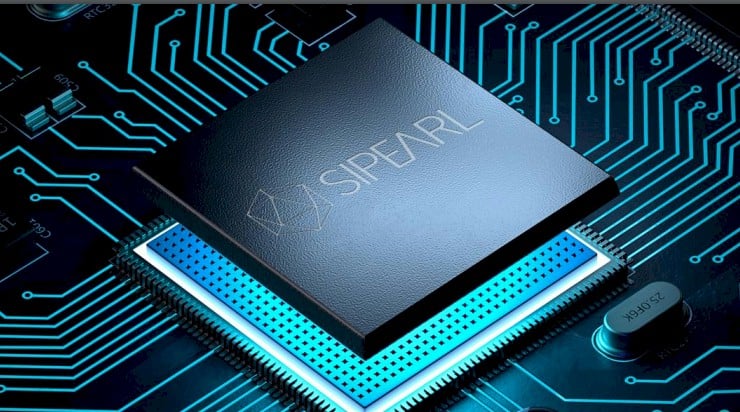
Euro chip designer SiPearl has finally taped out its Rhea1 processor destined for Jupiter, the first European exascale supercomputer, just as its Series A financing round ends with an injection of cash from a new investor.
Taping out means that the Rhea1 chip design is complete and its physical layout has been optimized for a specific production process. In this case, the design was handed off to Taiwanese semiconductor giant TSMC a few weeks ago to start manufacturing, SiPearl says.
Rhea1 is already behind schedule. The design was due to be available in 2022, but SiPearl then said that the first silicon would appear in 2023. Now the first sample silicon is slated to be available in early 2026.
The chip was originally planned for TSMC's N6 6nm process node - SiPearl's engineers could have used the delay to target a newer, smaller node. However, a company spokesperson confirmed to us that Rhea1 will be a 6nm chip.
The processor is an Arm-architecture design using 80 of the chip designer's Neoverse V1 cores. Each core includes a pair of 256-bit Scalable Vector Extension (SVE) units to boost its vector processing capabilities. Each processor also incorporates 64 GB of high-performance HBM2E memory stacked atop the chip.
Rhea1 is set to power the CPU cluster within Jupiter once the silicon is finally delivered, while part of the supercomputer known as JEDI (Jupiter Exascale Development Instrument) has already been operational since last year using Nvidia's Grace Hopper Superchips. The incomplete system managed to take fourth place on the Top500 list of high-performance systems in June.
It is understood that the CPU cluster will feature two Rhea1 processors per compute node and comprise 1,300 nodes contributing another five petaFLOPS of processing power to the overall system.
SiPearl's Rhea1 is also a key part of other European collaborative projects such as OpenCUBE, which is building a full-stack cloud computing platform using European technology and the HIGHER project, which aims to develop open source designs for high-density, rack-scale systems.
The company itself also recently released a reference server design that can be configured with one or two Rhea1 chips.
- SiPearl ships reference node design for Rhea1 high-spec Arm chip
- SiPearl updates specs for Rhea1 processor set to power Europe's exascale dreams
- SiPearl works with AMD on GPU support for Arm HPC chip
- Home-grown Euro chipmaker SiPearl signs deal with HPE, Nvidia
The tape-out of the Rhea1 marks a major milestone for European technological sovereignty in supercomputing, according to Anders Dam Jensen, Executive Director of the EuroHPC Joint Undertaking, which commissioned Jupiter.
"This groundbreaking European processor will not only power Jupiter, Europe's first exascale supercomputer, but also drive innovation across several EuroHPC JU-funded projects, with SiPearl at their core. Developed under the European Processor Initiative, Rhea1 brings cutting-edge performance and energy efficiency, reinforcing Europe's position in the global supercomputing race," Jensen declared in a statement.
SiPearl says it has now completed its €130 million ($152 million) Series A financing round, finishing off with a final tranche of funding worth €32 million ($37.4 million).
The last tranche was delivered by a pair of existing investors, plus a newcomer. The previous backers are the European Innovation Council (EIC) Fund from the European Commission and the French State, via French Tech Souveraineté, a part of France 2030. The third contributor is Taiwanese private equity biz Cathay Venture, which SiPearl says is aiming to expand its investment in EU projects.
This funding will support the industrialization phase of Rhea1, as well as R&D activities for next-generation processors for new market segments, such as datacenters, AI, and enterprise workloads, with a Series B funding round due to kick off soon. ®
From Chip War To Cloud War: The Next Frontier In Global Tech Competition
The global chip war, characterized by intense competition among nations and corporations for supremacy in semiconductor ... Read more
The High Stakes Of Tech Regulation: Security Risks And Market Dynamics
The influence of tech giants in the global economy continues to grow, raising crucial questions about how to balance sec... Read more
The Tyranny Of Instagram Interiors: Why It's Time To Break Free From Algorithm-Driven Aesthetics
Instagram has become a dominant force in shaping interior design trends, offering a seemingly endless stream of inspirat... Read more
The Data Crunch In AI: Strategies For Sustainability
Exploring solutions to the imminent exhaustion of internet data for AI training.As the artificial intelligence (AI) indu... Read more
Google Abandons Four-Year Effort To Remove Cookies From Chrome Browser
After four years of dedicated effort, Google has decided to abandon its plan to remove third-party cookies from its Chro... Read more
LinkedIn Embraces AI And Gamification To Drive User Engagement And Revenue
In an effort to tackle slowing revenue growth and enhance user engagement, LinkedIn is turning to artificial intelligenc... Read more