

AST Just Got A Small Boost In Its D2C Battle Against Elon Musk's Starlink
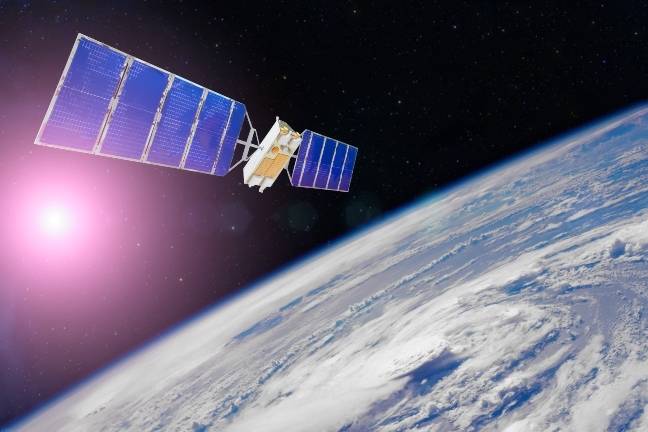
A messy legal fight between Ligado and Inmarsat over direct-to-cellular (D2C) spectrum has been settled, giving upstart AST a chance to gain ground on Starlink.
AST SpaceMobile has only five satellites in orbit, but nonetheless has partnerships with AT&T and Verizon to provide D2C satellite services. Now, it's clear to acquire 45 MHz of spectrum from bankrupt provider Ligado (40 MHz of L-Band MSS and an additional 5 MHz in the 1670-1675 MHz band), letting it beef up its portfolio.
The situation started when Ligado filed for bankruptcy in January 2025, following the US Department of Defense's refusal to grant an expansion of its services into land-based 5G operations. The DoD argued that Ligado's plan would have interfered with military GPS receivers.
Ligado sued Inmarsat, alleging the satellite operator's failure to upgrade its terminals to eliminate potential interference, which contributed to the DoD's objections and Ligado's bankruptcy.
Meanwhile, AST SpaceMobile struck a deal with bankrupt Ligado to buy up the 45 MHz of bandwidth, but couldn't complete the deal until the Ligado-Inmarsat dispute was resolved. Friday's deal sees all three getting what they want out of the matter.
Under the deal, Ligado will receive about $550 million, including $535 million to Inmarsat. AST SpaceMobile will fund the deal with a $550 million non-recourse, senior-secured term loan, securing 80+ years of spectrum rights from Ligado. Closing is subject to regulatory approval and customary conditions.
AST and Inmarsat didn't mention the fate of Ligado's only orbital satellite, the aging SkyTerra 1, which was launched in 2010 when Ligado was still known as LightSquared.
SkyTerra 1 was declared a total loss in 2024 (for insurance purposes) following an unspecified "sudden anomaly," but the satellite is reportedly still in operation, albeit with degraded performance. It was only designed to have an operational life of 15 years, though, meaning its planned end of service is this year.
They're coming for you, Elon – eventually, maybe
The big three US telcos – AT&T, Verizon and T-Mobile – have all struck deals to begin D2C service to customers, with both AT&T and Verizon opting to partner with AST, and T-Mobile signing on with Elon Musk's SpaceX to use its Starlink satellites.
T-Mobile's Starlink connectivity is now in public beta, while Verizon's AST offering has been available since March – but only for owners of Samsung Galaxy S25 and Google Pixel 9 devices. Both T-Mobile and Verizon services are currently limited to sending and receiving text messages. AT&T is still testing its AST satellite services and doesn't appear to have enrolled users yet.
- SpaceX accuses 'meme-stock' rival of 'misinformation' over Starlink signals waiver
- Shots fired as AT&T and Verizon ask FCC to block Starlink's direct-to-cell plans
- Telco to open lab to test cell network interoperability with satellites
- Will 2025 be the year satellite-to-smartphone services truly take off?
AST only has five satellites in orbit right now. That's a mere drop in the bucket compared to the more than 7,500 operational satellites Elon Musk's Starlink has lobbed into space, hundreds of which are available for D2C comms. AST said that its initial satellites don't have continuous coverage across the US, but it's targeting "approximately 100% nationwide coverage" with future satellite launches.
AST hasn't specified when those satellites might launch. Meanwhile, its time window is running short.
SpaceX and Starlink supremo Elon Musk said in August of last year that T-Mobile's D2C deal with Starlink was exclusive, but only for a year. After that, any carrier that wants to sign on would be welcome.
"We are starting off working with one carrier in each country, but ultimately hope to serve all carriers," Musk said in a tweet. Like him or not, he's got a significant lead in building a D2C satellite constellation, putting AST in a perilous position as yet another tech market consolidates around a few big firms. ®
From Chip War To Cloud War: The Next Frontier In Global Tech Competition
The global chip war, characterized by intense competition among nations and corporations for supremacy in semiconductor ... Read more
The High Stakes Of Tech Regulation: Security Risks And Market Dynamics
The influence of tech giants in the global economy continues to grow, raising crucial questions about how to balance sec... Read more
The Tyranny Of Instagram Interiors: Why It's Time To Break Free From Algorithm-Driven Aesthetics
Instagram has become a dominant force in shaping interior design trends, offering a seemingly endless stream of inspirat... Read more
The Data Crunch In AI: Strategies For Sustainability
Exploring solutions to the imminent exhaustion of internet data for AI training.As the artificial intelligence (AI) indu... Read more
Google Abandons Four-Year Effort To Remove Cookies From Chrome Browser
After four years of dedicated effort, Google has decided to abandon its plan to remove third-party cookies from its Chro... Read more
LinkedIn Embraces AI And Gamification To Drive User Engagement And Revenue
In an effort to tackle slowing revenue growth and enhance user engagement, LinkedIn is turning to artificial intelligenc... Read more