

Alibaba Says Its Technology Won't Target Uighurs
- Published
image copyrightGetty Images
Chinese e-commerce giant Alibaba has said it will not allow its technology to be used for targeting or identifying specific ethnic groups.
The statement follows reports that the company’s content moderation technology can pick out Uighur minorities.
Alibaba said it was “dismayed' that Alibaba Cloud developed facial technology that includes ethnicity as an attribute for tagging video imagery.
"We have eliminated any ethnic tag in our product offering," Alibaba said.
The firm said it never intended the technology to be used in this manner.
US-based surveillance industry researcher IPVM published a report on Wednesday that said software capable of identifying Uighurs appears in Alibaba’s Cloud Shield content moderation service for websites.
Alibaba describes Cloud Shield as a system that “detects and recognises text, pictures, videos, and voices containing pornography, politics, violent terrorism, advertisements, and spam, and provides verification, marking, custom configuration and other capabilities.”
IPVM said mention of Uighurs in the software disappeared around the time it published its report.
Alibaba - which is listed in New York and Hong Kong - is the biggest cloud computing vendor in China and the fourth worldwide, according to data from researcher Canalys.
Earlier this week one of Huawei's European communications managers resigned from the Chinese firm over concerns about its role in the surveillance of Muslim Uighurs.
New forced labour allegations
The latest report comes amid new allegations of potential forced labour in China’s west.
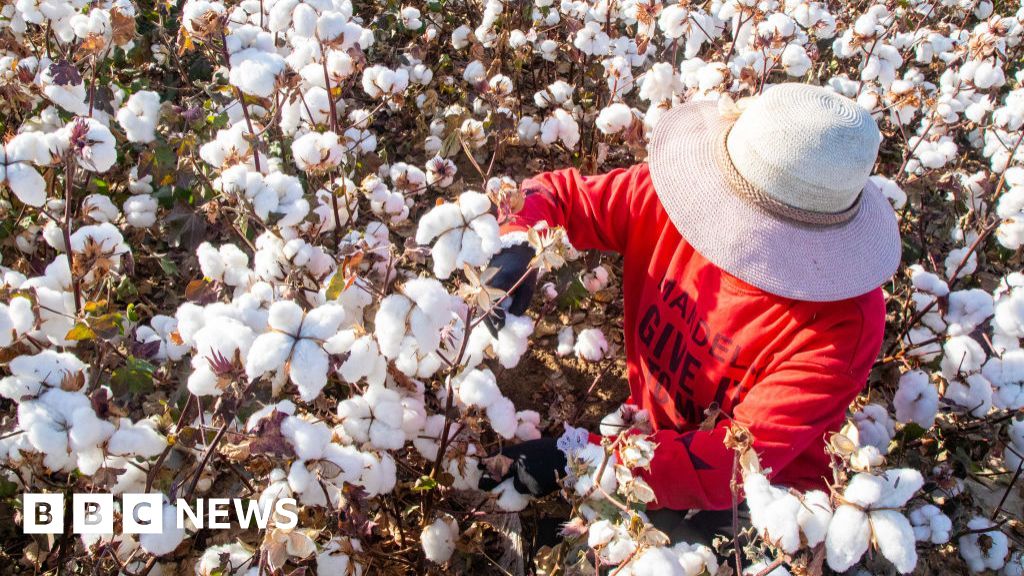
The BBC uncovered evidence suggesting that more than half a million minority workers a year are being marshalled into seasonal cotton picking.
That’s in addition to a large network of detention camps, in which more than a million are thought to have been detained, and claims that minority groups are being coerced into working in textile factories.
The Chinese government has long denied forced labour claims, insisting that the camps are “vocational training schools” and the factories are part of a massive, and voluntary, “poverty alleviation” scheme.
Following the BBC investigation, a member of an influential parliamentary committee urged UK businesses to investigate their sources of cotton, to ensure they avoided purchasing material that involved forced labour.
Also, the US recently banned cotton imports from a Chinese state-owned enterprise it said has used the forced labour of detained Uighur Muslims in Xinjiang province.
The Xinjiang Production and Construction Corps (XPCC) is a quasi-military organisation that reportedly accounts for nearly a fifth of Xinjiang’s GDP, and is one of China’s largest cotton producers.
From Chip War To Cloud War: The Next Frontier In Global Tech Competition
The global chip war, characterized by intense competition among nations and corporations for supremacy in semiconductor ... Read more
The High Stakes Of Tech Regulation: Security Risks And Market Dynamics
The influence of tech giants in the global economy continues to grow, raising crucial questions about how to balance sec... Read more
The Tyranny Of Instagram Interiors: Why It's Time To Break Free From Algorithm-Driven Aesthetics
Instagram has become a dominant force in shaping interior design trends, offering a seemingly endless stream of inspirat... Read more
The Data Crunch In AI: Strategies For Sustainability
Exploring solutions to the imminent exhaustion of internet data for AI training.As the artificial intelligence (AI) indu... Read more
Google Abandons Four-Year Effort To Remove Cookies From Chrome Browser
After four years of dedicated effort, Google has decided to abandon its plan to remove third-party cookies from its Chro... Read more
LinkedIn Embraces AI And Gamification To Drive User Engagement And Revenue
In an effort to tackle slowing revenue growth and enhance user engagement, LinkedIn is turning to artificial intelligenc... Read more