

AI Arms Dealer Nvidia Laments The Many Billions Lost To US-China Trade War
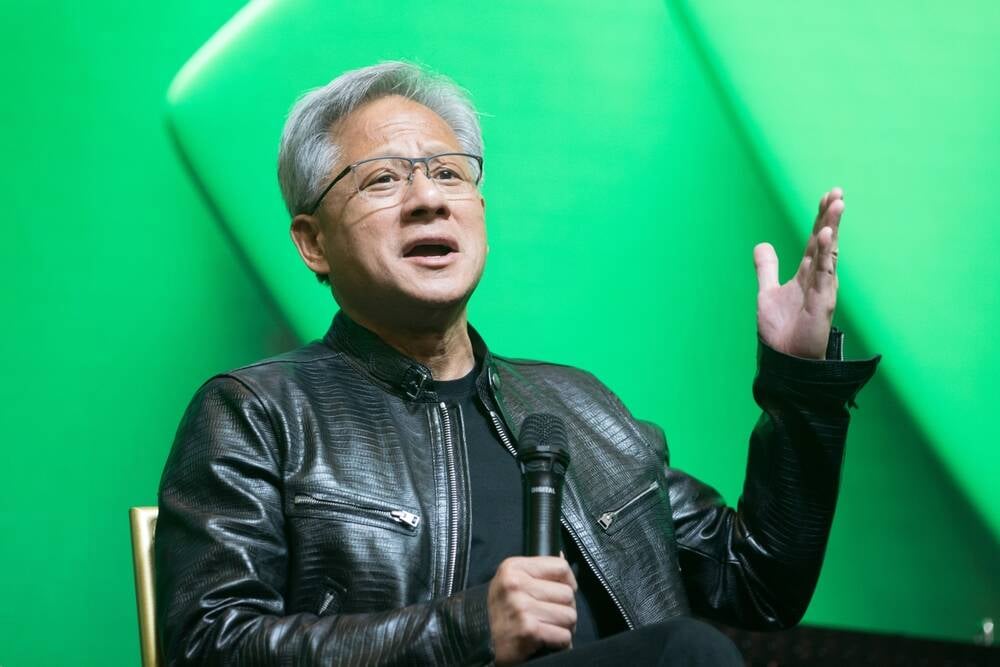
Nvidia's top brass urged Washington to approve the sale of Blackwell accelerators to China during the GPU giant's Q2 earnings call on Wednesday.
"Our products are designed and sold for beneficial commercial use, and every licensed sale we make will benefit the US economy," CFO Colette Kress told analysts. "America's AI technology stack can be the world's standard if we race and compete globally."
CEO Jensen Huang estimates that China would have been a $50 billion market for Nvidia this year alone if the company "were able to address it with competitive products."
Nvidia is reportedly preparing a more powerful Blackwell part for sales in the Chinese market in anticipation the White House will grant the licenses necessary to sell it. President Donald Trump has suggested he's open to the idea.
The request comes as Nvidia prepares to miss out on yet another quarter of H20 sales in the Middle Kingdom while it waits for Uncle Sam to grant export licenses and figure out how to collect its 15 percent cut of the revenues.
"While a select number of our China-based customers have received licenses over the past few weeks, we have not shipped any H20 based on those licenses," Kress said, noting that while the US government has claimed a 15 percent cut of licensed sales, "to date, the United States Government has not published a regulation codifying such requirement."
According to Kress, if Washington can cut through the red tape, Nvidia could realize an additional $2 to $5 billion in revenues on top of the $54 billion already forecast for the third quarter. Nvidia's current forecast doesn't account for any H20 sales during the quarter.
While Nvidia still can't sell its H20 stockpile in China, the company has managed to find another buyer to unload them on. In her CFO commentary [PDF] Kress revealed the company "benefited from a $180 million release of previously reserved H20 inventory related to the sale of approximately 650 million of H20 to an unrestricted customer outside of China."
Despite the Trump administration's ongoing trade war with China, Nvidia still managed to achieve mid-to-high double digit revenue gains across all of its business units raking in $26.4 billion dollars in profits on $46.7 billion in revenues during Q2.
As usual, datacenter revenues accounted for the vast majority of that, with revenues in that segment up 56 percent year-over-year to $41.1 billion. Of that, Networking sales accounted for $7.3 billion, up 98 percent from this time last year.
- Nvidia details its itty bitty GB10 superchip for local AI development
- Nvidia touts Jetson Thor kit for real-time robot reasoning
- The air is hissing out of the overinflated AI balloon
- To heck with export controls! Nvidia reportedly plotting cut-down B300 for Chinese market
Nvidia's now ancillary business units also saw strong gains during the quarter, with gaming revenues up 49 percent YoY to $4.3 billion and its professional graphics up 32 percent during the period to $601 million. Nvidia's Automotive unit meanwhile jumped 69 percent year over year to $586 million during the quarter.
And while the AI hypeman Sam Altman stokes fear of an AI bubble, Huang still expects AI infrastructure spend to reach $3 to $4 trillion by the end of the decade.
"In the last couple of years, you have seen that capex has grown in just the top four CSPs… to about $600 billion," he said. "There's five years between now and the end of the decade, and $600 billion of revenue only represents the top four hyperscalers." ®
From Chip War To Cloud War: The Next Frontier In Global Tech Competition
The global chip war, characterized by intense competition among nations and corporations for supremacy in semiconductor ... Read more
The High Stakes Of Tech Regulation: Security Risks And Market Dynamics
The influence of tech giants in the global economy continues to grow, raising crucial questions about how to balance sec... Read more
The Tyranny Of Instagram Interiors: Why It's Time To Break Free From Algorithm-Driven Aesthetics
Instagram has become a dominant force in shaping interior design trends, offering a seemingly endless stream of inspirat... Read more
The Data Crunch In AI: Strategies For Sustainability
Exploring solutions to the imminent exhaustion of internet data for AI training.As the artificial intelligence (AI) indu... Read more
Google Abandons Four-Year Effort To Remove Cookies From Chrome Browser
After four years of dedicated effort, Google has decided to abandon its plan to remove third-party cookies from its Chro... Read more
LinkedIn Embraces AI And Gamification To Drive User Engagement And Revenue
In an effort to tackle slowing revenue growth and enhance user engagement, LinkedIn is turning to artificial intelligenc... Read more