

Japan is on alert after a magnitude 7.5 earthquake struck its northern regions late on Monday, prompting tsunami warnings and a rare government advisory about the possibility of a “megaquake” over the next week.
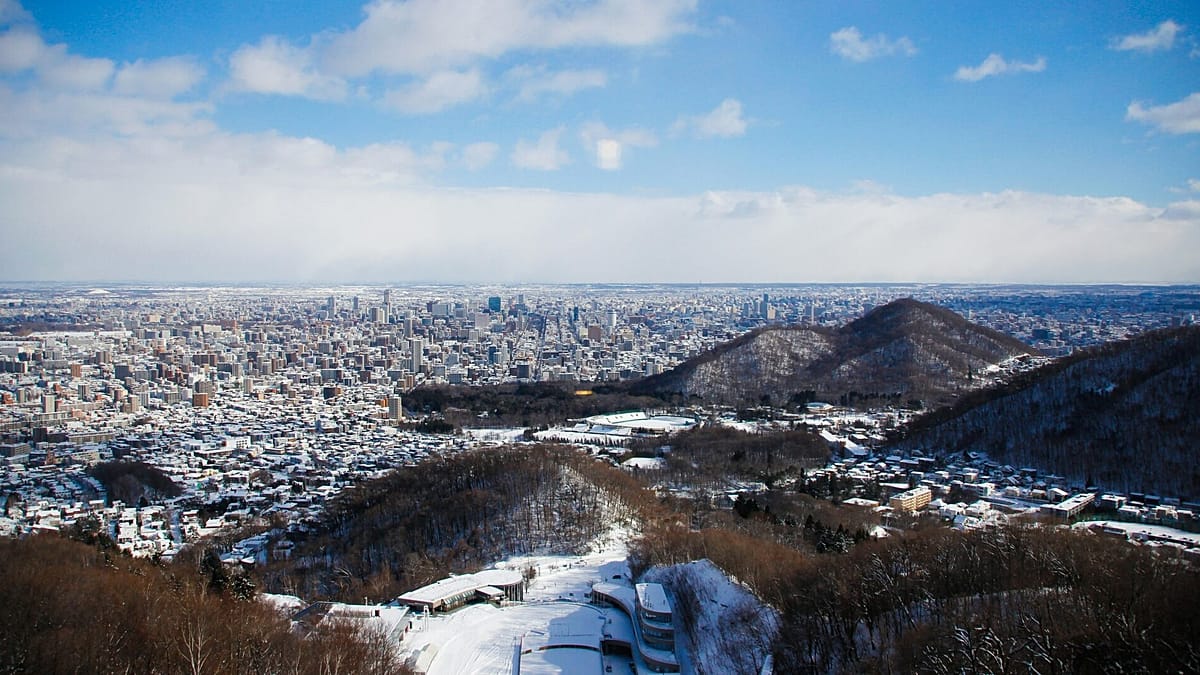
The warning comes as Hokkaido enters its busy winter tourism season, with ski resorts now welcoming early-season visitors before the holidays.
What does the ‘megaquake’ warning mean?
The earthquake hit off the eastern coast of Aomori – the northernmost prefecture on the main island of Honshu – at around 11:15 pm, registering an upper 6 on Japan’s seismic intensity scale, according to the Japan Meteorological Agency (JMA).
Slow, powerful waves rattled parts of Aomori, and shockwaves registered further north in Hokkaido. There were no reports of deaths or serious damage to key infrastructure, and no abnormalities were detected at nearby nuclear power plants, according to Japan’s national public broadcaster NHK.
Initial tsunami warnings for Iwate, Hokkaido and Aomori were later downgraded and fully lifted by early Tuesday morning.
Transport disruption has so far been limited, although Tohoku Shinkansen services were briefly suspended between Morioka and Shin-Aomori before resuming on Tuesday.
But the JMA has triggered a warning for a “megaquake” – an earthquake of magnitude 8 or higher – which could occur along the Japan Trench and the Chishima Trench off Hokkaido.
The warning is in effect until 16 December, and authorities note that a stronger tremor could bring tsunami waves of 3 metres to the area.
It marks the country’s first “megaquake” alert since the category was introduced in 2022.
What does it mean for travellers?
Hokkaido is one of Japan’s busiest winter destinations. Its ski hub, Niseko, saw record numbers during the 2024-25 season, with more than 11 million lift rides and an estimated 2.2 million visitors across its four resorts. With another snowy La Niña winter forecast, Niseko is expecting strong numbers again this season.
While “megaquake” may sound alarming, officials emphasise this is not a prediction but rather a statistical possibility based on patterns seen in large offshore quakes.
Flights and most rail routes are operating normally, and authorities have not restricted travel to northern Japan or Hokkaido.
There has so far been no direct impact reported at Niseko and Furano – Hokkaido’s main ski areas – including large-scale building damage or ski resort closures.
Travellers are, however, encouraged to stay informed and review basic earthquake safety guidance while visiting the region.
How to stay safe in Hokkaido
Japan is one of the world’s most seismically active nations, and earthquakes are a common feature of life.
Nearly 2,000 earthquakes of a magnitude 4 or higher have struck within 300 kilometres of Hokkaido in the past 10 years, according to the open-source Earthquake List.
On top of checking national travel advisories and monitoring updates from Japanese authorities, the Japan National Tourism Organisation (JNTO) recommends that travellers download the Safety Tipsapp, which sends out earthquake, tsunami and other weather warnings within Japan in 15 different languages.
During an earthquake, travellers should drop, cover and hold onto something stable, the JNTO adds. Those indoors should stay inside and avoid windows. Those outdoors should move away from buildings, trees and power lines to avoid falling objects.
In either case, avoid using elevators during or immediately after an earthquake.