

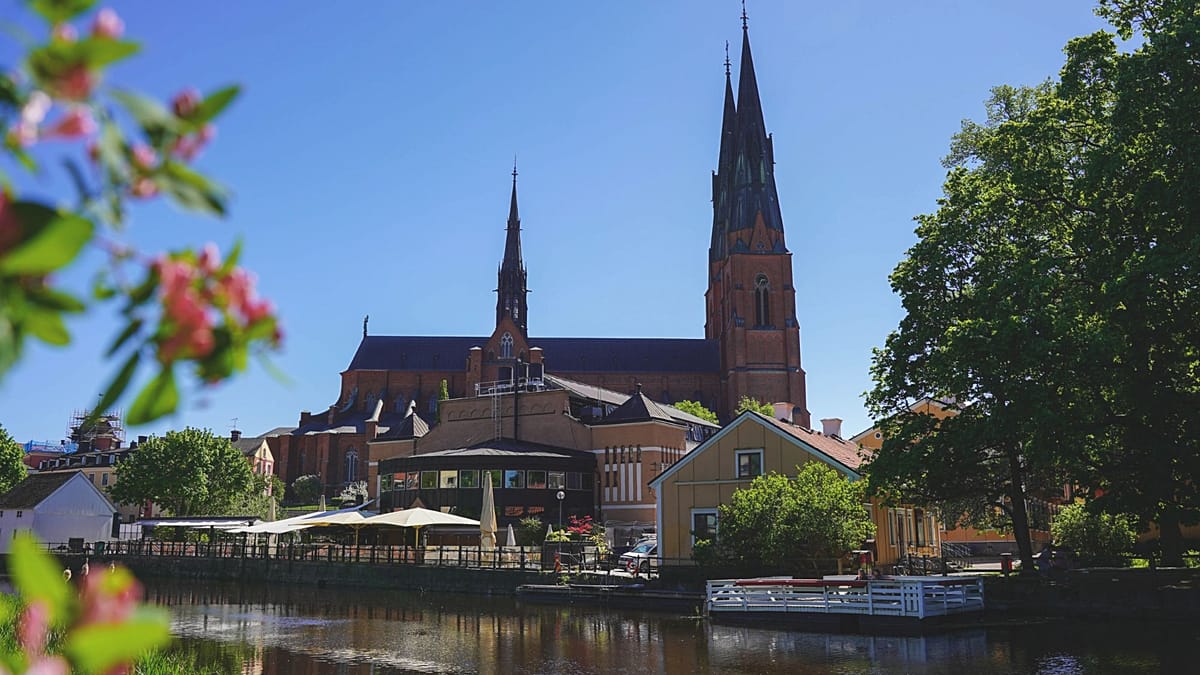
Selfie tourism has taken over some of the world’s top destinations, with travellers queuing for hours to secure “the shot” without actually engaging with whatever it is they are pointing their camera at.
 ADVERTISEMENT
ADVERTISEMENT
ADVERTISEMENT
One Swedish destination has come up with a novel way to combat the trend: An “IQ Tourism” programme.
Rather than pointing visitors towards the most photographed sights, Uppsala, a university city that’s just a 40-minute train ride north of Stockholm, is using an IQ symbol to direct them to experiences that offer “depth, clever stories, and unexpected layers of history”.
“We want curiosity to be the primary reason to travel here,” says Helena Bovin, head of marketing at Destination Uppsala.
“It’s a shift towards travel centred on meaning and context rather than just another experience to tick off a list.”
One of Sweden’s youngest cities – almost half of the population is under 30 – it should come as no surprise to you that many of the spots on the IQ tourism programme relate to Uppsala’s status as a university town.
Uppsala University is the oldest in Sweden, and its most famous alumni is Anders Celsius. Yes, that Celsius – Anders created the 100-degree thermometer in the 18th century, and you can see his original, which uses 0° for boiling and 100° for freezing, in the Gustavianum. The university museum also features a 17th-century anatomical theatre complete with numerous scientific instruments, anatomical specimens and historical artifacts.
You can act as the locals do by visiting Ofvandahls Hovkonditori, a student cafe first opened in 1878, or Arrenius, a coffee roastery where you are likely to get into lively discussions with your tablemates in the spirit of 17th-century English coffeehouses.
Just outside of the city you’ll find Gamla Uppsala museum, built near the royal burial mounds that date back to the Vendel period (550-800 AD). Here, you can learn about that history as well as the importance of the site during the Viking Age (800-1050 AD) when it was used for sacrifices to gods such as Thor, Odin, and Freyr.
As part of the programme, Uppsala has also created a roaming red tower viewer that will be aimed at small details most people walk straight past.
This will include the unwashed pane of glass in Uppsala Cathedral that gives a glimpse of what the building looked like before its 19th-century renovation, the paving stone outside Östgöta Nation that declares “nothing happened here” in 1965, and the mouse houses created by artists Jekaterina Pertoft and Zilmara Suarez that are dotted around the city.