

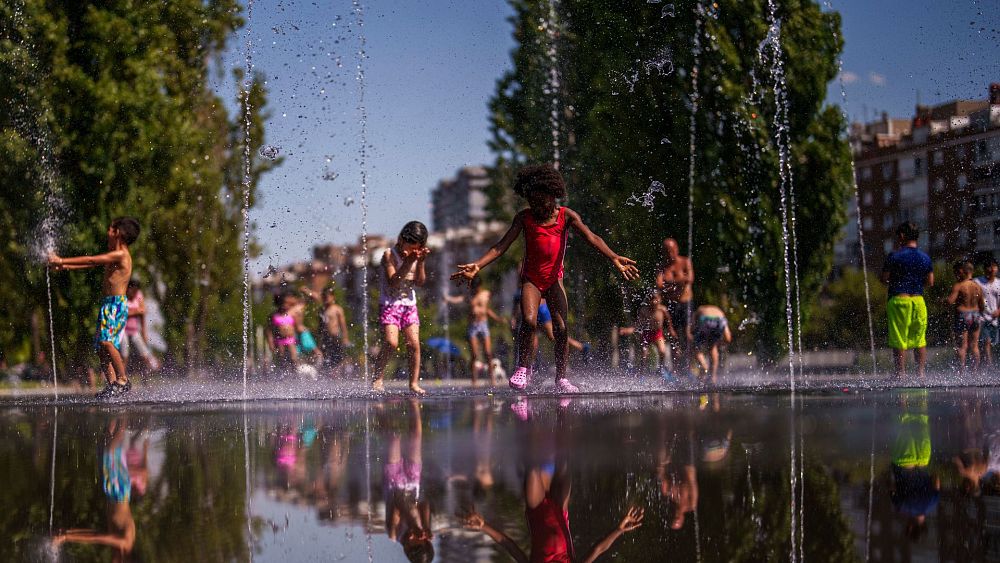
The sun is out and the beaches are packed - summer is well and truly here.
But for many travellers, the memory of last year’s record-breaking heatwaves is hard to shake.
Some of Europe’s most popular holiday spots are clustered around the Mediterranean - and are experiencing extremely hot weather.
Here’s what the temperatures are like in popular holiday destinations across Europe - and how you can beat the heat wherever you’re heading.
Will heatwaves hit Europe this summer?
In summer 2022, extremely high temperatures hit north and west Europe, sparking wildfires and crop failures.
It is likely that these areas will be even hotter this year, as the world swelters through the El Niño weather pattern, and as greenhouse gas emissions push up temperatures.
According to the European Environmental Agency, Europe as a whole is facing its warmest decade on record, with an average temperature increase of 1.11ºC to 1.14ºC warmer than pre-industrial levels.
However, some southern European countries could also experience higher rainfall. Southern Europe has a 40 to 50 per cent chance of seeing significantly higher rainfall this summer than last, scientists at the Copernicus Climate Change Service have said.
What’s the weather like in Italy?
Last week, Italy sweated through its first heatwave of the year, with temperatures climbing to the mid-30s in parts of the country.
An ‘orange alert’ for heat was issued on 22 June in cities including Ancona, Bologna, Bolzano, Brescia, Campobasso, Florence, Frosinone, Latina, Perugia, Pescara, Rieti, Rome, Trieste and Verona.
“Heatwave climatic conditions can pose a risk to the health of the population,” the authorities warned.
The mercury has dipped since, but it could be a sign of things to come this summer.
What’s the weather like in Spain and Portugal?
The Iberian peninsula is currently sizzling through a heatwave, the second of the year after a record-breakingly warm April.
Temperatures soared to 44ºC in the south of Spain while the capital Madrid also baked at over 40ºC. As many as 13 provinces also hit this milestone.
In April, Spain's environment minister Teresa Ribera described unseasonal heat across the Iberian Peninsula as “terrifying”. On Monday a 47-year-old man died while ploughing a field in a town in Seville.
Portugal has been hit by the same heatwave that is suffocating neighbouring Spain, with temperatures in the south tipping 40ºC. Smoke from Canadian wildfires is reaching the northeast of Iberia and Saharan dust is reaching the Algarve and south coast of mainland Spain.
This weather even threatens to last ‘several weeks’, local meteorologists have warned.
What’s the weather like in Greece?
Scientists have warned that Greece could experience a warm summer.
“There’s a very high probability that we’re going to have a hotter summer this year [compared to last year],” Efthimios Lekkas, a professor of disaster management at Athens University and head of Greece’s Earthquake Planning and Protection Organization, told state broadcaster ERT earlier this month.
Last week, parts of the country experienced a mini heatwave, with temperatures climbing to 37 degrees, but the mercury has since dipped.
How can you beat the heat in popular holiday destinations?
Nobody wants to get sick while they’re on holiday, but high temperatures are a risk factor.
Hot weather messes with your body’s ability to regulate itself. To cope with extreme heat, we sweat - but this leads to the loss of fluids and salts. High temperatures widen blood vessels, causing sudden drops in blood pressure. This can cause heat stroke.
But with a few tips, you can beat the heat.
Hydration is key. Make sure you have plenty of water on hand at all times. If you’re consuming alcoholic drinks, you need to drink extra water to counteract their dehydrating qualities.
Seek out shade, and opt for lightweight, breathable fabrics like cotton or linen. Loose-fitting outfits in light colours will help keep you cool by allowing air to circulate around your body.
Use a weather app to stay informed about the intensity of ultraviolet (UV) radiation where you are. This tool - easily accessible in Apple weather and most weather apps - provides real-time updates on UV levels, helping you make informed decisions about sun exposure and when to wear suncream.
Finally, look up community cooling centres before you head to your holiday destination.
Many cities host designated areas equipped with misting fans, shade structures and air-conditioning.
In Athens, for example, there are more than six of these centres. In other cities - like Madrid - certain types of public fountains provide areas where people can gain some respite from the summer weather.