

Southern Spain's high-speed train crash on Sunday 18 January left at least 42 people dead and over 150 injured.
With rail services suspended between Madrid and Andalusia following the Adamuz accident, hundreds more passengers were left stranded.
Azucena Esteban and Carlos Hidalgo, a married couple from Madrid who had planned to travel to Seville on a Renfe night train on Sunday, have now managed to reach their destination after a 48-hour journey.
But with no communication on compensation from their railway company, they had to find their own way there - by means of a hire car - and at their own expense.
Stranded train passengers faced with astronomical flight prices
"There was no option," Esteban recalls when asked about the transport options they considered at the time. They first spoke to Euronews Travel on the morning of Monday 19 January at Madrid Atocha station, where they were waiting for Renfe to provide a viable travel alternative.
When they realised that even the shuttle bus they had been promised to take them to Méndez Álvaro station would not arrive, they opted to hire a car at Barajas airport, as this service was not available at Atocha.
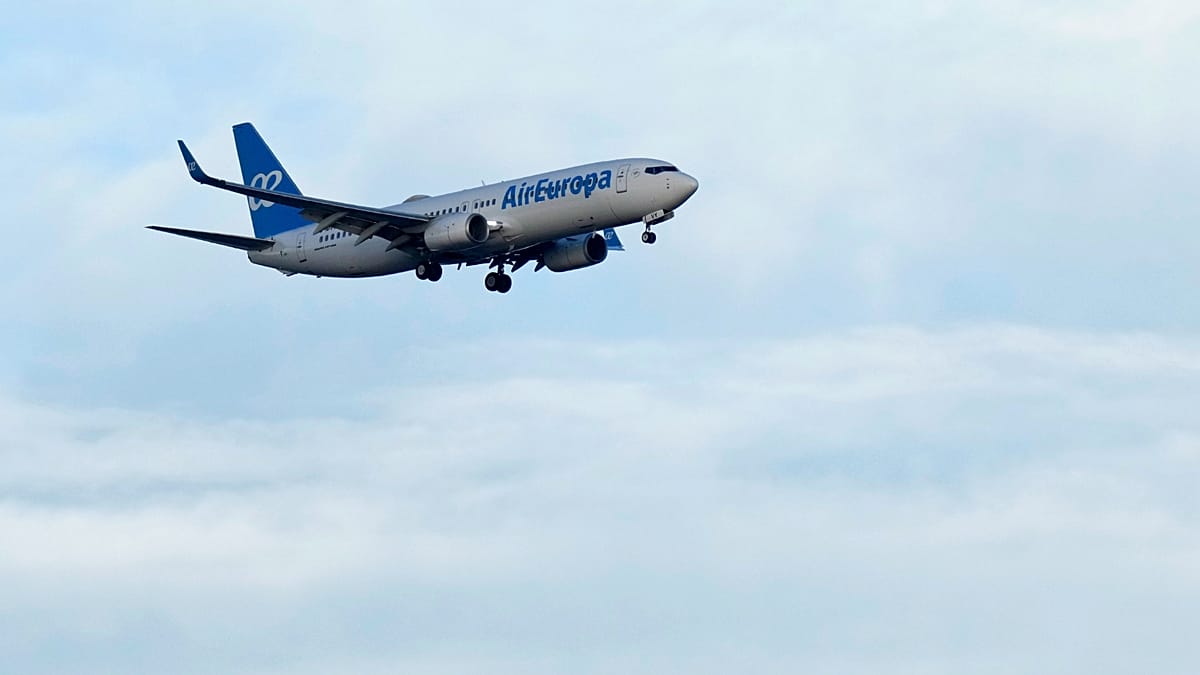
Flights between Madrid and Seville had climbed to €300, well above their usual price, Azucena recounted the following day by phone and from the Andalusian capital.
"I looked at all the airlines, but Malaga-Madrid was unviable, at least on Monday," explains Alberto García Chaparro, another affected resident in the capital.
"Buses were sold out and rental cars were unviable. Plane fares ranged from €180 to €500. In fact, I tried to buy an Iberia flight for €128, but when I paid [through a flight comparator], it was full and wouldn't let me buy it. When I went back in, it was already worth €300."
Car rental companies hiked prices following train crash
As García Chaparro points out, rental car companies also applied price increases after the accident that blocked all train travel between Madrid and Andalusia, Spain's first and third most populated regions, for 24 hours.
"The cars were at €80 - we looked the day before," says Azucena Esteban, who paid more than €200 to make the journey south. She adds that other users, who had approached the airport with the same intention, received quotes of €1,000 from other car companies.
Due to the system of variable prices depending on supply and demand in these companies, it is impossible to verify this fact: the current figures for a trip similar to the one they took, at the time of writing this article, range between €125 and €250.
Other affected passengers who Euronews Travel spoke with on Monday at Atocha station did manage to purchase bus tickets to Andalusia.
But testimonies gathered during the morning after the accident claimed that there was only one night bus left when consulted: "We were able to catch it at 10pm, but there were no others left." Two women interviewed also testified that air fares were "very expensive".
Is it legal to raise prices for alternative services in the face of a catastrophe?
A regulatory modification of the consumer protection law was approved by the Council of Ministers in November 2024, one month after the Valencia and Castilla-La Mancha DANA floods.
It prevents companies from automatically adjusting prices based on demand when there are situations that can be qualified as a civil protection emergency.
The regulations of the Council of the European Union (at ministerial level of the 27) and the European Council (heads of government) are clear: "Civil protection includes preventive measures aimed at reducing the consequences of future emergencies or disasters, as well as assistance providedto those populations that, after suffering a natural or man-made disaster, are in need of it."
But Rubén Sánchez, secretary general of the consumer association FACUA, clarifies that, in order to apply the regulation, a civil protection emergency declaration must first be formalised, which did not happen in the case of the Adamuz incident.
"The loss of tickets can be claimed and the [additional] cost of the bus used as an alternative can also be claimed if it is more expensive than the train ticket. But the European regulation does not allow us to claim extra costs for using a plane as an alternative," warns Sánchez.
Spain's flagship airlineIberia reacted on Tuesday, offering one more daily flight on its Madrid-Andalusian shuttle service, both in Malaga and Seville, and capping prices: tickets were set at €99.
What to do if you were affected by the cancellations
FACUA, which is calling on the Ministry of Consumer Affairs to amend the law to protect citizens in future similar cases, explains that passengers have the right to a full refund or an alternative journey.
"If this transport is not provided within a maximum of 100 minutes from the scheduled departure time and the passenger has to hire it on their own, they have the right to be reimbursed by the company for the cost of the coach journey," explains the association in a statement. They did not mention the option of taking a plane.
Passengers who have suffered cancellations have the right to be provided with accommodation by the railway companies while alternative transport is arranged. "In case of failure to do so, users can claim the amount of the accommodation they have had to hire," says FACUA.