

 ADVERTISEMENT
Imagine your local roads and how they can just about handle the amount of cars using them daily.
Now add 20 million more cars. Traffic jams, break downs and delays - problematic, right?
That’s basically what we’re doing with our electricity infrastructure, according to Leonhard Birnbaum, CEO of E.ON and President of Eurelectric.
The EU must hit a minimum target of using 42.5% renewable energy by 2030. But using renewable energy means increased electrification.
As deadlines draw closer and our electricity demands continue to increase, is Europe’s energy infrastructure ready to handle the green transition?
In this episode of The Big Question, Leonhard Birnbaum joins Hannah Brown to discuss how best to prepare Europe for electrification.
Is Europe ready for the green transition?
“We have added massive renewables and now the reserves of the systems are just gone and we need to add more infrastructure, i.e. more electricity roads, so that we can continue with the transition,” Leonhard explains.
The electricity industry has been investing roughly €35 billion per year into distribution. (If we’re still imagining roads, that pays for all roads except highways.) But according to Leonhard, the investment needs to double to close to €70 billion per year for the next 20-25 years.
For the EU27 alone, the European Commission estimates that €584 billion in investments are necessary for the electricity grids between 2022-30.
Now this next bit is where the bad news hits: Energy customers or taxpayers will take the hit to fund it.
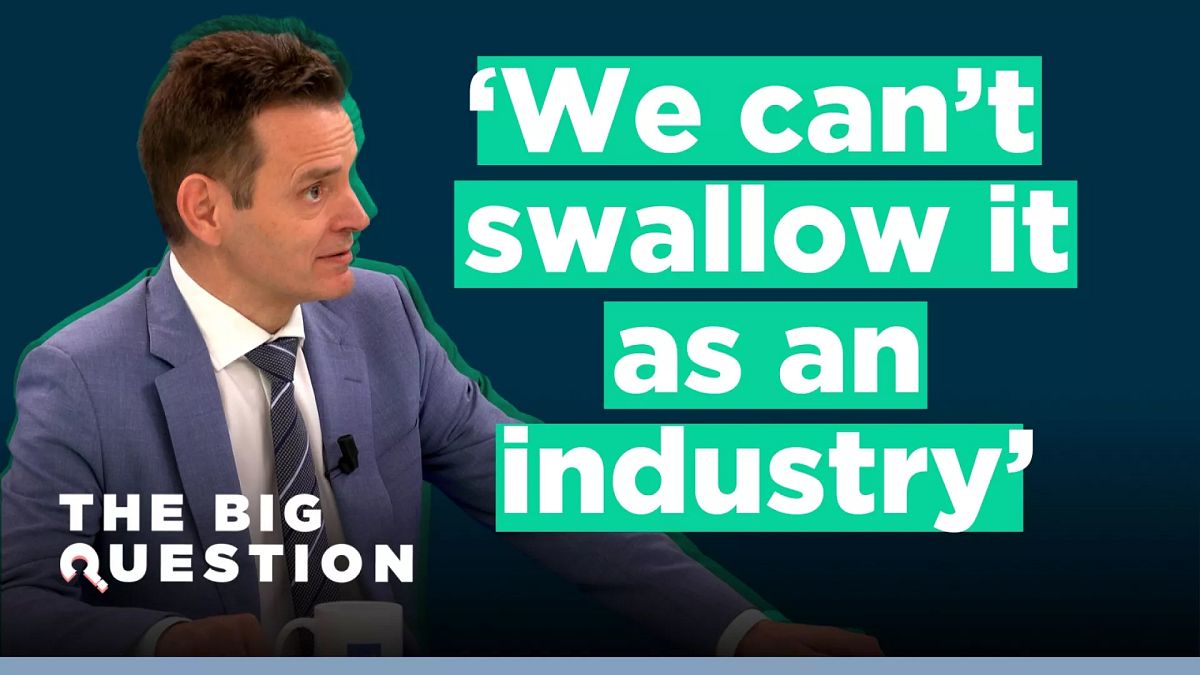
“We can't actually swallow it as an industry because if I need to double investments - €30 billion - this is not a margin we're making,” Leonhard explains.
Why do we need to invest in Europe’s electricity infrastructure?
“Electrification is a way to decarbonise. It's a way to get more secure. It's also a way towards affordability,” Leonhard told The Big Question.
He highlighted his concerns over a stagnation in electrification rates across the bloc and said that he hoped the issue will soon be addressed by the new Commission.
“If we don't see electrification, then it just means that the transition becomes significantly more expensive,” he explained.
Currently some 23% of all final energy use in Europe is electric and 74% of that is coming from clean sources (50% renewable, 24% nuclear). To decarbonise, Europe will need to triple this.
ADVERTISEMENT“We have just started to electrify transport and mobility and we have just started to electrify heating and we have just started to electrify the industries. So there's a long way to go to reach 100%.”
But Leonhard remains both optimistic and excited about Europe’s future.
“The electricity infrastructure in Europe, in a global comparison, is actually very good. So it's not that we are starting from a bad base.
“We have what we need to run but I still believe that additional innovation will make the transition cheaper. We need lots of innovation to make it cheaper for customers.”
ADVERTISEMENTThe Big Questionis a series from Euronews Business where we sit down with industry leaders and experts to discuss some of the most important topics on today’s agenda.
Watch the video above for the full conversation on Europe’s electrification with E.ON.