

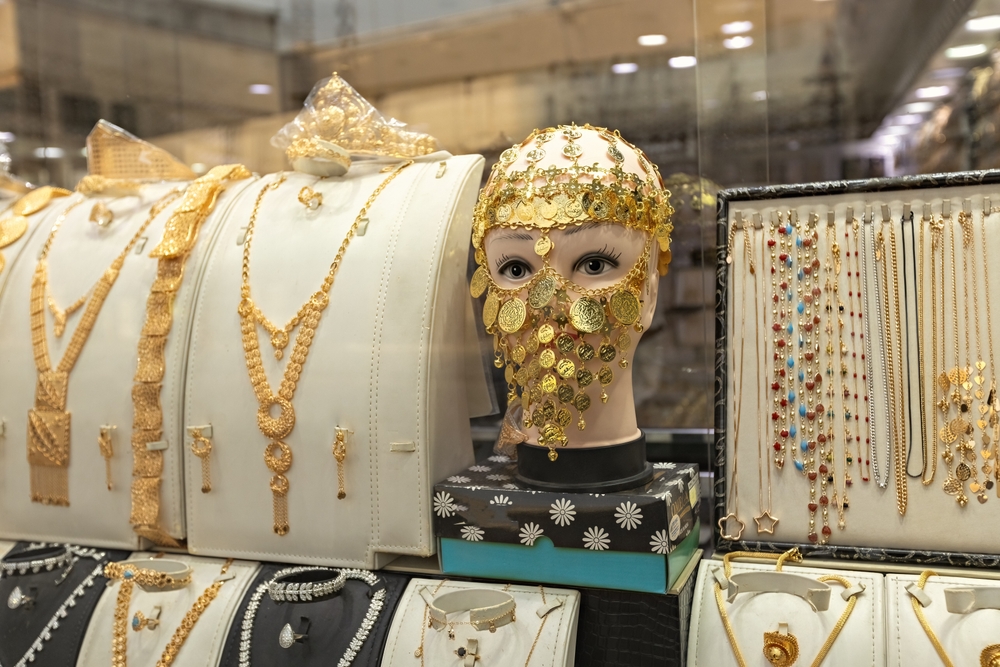
RIYADH: Saudi Arabia’s consumer spending remained above $3 billion in the week ended Oct. 24, with outlays on jewelry jumping 19.6 percent, official data showed.
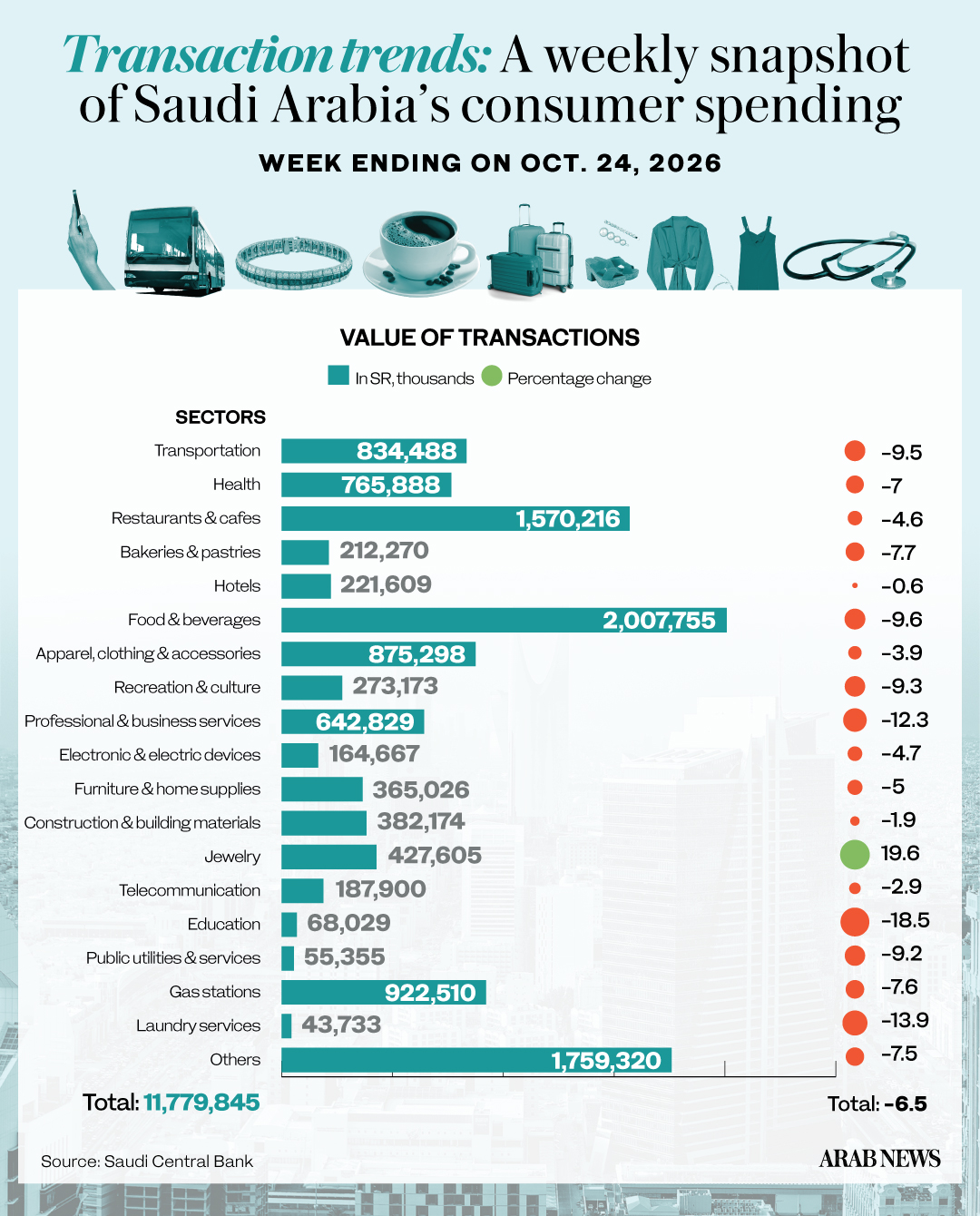
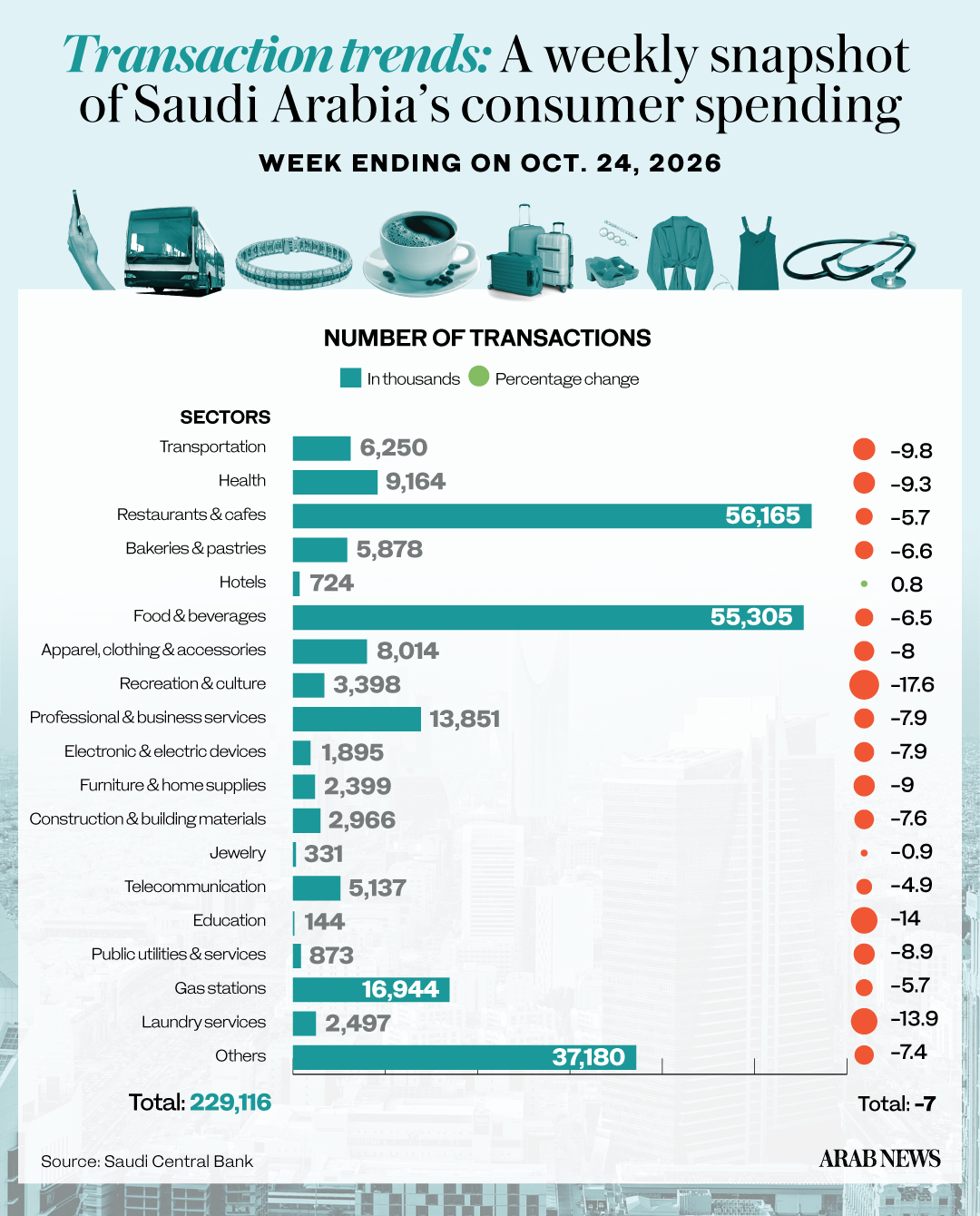
The Kingdom’s point-of-sale transactions totaled SR11.78 billion ($3.14 billion) during the seven-day period, down 6.5 percent from the previous week, while the number of transactions fell 7 percent to 229.12 million, according to the Saudi Central Bank, known as SAMA.
Jewelry was the standout category, reaching SR427.61 million, even as the number of transactions slipped 0.9 percent.
Weekly spending across all sectors has fallen steadily over the past month, declining from SR16.51 billion in the week ending Oct. 3, a drop of about 28.6 percent.
Economist Talat Hafiz said the drop “largely reflects the normal monthly salary cycle and the timing of household purchases.”
Speaking to Arab News, he added that consumers tend to spend more immediately after receiving their salaries, then moderate their spending as the month progresses.
“Some households may also have brought forward purchases of goods and services associated with seasonal spending, such as the beginning of the school year.”
Sectoral outlays
Spending on food and beverages fell 9.6 percent to SR2.01 billion, while restaurant and cafe saw a 4.6 percent decline to SR1.57 billion.
Outlays on apparel, clothing and accessories dropped 3.9 percent to SR875.30 million.
Gas station spending fell 7.6 percent to SR922.51 million, while the value of transportation-related transactions declined 9.5 percent to SR834.49 million.
In the healthcare sector, POS outlays stood at SR765.89 million, down 7 percent, while spending on professional and business services declined 12.3 percent to SR642.83 million.
Education-related spending fell 18.5 percent to SR68.03 million, with the value of payments on books and stationery dropping 13.2 percent to SR88.78 million. The number of transactions in the latter category fell 34.9 percent.
“Sector-specific factors may also be influencing spending behaviour,” Hafiz noted, adding that geopolitical developments in the region and elsewhere may be encouraging some Saudis and residents to postpone travel out of the Kingdom, particularly by air, as they feel more secure staying in Saudi Arabia.
“This could help explain softer spending in certain travel-related categories, although the weekly figures alone cannot establish that connection.”
Geographic breakdown
Riyadh accounted for the largest share of consumer spending at points of sale, with transactions in the capital reaching SR4.21 billion, down 4.6 percent from the previous week.
The number of transactions fell 4.9 percent to 77.57 million.
Jeddah recorded POS spending of SR1.60 billion, a decline of 4.4 percent, while the number of transactions stood at 26.15 million.
In Dammam, consumer outlays totaled SR601.50 million, down 6 percent. Makkah recorded SR468.19 million, a decline of 7 percent, while Madinah registered SR468.17 million, down 5.5 percent.
Hafiz said he would not interpret these weekly declines alone as evidence of weakness in the Kingdom’s economy. “My assessment is that they primarily reflect the timing of spending and adjustments in consumer behaviour.”