

You've Seen The Raspberry Pi CM4 In A Mini-ITX Case. Now Here's Four In A Mini-ITX Case
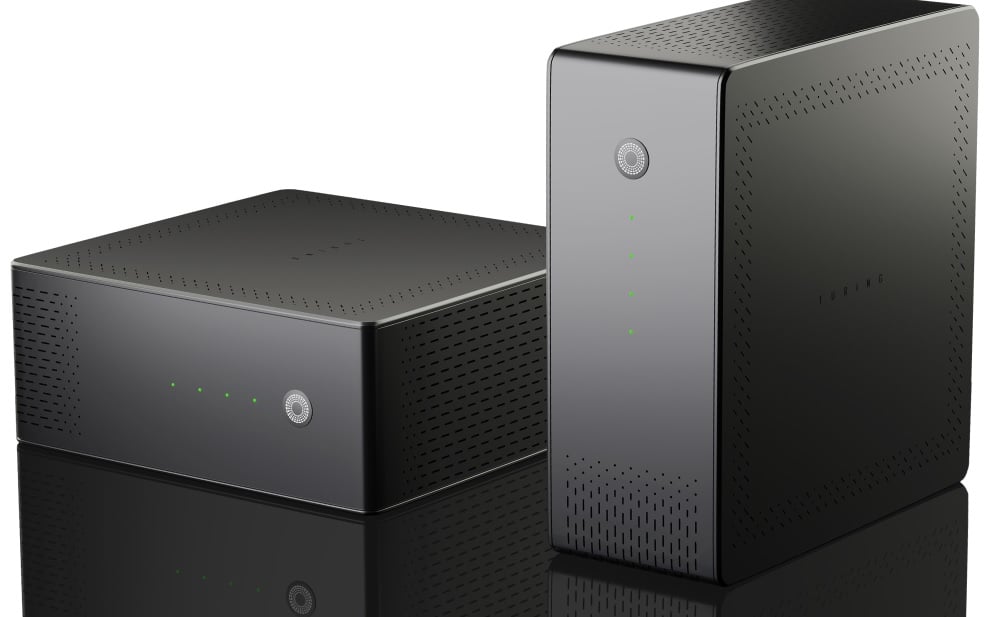
Keen on Kubernetes? It has been a long wait, but the Turing Pi 2 is finally close to shipping.
A year and a bit after the Raspberry Pi Compute Module 4 shipped, and one of our crafty commenters noticed that a new version was coming, the Turing Pi 2 board is close enough to shipping that zealous Pi-related YouTuber Jeff Geerling has got his hands on one.
Unlike the Alftel Seaberry we covered last month, this is not a Pi CM4 in a mini-ITX case. No, it's four Pi CM4s in a mini-ITX case. No need to imagine a Beowulf cluster of these: it's specifically designed to build such a thing, or more contemporaneously, a Kubernetes cluster of them.
Turing Pi 2
The Turing 2 is the successor to the Turing 1, which let you cluster up to seven Pi 1, Pi 3 or Pi 3+ Compute Modules. The snag was that even the CM3+ was a bit feeble, with only a gig of RAM and four 1.2 MHz Cortex-A53 cores. Even seven of them wouldn't form a very powerful cluster. Although it holds fewer boards, the Turing 2 is significantly beefier, with two Mini-PCIe slots, two SATA III ports, 12Gbps of interconnect bandwidth and a managed switch to manage intra-cluster communications.
A less apparent advantage over the Turing Pi 1 is greater choice of boards. While the older Pi Compute Modules presented an SoDIMM-style edge connector, the CM4 needs a carrier board. But that means that a number of devices with compatible connectors are available, so that the Turing Pi 2 isn't limited to Pi Compute Modules. You can also use the Nvidia Jetson Nano, Pine64 SOQuartz, or Radxa ROCK3 Computing Module.
- Want to buy your own piece of the Pi? No 'urgency' says Upton of the listing rumours
- Seaberry carrier board turns a Raspberry Pi into a desktop PC with 11 PCIe slots
- Do not try this at home: Man spends $5,000 on a 48TB Raspberry Pi storage server
- Linux 5.16 to bring mainline support to Raspberry Pi 4 Compute Module – and the nifty devices built around it
This isn't a desktop computer, and although you could certainly use it as one, it would be a waste of the device's potential. But it will make a fine inexpensive local K8s cluster, or as the manufacturers suggested back when it was announced, for prototyping workloads to deploy onto Amazon's ARM-powered AWS Graviton service.
You could be forgiven for forgetting, but there's more to life than Linux, of course. There are an assortment of other OSes for the Pi hardware, and with a little adaption, some would be ideal for this. There's a preliminary but usable port of the newly independent (from Nokia's Bell Labs) Plan 9 for the Pi 4. The successor to Plan 9, Inferno, is also cluster-capable, and there's an existing, lavishly documented RasPi port of that too. Some assembly required, though.
Looking for an idea for a radical tech startup? Port Google's Gvisor onto Plan 9's APE to make a super-lightweight K8s killer. Your correspondent just asks for a 1 per cent cut. ®
Gyrostat Capital Management: Why Risk Management Is Not About Predicting Risk
Why Risk Management is Not About Predicting Risk Financial markets reward confidence, but they punish certai... Read more
Gyrostat January Outlook: Calm At Multiyear Extremes
This monthly Gyrostat Risk-Managed Market Outlook does not attempt to forecast market direction. Its p... Read more
Gyrostat December Outlook: The Market Does The Work
Harnessing Natural Volatility for Consistent Returns Markets have always moved more th... Read more
Gyrostat Capital Management: Why Advisers Must Scenario-Plan Both The Bubble And The Bust
The Blind Spot: Why Advisers Must Scenario-Plan Both The Bubble and The Bust In financial m... Read more
Gyrostat Capital Management: The Hidden Architecture Of Consequences
When Structures Themselves Become A Risk In portfolio construction, risk is rarely where we look for it.... Read more
Gyrostat November Outlook: The Rising Cost Of Doing Nothing
Through the second half of 2025, markets have delivered a curious mix of surface tranquillity and instabi... Read more