

Markets Ran Ahead Of Tokyo: Yen Weakens As GPIF Expectations Meet Reality

Markets Ran Ahead of Tokyo: Yen Weakens as GPIF Expectations Meet Reality
Markets spent Friday pricing in a structural shift. Monday was about recognizing that the shift, if it comes, will probably take much longer than first imagined. That change in expectations left the Yen weaker across the board after reports indicated Japan has no immediate plans to revise the Government Pension Investment Fund’s benchmark asset allocation, despite the government’s ambition to steer more institutional money toward domestic assets.
Finance Minister Satsuki Katayama’s remarks last week about encouraging “substantially greater investments in Japanese financial assets” had sparked speculation that GPIF could soon redirect a significant portion of its enormous portfolio back into Japan. Investors quickly extrapolated that into stronger structural demand for Japanese assets, lifting both the Yen and government bonds. Officials have now clarified that any increase in domestic investment is expected to come within GPIF’s existing allocation bands rather than through an immediate overhaul of its medium-term investment framework. Chief Cabinet Secretary Minoru Kihara also reiterated today that the fund reviews its benchmark portfolio annually and only makes changes when market conditions justify them.
The broader policy direction therefore remains intact, but the timetable has changed. Rather than abandoning the idea of encouraging greater domestic investment, policymakers appear intent on pursuing it gradually. The market simply moved faster than the government expected. Monday’s Yen weakness reflects investors scaling back expectations of an imminent capital-flow shift, not abandoning the longer-term narrative that Japan wants more of its institutional savings invested at home.
At the same time, New Zealand Dollar received fresh support from improving domestic fundamentals. New Zealand’s services sector returned to expansion in June as the BusinessNZ Performance of Services Index climbed from 48.0 to 50.6, joining the recent rebound in manufacturing. According to BNZ’s Stephen Toplis, the combined surveys point to economic growth recovering toward 2.0%, suggesting the economy is returning to its pre-oil shock trend.
Those two stories have naturally converged in NZD/JPY. The cross is benefiting not only because the Yen has surrendered part of Friday’s gains, but also because New Zealand’s domestic outlook continues to improve. That combination creates a more convincing fundamental backdrop for the latest rally than one driven purely by shifts in risk sentiment or broad US Dollar moves.
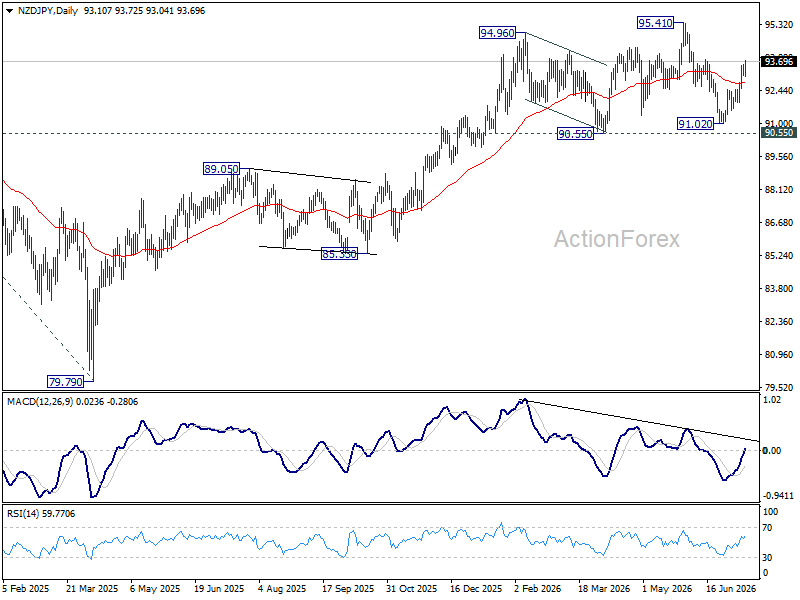
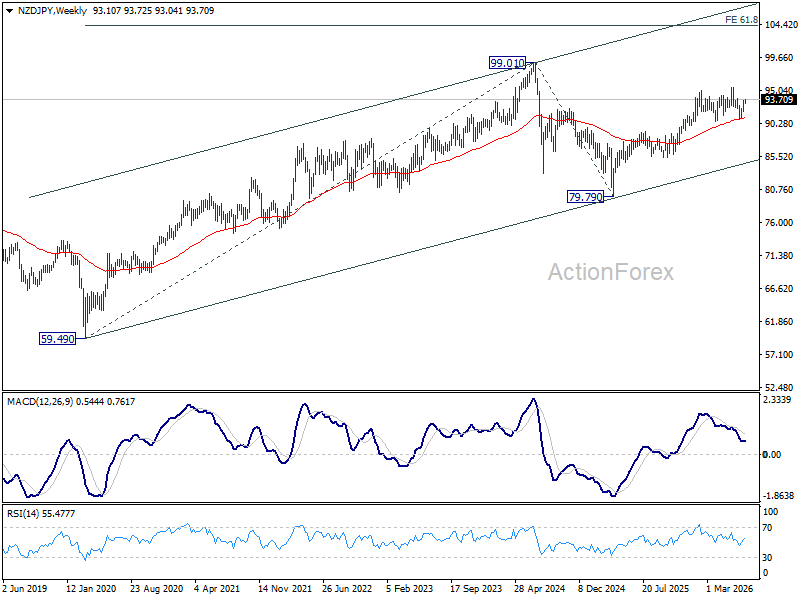
Technically, the extended rebound from 91.02 suggests the pullback from 95.41 has already completed after NZD/JPY successfully defended both key structural support at 90.55 and the 55 W EMA (now at 91.07). The broader uptrend from the 2025 low at 79.79 therefore remains intact.
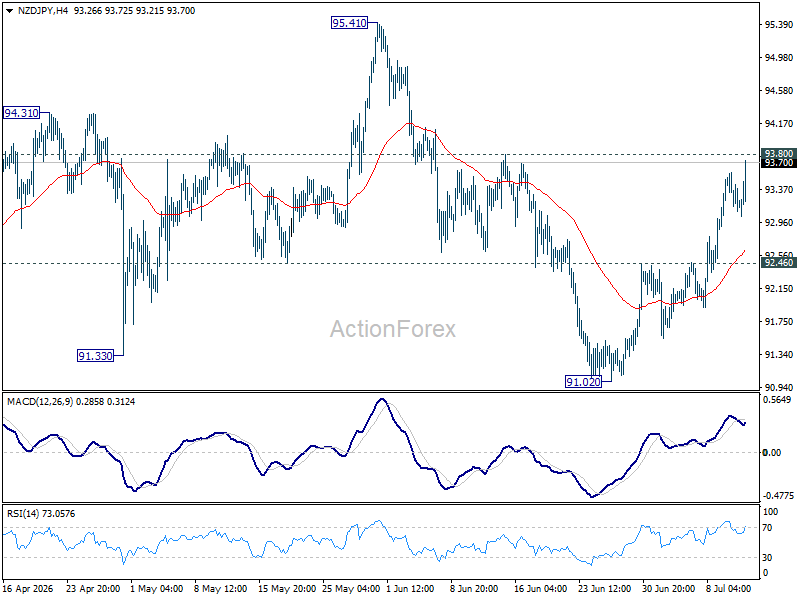
Immediate attention is on 93.80 resistance. A firm break would bring a retest of 95.41, while a decisive move above that high would resume the medium-term advance toward the 2024 peak at 99.01. On the downside, a break back below 92.46, now acting as initial support, would delay the bullish outlook and signal a prolonged period of near-term consolidation instead.
What A Rising VIX Means For Pension Funds
Wall Street’s latest selloff has moved beyond a technology-sector wobble and become a broad market event. The Nasdaq C... Read more
Behaviour Cannot Fix A Portfolio Construction Flaw
A Retiree Shouldn't Be Asked to Behave Their Way Out of a Portfolio Construction Problem Why behavioural coaching shoul... Read more
Behavioural & Retirement Portfolio Resilience
Behavioural Survivability and Retirement Portfolio Resilience Why the lived experience of market recovery matters as mu... Read more
Australia's Rate Rise Bites: Highest In 15 Years
The Reserve Bank of Australia has lifted interest rates to their highest level since 2011, and its governor admits the w... Read more
October Retirement Portfolio Resilience Assessment
Markets stabl Read more
Gyrostat September Retirement Portfolio Resilience Assessment
September Retirement Portfolio Resilience Assessment Markets have fallen. The price of risk has risen. ... Read more