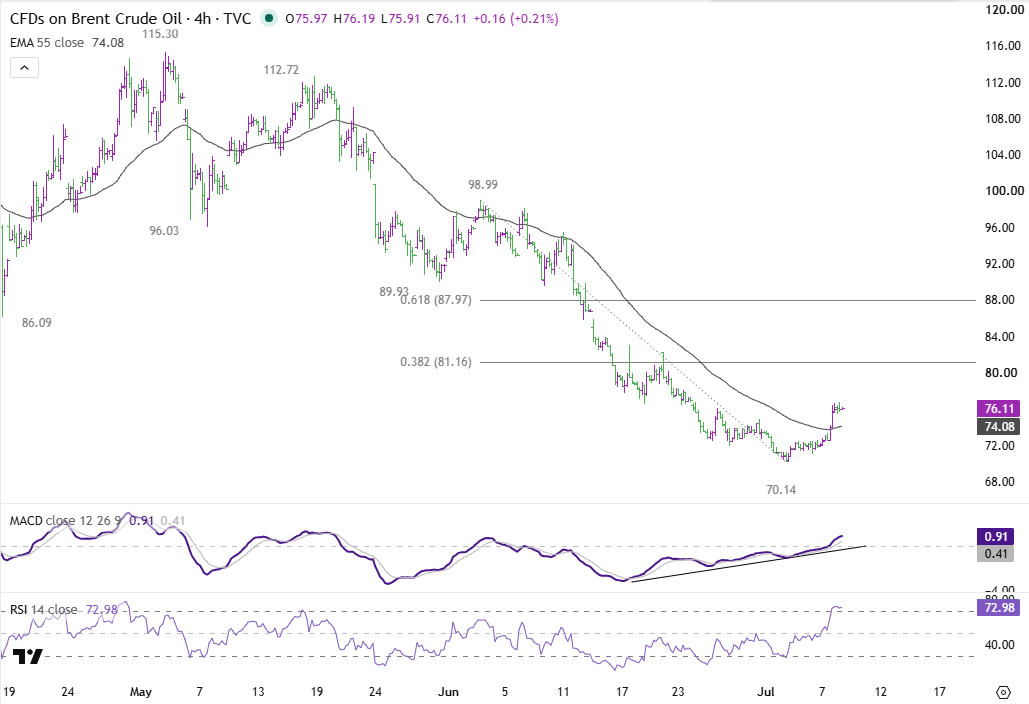

Fresh US airstrikes against Iranian targets finally gave oil bears a reason to blink. Brent crude rallied back above $76 after Washington retaliated for attacks on commercial shipping in the Strait of Hormuz, but the move was notable less for its direction than for its restraint. In another environment, military action involving one of the world’s most important energy chokepoints could have sparked a much larger surge. Instead, the market responded with what looked more like an orderly bout of short covering than a renewed scramble to price another oil shock.
That reaction makes sense given where positioning stood beforehand. Brent had already unwound almost all of its war-related gains as OPEC+ increased supply and shipping routes gradually normalized. Bearish sentiment had become increasingly entrenched after prices slipped back below $71. When fresh geopolitical headlines arrived, traders who had profited from that decline suddenly had a compelling reason to buy back short positions. The news created the catalyst, but the fuel for the rally largely came from positioning rather than a wholesale reassessment of geopolitical risk.
Markets have also learned something over the past three months. Since the April ceasefire, attacks on ships, drone strikes and military exchanges have occurred several times, yet each flare-up has ultimately given way to renewed diplomacy. That pattern matters because the ceasefire was never designed to eliminate every incident. The June 17 Islamabad Memorandum deliberately established a 60-day negotiation period and a coordination center in Doha to handle exactly these kinds of disputes while talks continue over sanctions, nuclear enrichment and frozen assets. Investors see individual confrontations as part of that process rather than signs the agreement is collapsing.
That doesn’t mean geopolitical risk has disappeared. It means the threshold for rebuilding a substantial war premium has become much higher. Today’s rebound suggests traders remain prepared to fade geopolitical shocks unless they begin threatening energy supplies in a more sustained way. For now, the market is responding to headlines tactically while still assuming the broader ceasefire framework survives through its mid-August deadline.
Technically, Brent’s break above the 55 4H EMA at 74.08 strengthens the case that 70.14 marked a short-term bottom. Additional gains are possible as remaining shorts continue to unwind, with 80 the next obvious target. Even so, 38.2% retracement of 98.99 to 70.14 at 81.16 is likely to cap the rebound. Unless prices break decisively above that zone, the current recovery is more likely to prove another leg within a broader consolidation than the beginning of a renewed uptrend.