

DUBAI: “Photography, for me, is a feeling,” Abdulmajeed Albalawi tells Arab News. “It was a feeling before it was a hobby and before it was work. The feeling of the picture, the feeling of the memory, the details of the place you are shooting in.”
The Saudi photographer was born in AlUla — a place that he says “inspires the lenses of photographers.” He continues: “Nature at every hour, night or day; the antiquities; Hegra; the heritage; the Old Town; and the oasis. Whoever loves nature photography will find nature there; whoever loves heritage, heritage is there. That variety gives AlUla its place as the city of photographers.”
He was in high school when he got his first camera. He took it on a trip to Taif and pointed it at his father.
“The first photograph I ever took was of my father, may God rest his soul,” he says. “It carries a big memory for me.”
He never trained formally. He began as a hobbyist and learned in workshops. “Any beginning is difficult,” he said. The hardest part? “Night photography, photographing the Milky Way and the stars — that was difficult for me at the start.” It is now the work he is drawn to most, and he runs training courses of his own with tourism bodies and school programs. However, he stresses, “There is nothing I do not like to photograph.”
Recognition has come steadily. He won the Saudi Colors photography competition in 2015. Three years later, at the Arab Tourism Media competition in Cairo, he took the award for best tourism photograph with an image taken at the Winter at Tantora festival. In 2023, he won an award for digital content creators working in social media.
Hegra, Winter at Tantora
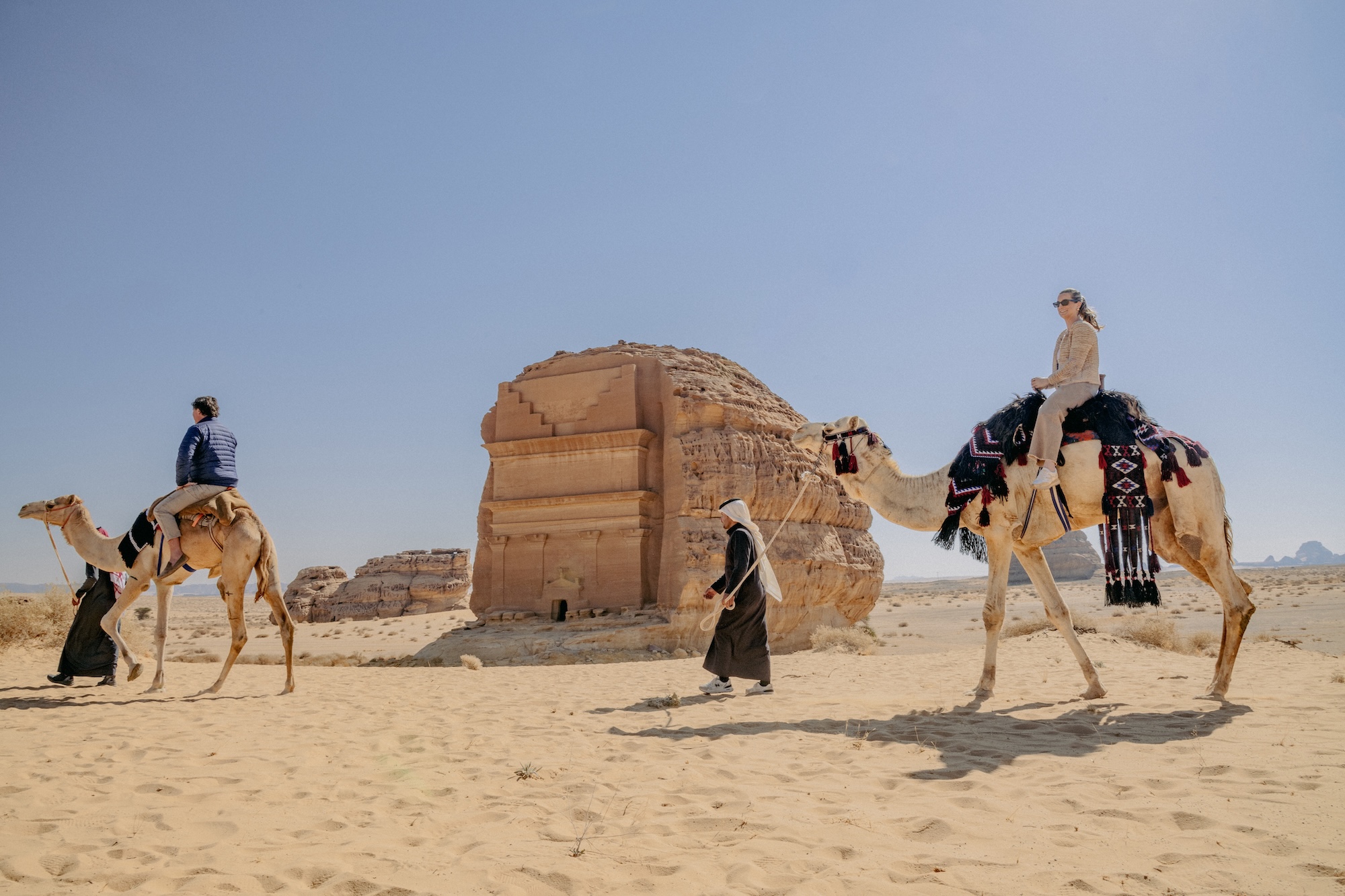
I took this during a visitor tour at the festival’s Ancient Kingdoms program, which tells the history of the place and of the caravans that passed through it. They brought the camels and put them in front of the tomb. These visitors were from outside AlUla — foreigners, from Europe. For the people in the frame it is a memory they keep, and it is one of the pictures that carries a fond memory for me too.
A night tour of Hegra
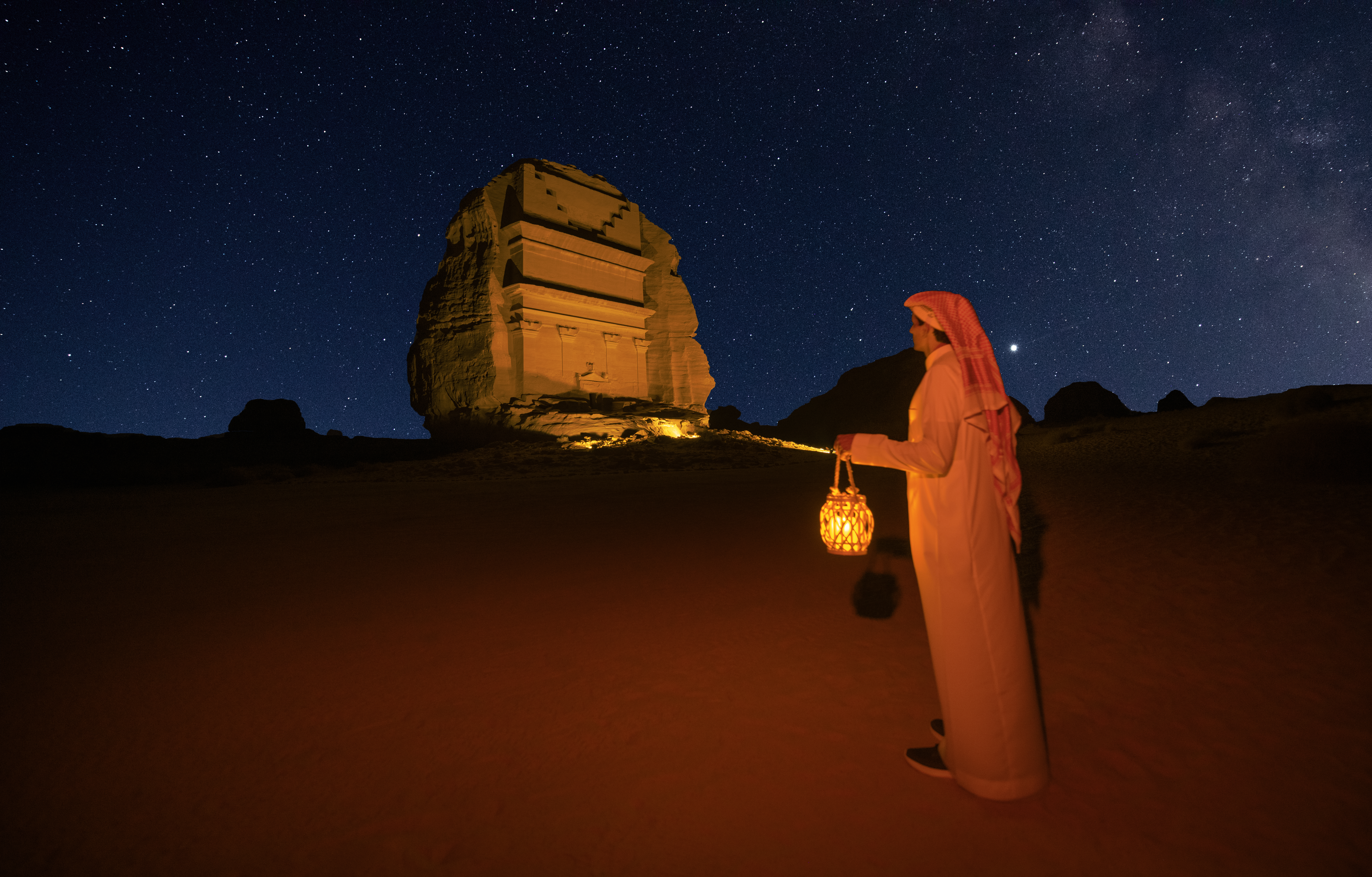
This was also taken during Winter at Tantora. There are night tours of the archaeological site where some visitors are given lanterns and walk through it in the dark, with a narrator who explains the history of the area to them. The man in this picture is one of the visitors. He is looking at the historic site of Hegra at night. Seeing it at night is not the same as seeing it in the day. At night there is quiet and stillness, and there are stars and the Milky Way. It’s a different feeling from the daytime tours. The sky above AlUla is full of stars, and the scene speaks to the history underneath it.
AlUla balloon festival
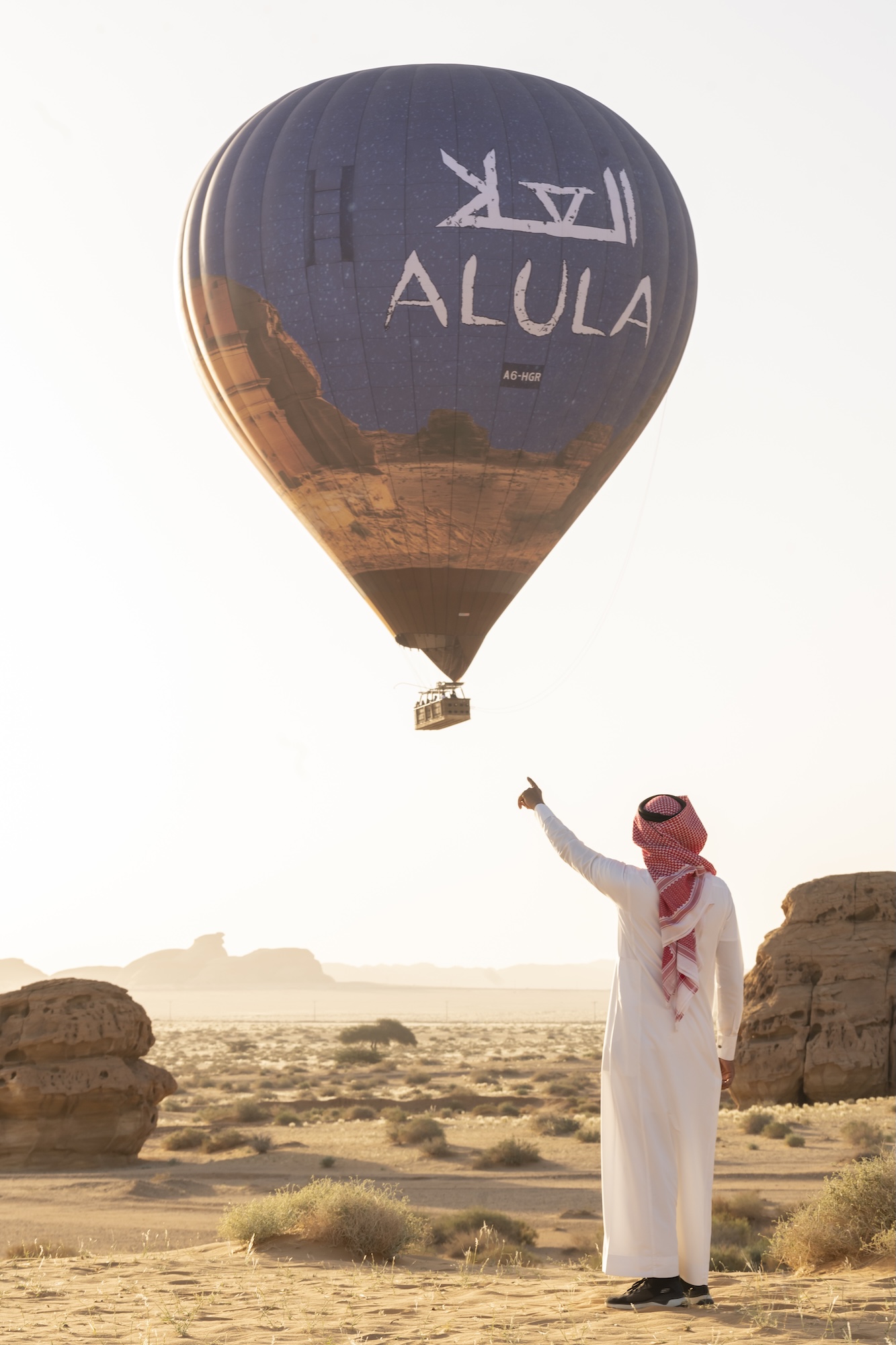
The balloon season here runs from around October through to February or March. They launch from above Hegra, so many of the visitors who are inside the archaeological area look up and see the balloons in the sky of AlUla. We go out for it at dawn. I have to be on site by five in the morning, and by half past seven or eight at the latest the balloons are coming down. I have shot it both ways — inside the balloon and standing on the ground as they take off. It makes for an historic scene, and a very enjoyable one to look at.
AlUla oasis
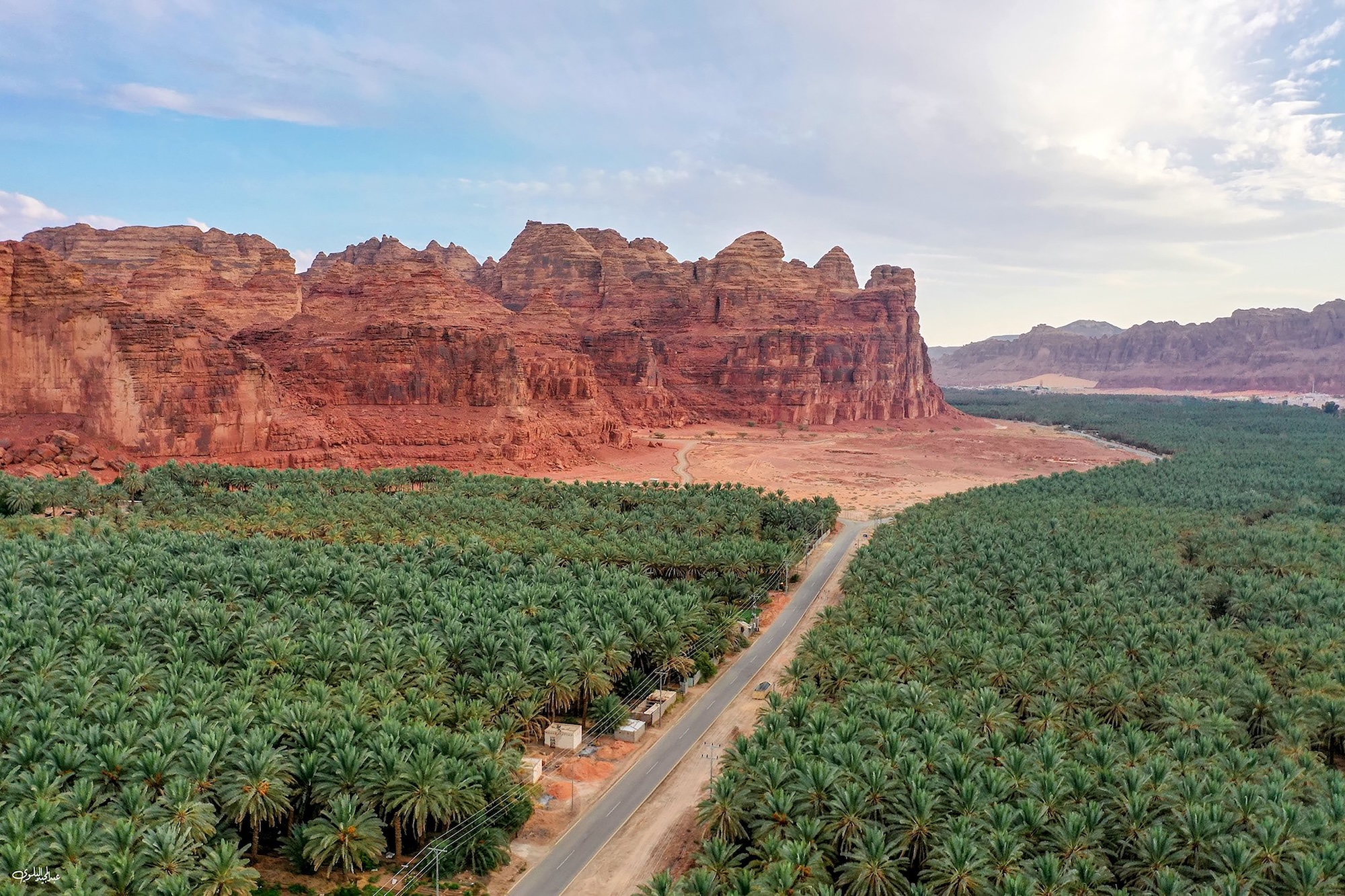
I took this with a drone over the oasis. What you notice first in this image is the green stretching out. The road running through the palms gives you the scale of it. The oasis sits beside a mountainous historic area close to Dadan, where the Lion tombs are. So the frame holds three things at once: an oasis, a mountain landscape and a historic site. That is what makes it a pleasure for the eye. AlUla is not only desert, and this picture is one way of saying so.
Maraya
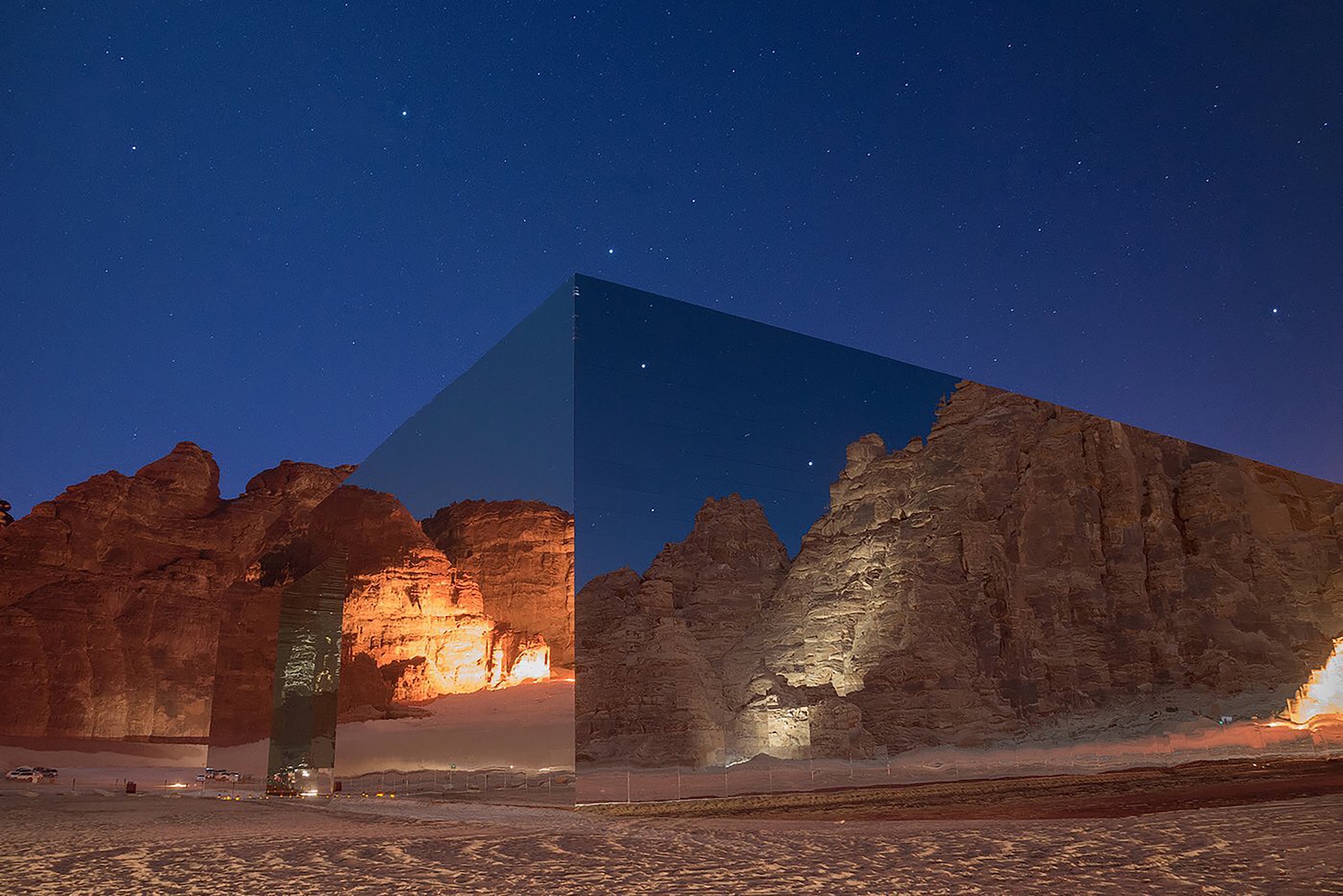
This was the first picture I took of Maraya — the world’s largest mirrored building — in AlUla. What I was after was the reflection; the whole facade gives you back the terrain around it, so the mountains appear on the surface of the building and the building almost disappears into what is behind it. Getting that at the right hour is the whole picture. I was fortunate to come away with it.
Al-Gharameel Nature Reserve
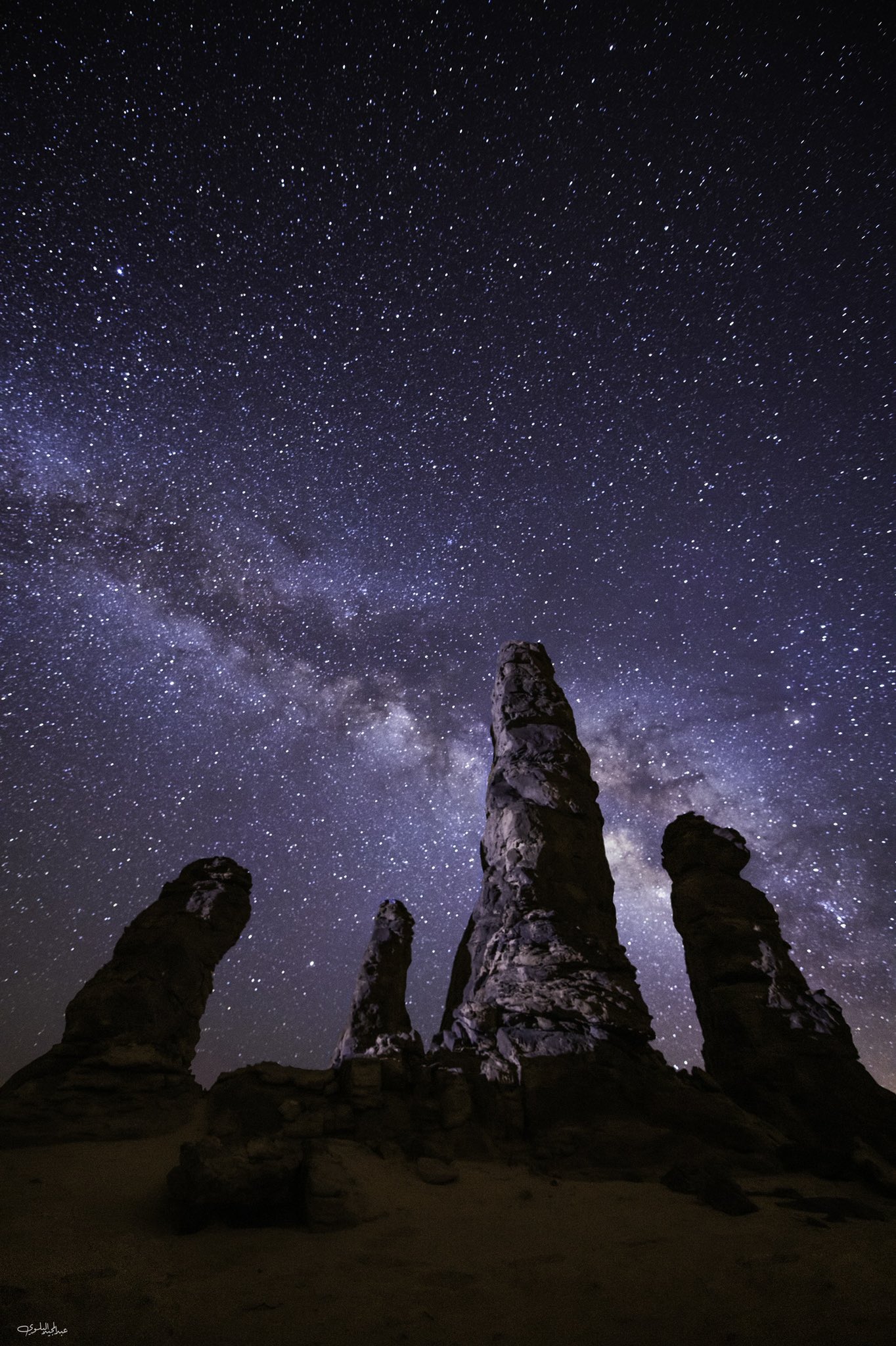
I took this around 2020, before the pandemic. It was made as two exposures: the first for the rock formations and the second for the Milky Way, and then I merged them into one picture. This is one of the skills a photographer has to know — you take one frame, then you take a second, and you blend them. Many photographers work this way. Night pictures like this one carry feeling for me. I always photograph the Milky Way and the night with something inside me.
The meteor at Al-Gharameel
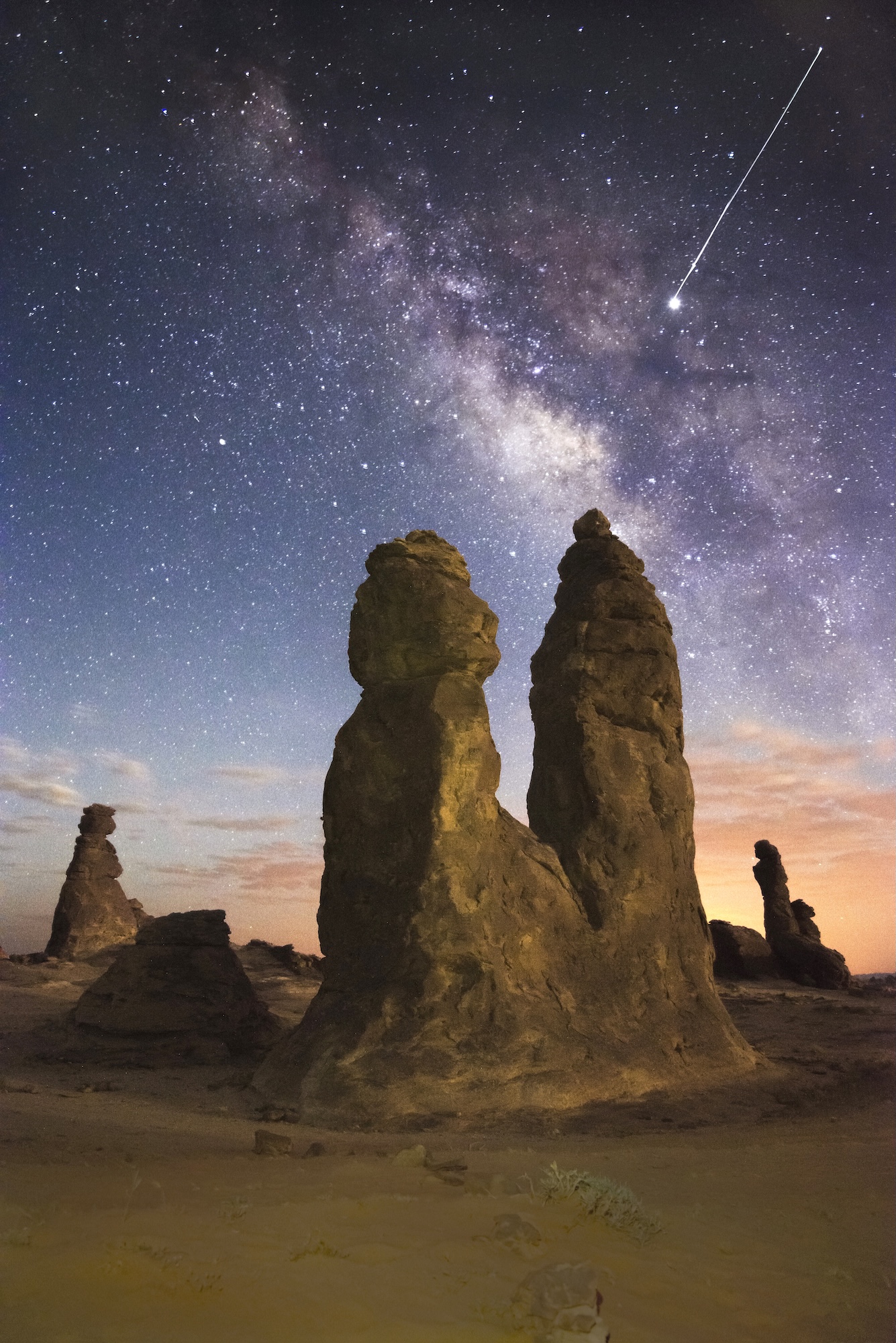
We went out for this in Ramadan 2018. A friend and I used to break our fast at Al-Gharameel. We went there and the moon was up. The moon is the enemy of the stars: with that light no stars appear, no Milky Way appears. I told myself I would not be shooting. My friend carried on. I waited until two in the morning, and then the moonlight began to fade and left just a little light on the rock, so I used that. I set the camera down and the Milky Way came out. I was shooting at 25 and 30 seconds a frame, and during one of the 30-second exposures a meteor crossed. I had not expected it at all. I shouted out loud: a deep joy. I felt I had won, that I had taken a picture out of despair. Now, when someone is dear to me, this is the picture I give them.