

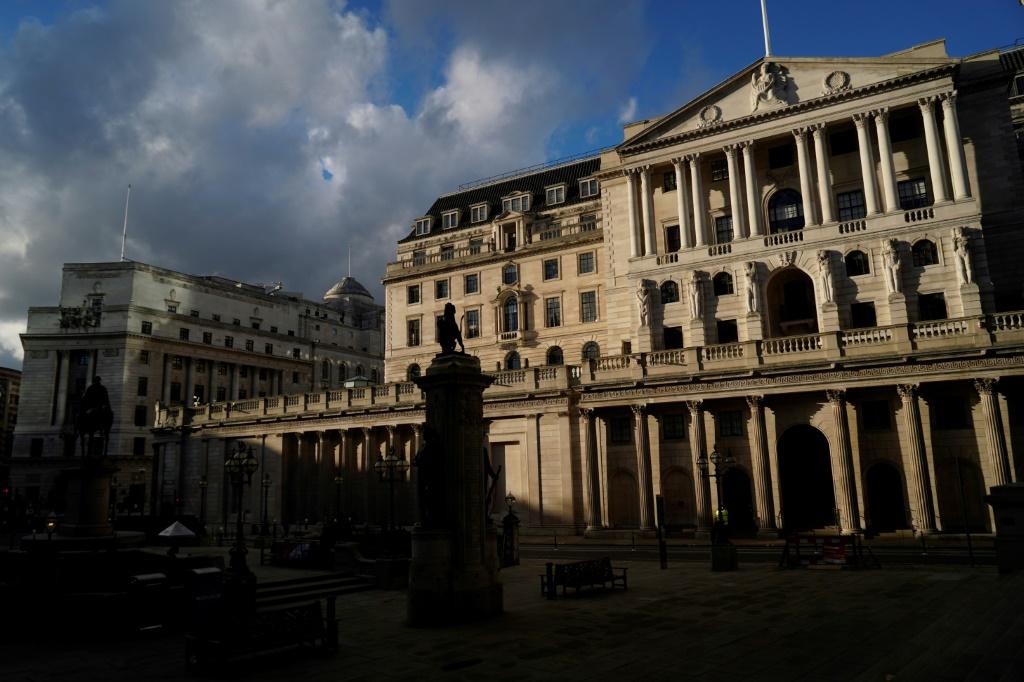
The Bank of England updates on its monetary policy and forecasts Thursday with eyes on the inflation outlook as surging prices worldwide pose a threat to economic recovery.
While the BoE is widely expected to keep its main interest rate at a UK record-low of 0.1 percent, it could detail how the central bank plans to begin tapering its emergency cash stimulus programme, or quantitative easing (QE), according to economists.
This is because Britain has lifted most lockdown restrictions, enabling its economy to press on with recovery despite worries over the fast-spreading Delta variant of the coronavirus.
At the same time, analysts said the BoE will be mindful of an expected jump in British unemployment after the UK government next month ends its furlough scheme that has kept millions of Britons in private-sector jobs during the pandemic.
The BoE announcements are due at 1100 GMT.
"The need for emergency stimulus measures is receding but the BoE is unlikely to taper QE at this meeting," noted ThinkMarkets analyst Fawad Razaqzada.
"It could nevertheless prepare the market for tapering in the months ahead. This is because inflation is expected to fall back after rising well above the Bank's 2.0-percent target," he added.
BoE governor Andrew Bailey and the bank's other policymakers have gathered this week for a regular policy meeting as official data has showed UK annual inflation soaring close to a three-year peak.
The Consumer Prices Index hit an above-target 2.5 percent in June as Britain lifted virus curbs.
Markets worldwide are on red alert over galloping inflation -- driven largely by surging oil and other commodity prices -- since it could force policymakers to raise interest rates sooner than expected, hindering the recovery.
The BoE's key task is to use monetary policy to keep annual UK inflation close to a British government-set target level of 2.0 percent to preserve the value of the pound.
"While the Bank of England will (Thursday) upgrade its near-term forecasts for inflation..., it will probably still judge that the rise is transitory," said Ruth Gregory, senior UK Economist at Capital Economics.
The Federal Reserve and European Central Bank also insist that high inflation will be temporary, causing no change to their own ultra-low rates and economic support measures.
As the pandemic erupted in March 2020, the BoE slashed its key interest rate to the current record-low level.
It also began pumping massive sums of new cash into the economy.
The bank has created ?450 billion ($627 billion, 529 billion euros) under its QE programme since March last year, when Covid-19 prompted Britain's first coronavirus lockdown.
Prior to this it had pumped hundreds of billions of pounds worth of QE into the UK economy over a decade following the 2008-09 global financial crisis and Brexit.
The central bank's total emergency stimulus package stands at ?895 billion.
Copyright AFP. All rights reserved.