

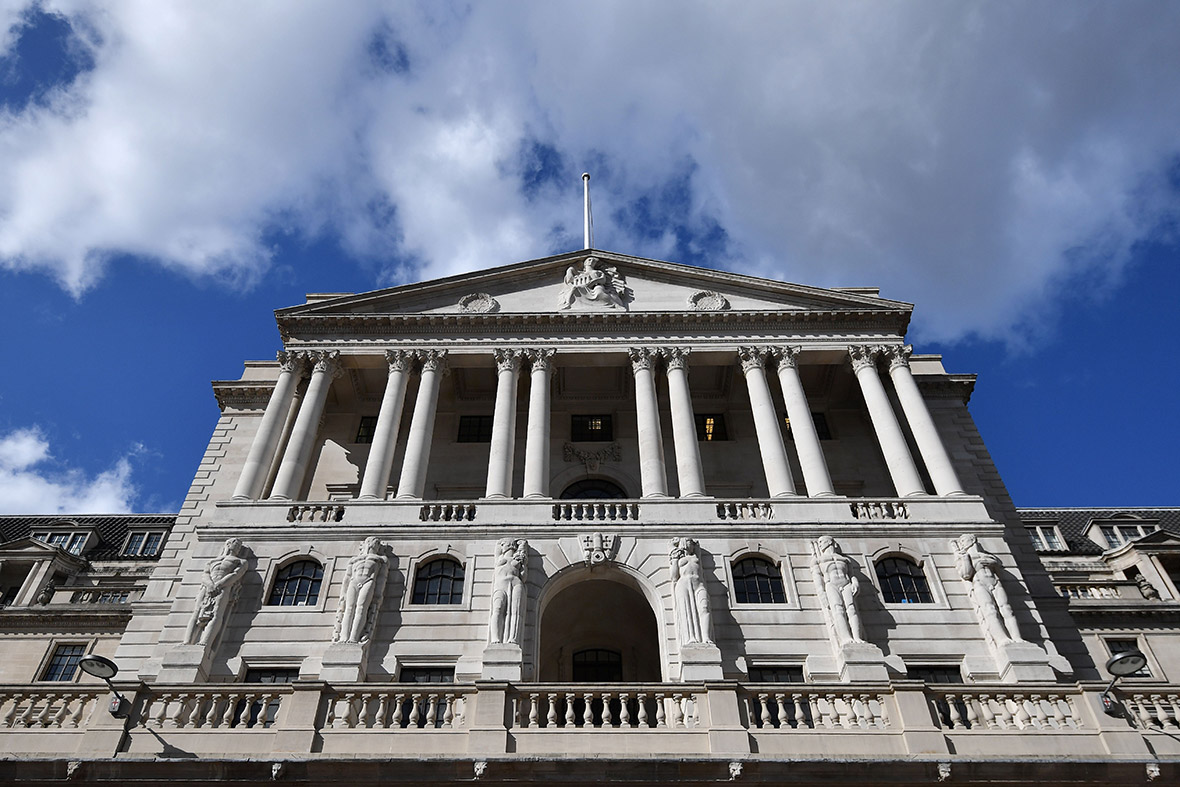
The Bank of England has kept interest rates unchanged at the Monetary Policy Committee (MPC) meeting today (14 December).
Britain's central bank last month raised interest rates for the first time in a decade, lifting the benchmark rate by 25 basis points to 0.50%. The rate had been stable at 0.5% from March 2009 to August 2016, when the MPC decided to reduce it by 25 basis points in the wake of dire survey data following the Brexit vote.
Today's decision, which was unanimous, was broadly in line with economists' forecasts and was supplemented yet again by a decision to maintain the central bank's asset purchase programme at £435bn, in line with market expectations.
The Treasury-backed Term Funding Scheme – instituted in August 2016 to reinforce the pass-through of the cut in interest rate back then and the purchase of UK corporate bonds – was also maintained. It will continue to February 2018.
The minutes of the MPC meeting, released in tandem with the interest rates decision, noted that "further modest increases" in the key rate would probably be needed over the next few years if the economy performed as expected.
Markets do not expect interest rates to be raised again until late next year and the BoE did not offer any details on the timing
Threadneedle Street officials also indicated that Brexit remained the "main challenge" for monetary policy. The latest developments had diminished the risk of a disorderly exit and were instead "likely to support household and corporate confidence", they said.
The Bank's decision comes just two days after figures released by the Office for National Statistics showed inflation climbed to the highest level in over five in and a half years in November. It rose 3.1% year-on-year last month, compared with the 3% growth recorded in October and September.
The figure was the highest level on record since March 2012 and will force BoE governor Mark Carney to write a letter to the chancellor explaining why price growth is so far above the BoE's 2% target.
Earlier this week, Britain's statistical office warned that wages continued to lag behind inflation.
Average weekly earnings rose by 2.5% year-on-year, in line with the figure analysts expected. The previous month's 2.2% gain was revised up to 2.3%.
Excluding bonuses, earnings grew 2.3%, marginally above the 2.2% forecast and the previous month's reading. However, when the impact of inflation is factored in, real weekly wages fell by 0.2% when including bonuses, and by 0.4% when excluding bonuses, compared with a year earlier.