

 ADVERTISEMENT
Sarah Faith is a content and values writer at activist travel company, Responsible Travel.
Europe boasts iconic big predators, spectacular birdlife, and some of the world’s last stretches of remote wilderness. So, swap the beach break for your binoculars and head out on a doorstep safari - because Europe’s wildlife needs your help.
According to the European Environment Agency, Europe’s biodiversity is declining at an alarming rate. But there’s hope. Rewilding projects across the continent are bringing life back where it’s disappearing and tourism can support them. Here’s where to see wildlife in Europe this year.
Spot beavers and whales in the Highlands and Islands, Scotland
“Across mainland Europe, there are many examples where nature is making a dramatic recovery, showing what is possible by giving nature more space and freedom.” says Peter Cairns, executive director of Scotland: The Big Picture, which has a vision to transform the Scottish wilderness through rewilding and the reintroduction of larger species like beaver, lynx, and even wolves.
“As wildlife returns, so too do people, who see increasing opportunities in rewilded landscapes.”
You can help make the economic case for wildlife on a small ship cruise to spot whales, dolphins, basking sharks, seals and seabirds around the Isle of Mull and surrounding islands.
White-tailed eagles are a highlight and their presence on Mull is a conservation success story, with 22 pairs of the previously extinct-in-the-UK bird now calling the island home.
A seven-day cruise to Mull, Islay, Luing, Shuna and Jura with St Hilda Sea Adventures costs from £1,330 (€1,560) per person.
Scotland’s doorstep safaris don’t stop there. The Cairngorms National Park - home to a quarter of Britain’s threatened species - is home to osprey, golden eagles, rutting deer, pine marten, and even wild cats.
Meet the people committed to preserving the Cairngorms for nature - and spot beavers - on a Scotland: The Big Picture rewilding journey. Four days in the Great Glen costs from £995 (€1,166) per person. All profits go towards the charity’s ongoing rewilding efforts.
Encounter brown bears in the Southern Carpathian Mountains, Romania
One of Europe’s last great wildernesses is found in the Alpine meadows, forests and towering peaks of the Southern Carpathian mountains. Romania boasts the largest brown bear population in Europe outside of Russia, alongside some of Europe’s best chances to see wolves and lynx.
Spot them from remote yet comfortable hides run by Foundation Conservation Carpathia which aims to turn the region into a European Yellowstone - a vast protected wilderness that will boost biodiversity and provide a sustainable income for local people in harmony with nature.
A four-day trip with Travel Carpathia costs from €460 per person, with all proceeds going to Foundation Conservation Carpathia. It includes three nights of full board accommodation at Comisu hide on the southern ridge of the Fagaras Mountains, and an expert local guide.
Whale watch responsibly in the Azores, Portugal
Towards the end of April and into May, Blue whales cruise the waters surrounding the Azores, filling up on plankton blooms on their annual journey north to the Arctic.
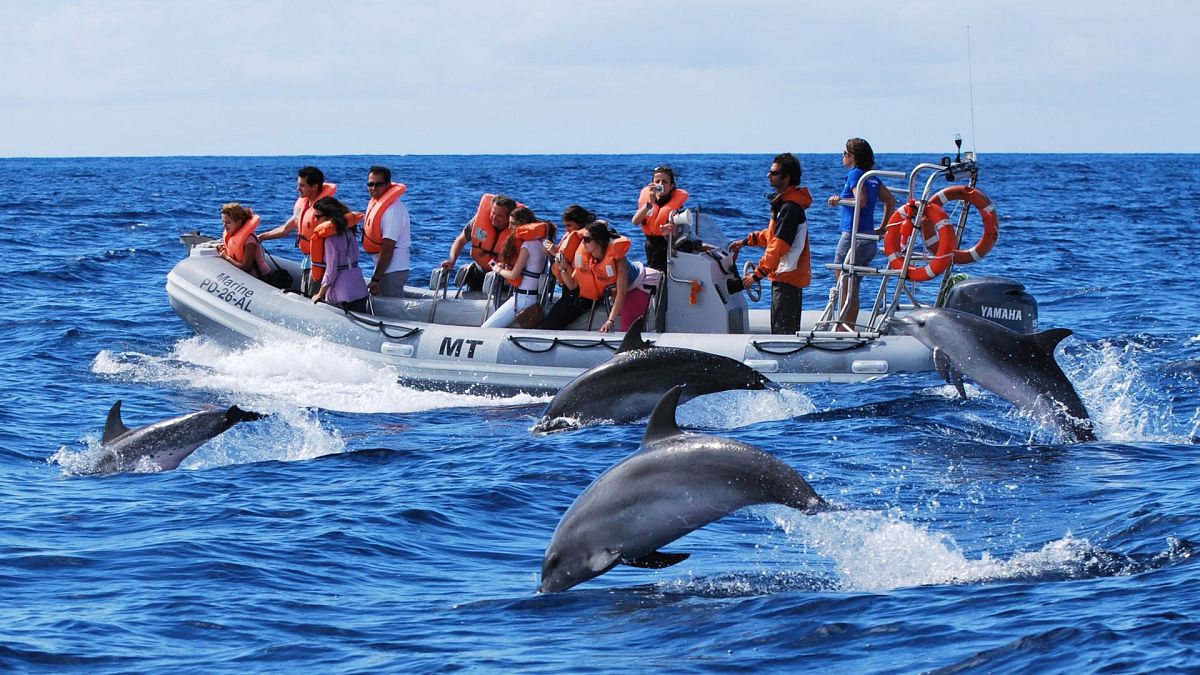
Portugal’s verdant Atlantic outpost offers some of the best opportunities in Europe to spot these enormous creatures - the largest on our planet - from the deck of a rigid inflatable boat.
Responsible whale watching tours won’t take you too close to these giants, ensuring you don’t disturb them as they travel, but expert marine biologist guides will give you the best chance of spotting them.
See them with the Dolphin and Whale Connection, on an eight-day Blue whale tour costing from £1,295 (€1,520) per person. If you miss the headline species don’t worry, there are plenty of other cetaceans - fin, humpback, and sperm whales, plus dolphins - to glimpse as well.
Catch sight of polar bears in Spitsbergen, Arctic Norway
In Norway’s rocky Arctic Svalbard archipelago, polar bears outnumber people, making this one of the best - and most accessible - places to catch sight of one of the world’s most iconic species.
ADVERTISEMENTBut, travel to one of Europe’s most fragile environments needs careful thought. The effects of climate change are more pronounced here: Spitsbergen is warming up at six times the global average, causing glaciers to retreat and sea ice to disappear.
On a small ship cruise with Aqua Firma you’ll travel under sail power where possible to minimise the carbon footprint of your trip. Polar bear sightings are common, alongside walruses, seals and seabirds. An eight-day full-board adventure costs from £2,607 (€3,055) per person.
Protect endangered Loggerhead turtles in Kefalonia, Greece
Every year, Loggerhead turtles migrate to Kefalonia to breed, laying their eggs on the soft sand beaches on the south of the island. Travel in May to mid-August to catch a glimpse of the females coming ashore, and from August to October for a chance to spot hatchlings making their way down to the sea.
But, with increasing pressure from coastal development, these turtles are now endangered. You can help protect them on this volunteering holiday with POD Volunteer.
Spend two weeks monitoring and protecting turtle nests, recording light pollution levels, observing turtle behaviour, and helping hatchlings make their way safely to the sea. Costs from £649 (€760) per person.
ADVERTISEMENTWalk on the wild side in Andalucia, Spain
Head inland from the costas for a taste of Andalucia’s wild side. Iberian lynx roam the oak and cork-covered hills of the Parque Natural de la Sierra de Andújar, an hour or so from Cordoba, while further south, the rocky and other-worldly Parque Natural Torcal de Antequera offers excellent sightings of Iberian ibex, Peregrine falcons and sparrowhawks.
For more birding wonders, the Fuente de Piedra lagoon - the largest lake on the Iberian peninsula - plays host to Europe’s second-largest colony of greater flamingo.
The lynx in particular are elusive, so you’ll need an expert local guide to stand a chance of spotting them. Join a local zoologist on a six-day trip with Royle Safaris, which costs from £1,495 (€1,752) per person.