

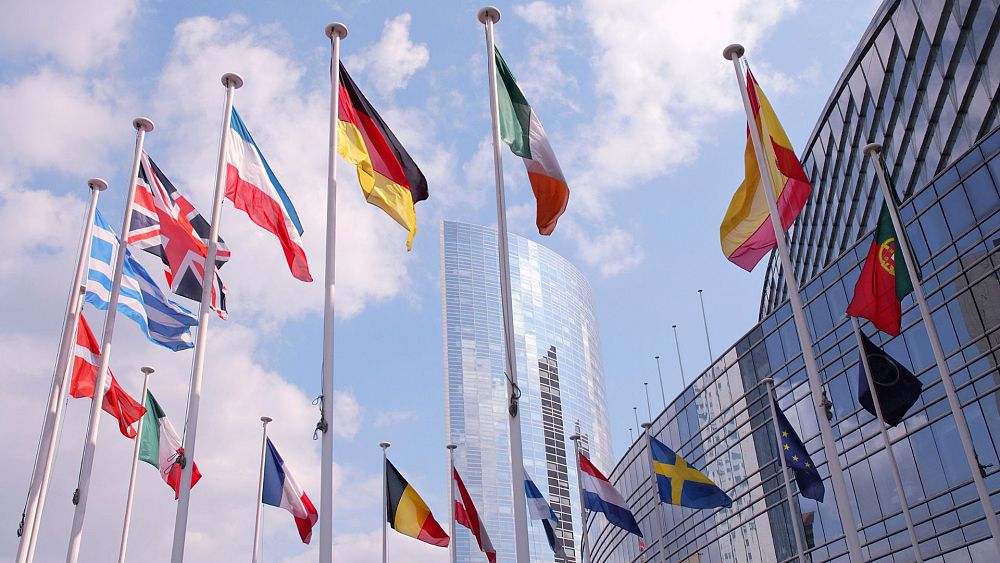
EU countries granted a record number of citizenships in 2021, new figures show.
A total of 827,300 people obtained citizenship in EU member states in 2021 - an increase of 98,300 on 2020.
The 14 per cent leap can be partly attributed to a pandemic-era backlog, but also reflects an upward trend on 2019, when 706,400 new citizenships were granted.
85 per cent of new citizens were not previously citizens of another EU country.
Which countries granted the most citizenships in 2021?
Spain granted the highest number of new citizenships in 2021, welcoming 144,800 new residents.
The country was closely followed by France and Germany (130,000 new citizens each), Italy (121,500) and Sweden (89,400).
Becoming a citizen can be a long and arduous process - but it’s not equally difficult across the bloc.
If you’re wealthy, several countries offer citizenship by investment schemes. People who purchase a property in Greece worth more than €500,000 can apply for citizenship seven years later - as long as they have lived there during that time and paid taxes. In Malta, you can get citizenship through investment in just 18 months, provided you can cough up €700,000 for real estate.
Most people become citizens through the more conventional route of naturalisation - living and working in the country for several years.
Which countries are easiest - and hardest - to get citizenship in?
In 2021, Sweden granted 10 citizenships per 100 resident non-nationals - the highest naturalisation rate in the bloc. Sweden was followed by the Netherlands (5.4 citizenships per 100 resident non-nationals), Romania (4.6), Portugal (3.7) and Belgium and Spain (both 2.7).
In some parts of Europe, getting citizenship is uncommon, even for people who have lived there for years.
Lithuania granted just 0.2 citizenships per 100 resident non-nationals, followed by Latvia (0.3), Estonia (0.5), and Czechia, Croatia and Slovakia (all 0.7).
Immigration rules vary significantly from country to country. In Austria, for example, you have to be resident for at least a decade before you are eligible for citizenship - and must to learn to speak German to a high school standard.
Are countries granting more citizenships than they used to?
Most countries are granting more citizenships than they have in previous years. France granted an additional 43,900 citizenships in 2021 compared to in 2020.
Germany recorded the second largest increase in absolute terms (18,800 extra citizenships in 2021), followed by Spain (an additional 17,700), Sweden (an additional 9,200) and Austria (an additional 7,200).
However, 10 EU countries recorded a decrease in the number of citizenships granted. Italy granted 10,300 fewer citizenships in 2021 compared to 2020.
Relative to local population, Sweden granted the highest number of citizenships, at 8.6 per 1000 people, closely followed by Luxembourg (7.8 per 100 people) and the Netherlands (3.6 per 1000 people). This is different to the ‘naturalisation rate’ - it compares the number of new citizens to the whole population, not just resident non-nationals.
Who are the EU’s new citizens?
Most of Europe’s new citizens come from Morocco and Syria.
86,200 Moroccans were granted EU citizenship in the EU, making up 10.4 per cent of new citizens. More than two thirds (71 per cent) of these people became citizens in Spain or France.
Syrians are the next largest group of new citizens (83,500, 70 per cent of whom settled in Sweden and the Netherlands), and Albanians (32,300, 70 per cent of whom settled in Italy).
Albanians were followed by Romanians (3.5 per cent of the total), Turkish people (3.1 per cent), Brazilians (2.5 per cent), Algerians (2.3 per cent), and Ukrainians (2.2 per cent).
The median age of new citizens in the EU was 32. About a quarter were children between 0 and 14 years old.