

 ADVERTISEMENT
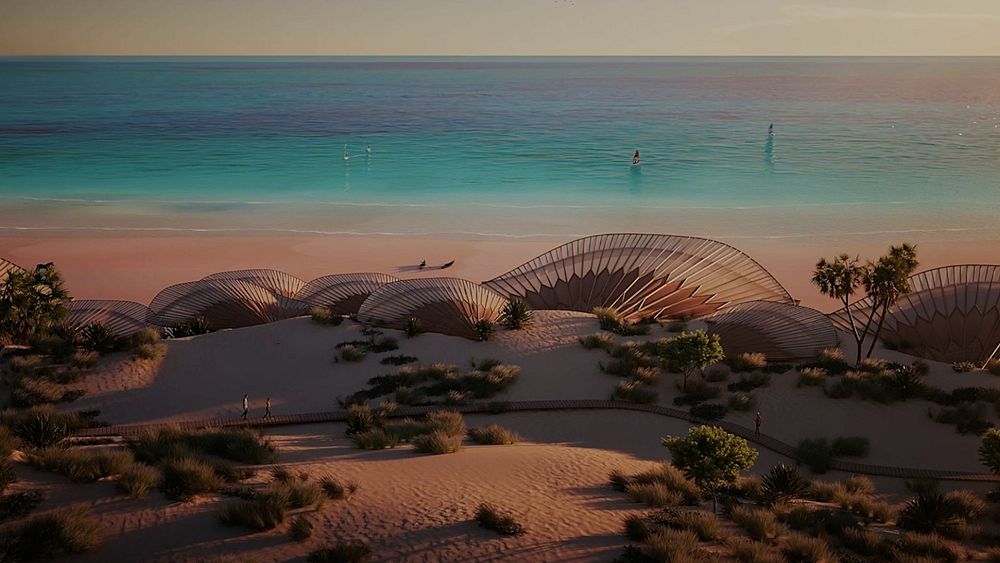
Developers plan for the whole site to run on 100 per cent solar energy and send zero waste to landfill. They’re also capping the amount of visitors at one million a year.
A major part of the region’s attraction to travellers is its long, sandy coastlines, and azure waters. But what’s beneath the waves might be the most exciting thing of all. Coral reefs and diverse marine life are plentiful here and will prove a big draw to aqua fanatics - particularly scuba divers.
So could the Red Sea’s extensive projects turn them into the next big diving destination? Quite possibly.
Why Saudi’s dive sites will challenge Egypt’s status
The Red Sea’s confidence in the quality of its scuba diving locations isn’t unfounded. You only have to look across the water to Egypt’s shores to see some of the most popular diving resorts in the world.
Hurghada and Sharm el-Sheik have long been lauded by divers as among some of the best areas on the planet, boasting multiple wrecks, colourful coral, curious geology and an outstanding abundance of marine life.
As an untouched side of the Red Sea, there’s a lot of potential in Saudi Arabia. Plus, unlike some of Egypt’s more popular resorts, the Red Sea is planning to minimise divers’ impact on the reefs and exercise strict control over its use.
Galaxae, a subsidiary of Red Sea Global, will oversee all diving activities in the area. Working with the Professional Association of Diving Instructors (PADI), they plan to ensure that sites aren’t overtaxed and aim to maintain the integrity of the marine ecosystem.
“It's not open to everybody; dive companies can’t just come and set up,” John Pagano, Group CEO of The Red Sea, explains.
“This is very much under control because we want to ensure that the sustainability ethos of the company is maintained and that we protect this very precious environment.”
What is there to see for scuba divers in Saudi Arabia’s Red Sea?
While Pagano can’t name the best sites to see just yet – “We've identified numerous sites; we have a 2,500 square kilometre archipelago which is surrounded by a barrier reef” – the possibilities are enticing.
Last year, a research study of the Al Wajh lagoon (a 2,081 square kilometre area including 92 islands) revealed an incredible amount of diverse habitats and marine life. Some of these included critically endangered species such as the Halavi Guitarfish and Sooty Falcon. It also revealed an eight-metre-high coral colony thought to be nearly 600 years old.
In the future, there’s hope divers will be able to explore the 18th-century ‘merchantman’ shipwreck, believed to be the best-preserved wooden shipwreck in the Red Sea. The wreck still holds cargo from its journey, including jars, porcelain and some of the spices it was carrying.
Saudi Arabia is taking a sustainable approach
Pagano also shared some of the efforts developers are making to protect the destination’s best assets, such as their mangrove mangals and coral reefs.
“We've committed ourselves to growing 50 million new mangrove trees,” he explained. “In fact, the first million we've already planted are in the process of being transplanted to different locations.”
Mangroves are huge carbon sinks and a valuable asset to the fight against climate change. Wherever developers encounter mangrove fringes, they work around them to maintain the integrity of the valuable trees.
When it comes to protecting the coral reefs, builders choose locations strategically to avoid damaging, or overshadowing, existing reefs. They also use silt curtains to avoid disturbing the seabed and prevent silt from landing on the corals.
Like many other locations around the world, The Red Sea also employs coral farming to assist in reef rejuvenation.
Perhaps most notably though, the Red Sea resorts (?) will be the largest destination in the world to be powered by 100 per cent renewable energy. A 750,000-strong solar panel farm has already been installed as part of the first phase in bringing this goal to fruition.