

 ADVERTISEMENT
The selfie craze is now more lethal than shark attacks. A study published in the Journal of Travel Medicine in 2022 uncovered 379 selfie-related deaths over the previous 13 years.
Among these, 140 tourists tragically snapped their final photo. Meanwhile, only 90 fatal encounters during the same time frame involved sharks, primarily unprovoked.
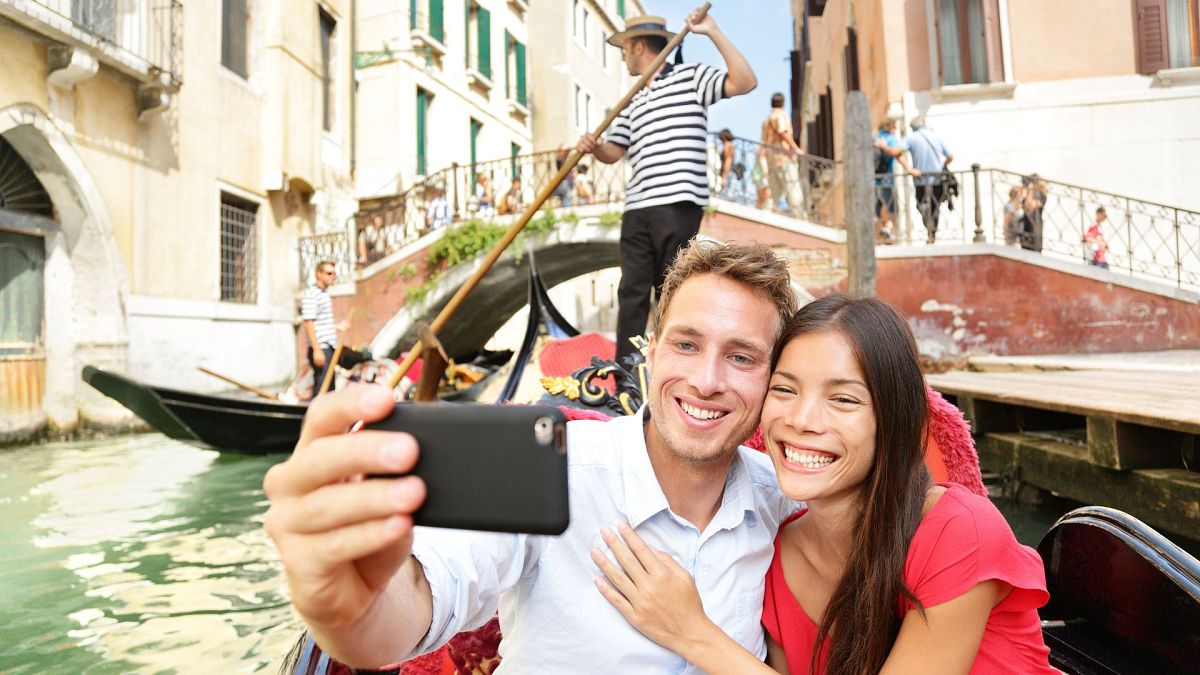
Just last month, a gondola capsized in Venice, Italy when a group of tourists refused to stop taking selfies and sit down. Right before the accident, the gondolier asked the group not to move around while he attempted a tricky manoeuvre under a low bridge. Thankfully, no one was injured.
The pursuit of the perfect selfie for social media has led tourists into a realm of extreme risks, resulting in tragic incidents, including fatal falls from cliffs, accidents with cars and trains, dangerous wildlife encounters, and unforeseen drownings.
As a result, tourists are now being hit with hefty fines and jail time for engaging in the dangerous, disruptive, and destructive action of taking selfies too far.
In December, a 24-year-old woman was tragically killed while attempting to take a selfie on the edge of the Prabalgad Fort in India. She fell 60 metres into a gorge.
During the 2023 Tour de France, a spectator attempting to take a selfie with passing riders clipped the handlebars of an American cyclist, causing a 20-rider pile-up during the 15th stage of the race.
Portofino in northern Italy placed a temporary selfie ban in some areas of the city last year to prevent overcrowding on its narrow streets. The ban was enacted after what was described as 'anarchic chaos' caused by tourists blocking traffic to take photos.
Risking your life for the perfect photo
Taking the perfect photo for social media often leads to risky behaviour fuelled by the desire to stand out in a crowded landscape. Spurred by the desire for likes, shares and fame, dangerous selfies continue to increase in popularity. The quest for the best photo can lead individuals to ignore safety warnings or venture into unsafe places.
Of the 379 selfie-related deaths worldwide between 2008 and 2021, 37.2 per cent were travellers, as opposed to locals. Falls from height made up 49.9 per cent of all deaths, followed by transport-related (28.4 per cent) and drownings (15.3 per cent).
The average age of selfie victims during this time period was 24.4 years old. Women were more likely to be fatally injured in falls from heights and animal encounters, while more men were killed in transport-related risks. Countries with the highest number of selfie deaths included India (26.4 per cent), the United States (10.3 per cent), and Russia (8.7 per cent).
What’s worse, according to a study by the Journal of Family Medicine and Primary Care, selfie-related deaths are most likely underreported as they are not usually listed as the cause of death.
Dangerous selfies are a public health issue
According to scientific analysis from the University of New South Wales (UNSW) in Sydney, Australia, the media tends to portray dangerous selfie-taking as foolish and selfish, often blaming the victim. However, selfies are now a regular part of everyday life, and these scientists assert that the act of taking risky selfies should be addressed as a public health issue.
Similarly, previous generations considered driving without a seatbelt, riding a bike without a helmet, and smoking cigarettes 'normal' everyday activities that are now public health hazards.
By recognising these risky behaviours as public health issues, we stop blaming and shaming and instead begin to take steps toward prevention and education.
This would be a step further than past decisions to designate dangerous tourist areas, such as bodies of water, mountain peaks, and tall buildings, as 'no selfie zones'.
The destinations restricting selfie taking
Japan’s JR West Railway Company banned selfie sticks on its platforms to prevent electrocutions from overhead wiring and falling onto the tracks.
After a string of selfie-related accidents in Mumbai, India, the government enacted no selfie zones in certain areas of the city, including some beaches, festival sites and tourist attractions. In Pamplona, Spain, taking selfies during the annual Running of the Bulls is illegal due to previous gorgings.
ADVERTISEMENTIn the United States, New York passed a bill banning selfies with wildcats unless there is a physical barrier between the person and the animal. Similarly, visitors to Lake Tahoe have been asked not to take bear selfies, as turning your back near a bear is extremely dangerous.
The popularity of selfies, especially among younger demographics, led to a rise in accidents and fatalities.
Some places have implemented warning signs, restricted access to hazardous areas and conducted awareness campaigns. But these steps may not fully address the underlying issue of risk-taking behaviour for the sake of social media recognition.
More effective and innovative approaches need to be implemented to address this modern-day safety concern.