

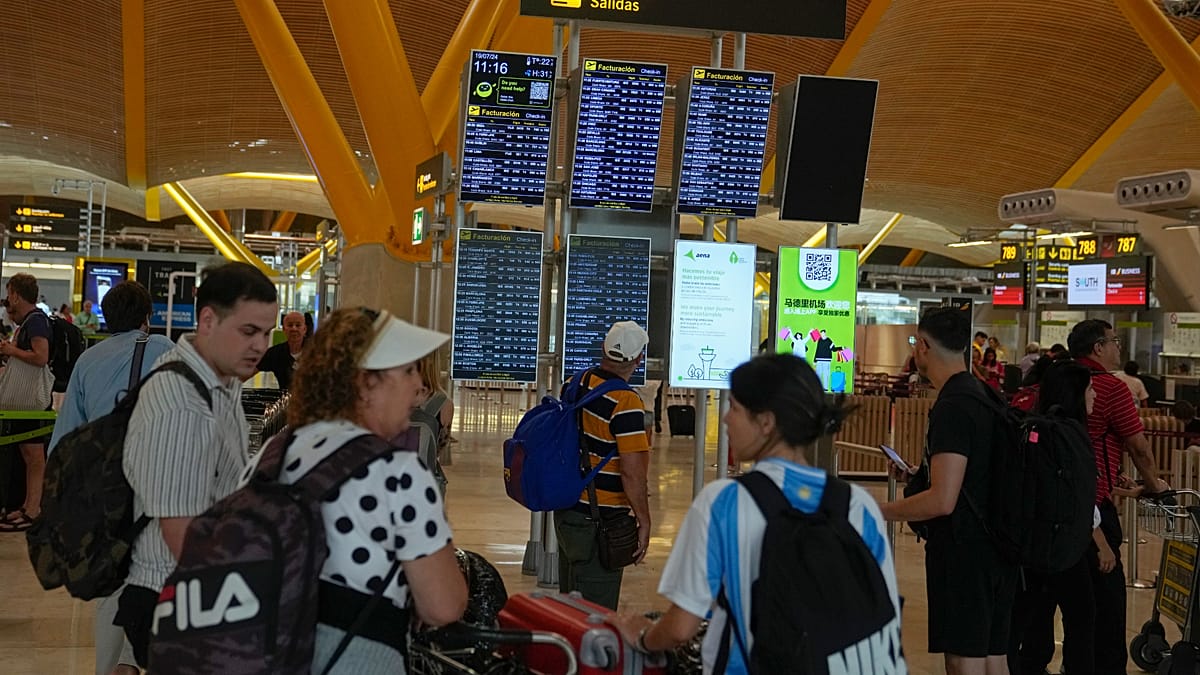
A full-blown row has erupted between Rome and Madrid after the Meloni government refused to accept the Spanish cabinet's ultimatum to lift border checks for people arriving in Italy from Spain. From Saturday morning, travellers entering Spain from Italy will be subject to the same measures introduced by the government in Rome on 1 August.
 ADVERTISEMENT
ADVERTISEMENT
ADVERTISEMENT
According to the information available, Spanish border checks will remain in place until 7 September, while on Friday the Italian government reiterated that the suspension of the Schengen agreement will remain in force at least until 15 August.
At the height of the holiday season, with thousands of people travelling between Italy and Spain and trips already booked, Madrid's retaliatory move is likely to cause confusion at airports and ports. It is a situation which, the authorities in Madrid have complained, Spanish citizens have already experienced on arriving in Italy, where they have been subjected to the checks imposed by Rome.
How border checks work in Spain
The Spanish government has explained that citizens arriving from Italy by air, sea or land may be subject to checks from midnight on Saturday 8 August. Travellers from the European Union will be asked to show an identity document, while non-EU nationals will also have to present a visa or residence permit.
Italian citizens can present a passport or a national identity card valid for travel abroad, but this must be in electronic format (CIE), because since 3 August 2026 paper identity cards have no longer been valid as travel documents.
Where checks are carried out
Identity document checks could lead to queues and delays, especially at the busiest hubs such as Madrid and Barcelona.
At airports, travellers may be checked at arrival gates or at boarding. For those arriving by sea, checks may be carried out at embarkation or during disembarkation. People entering Spain from Italy by car, after crossing France, may be stopped at the French-Spanish border crossing and asked to show their identity documents.
What to do when travelling with children or animals
Citizens travelling with children must ensure that minors also have identity documents. In Italy, documents are valid for three years up to the age of three, and for five years up to the age of 18. In addition, children under 14 are not allowed to travel alone. To travel to Spain with pets, an EU pet passport is required, issued by a vet, with identification via microchip and a valid rabies vaccination.