

 ADVERTISEMENT
Visitors to Albufeira may soon need to cover up when they walk around the popular coastal city under a new tourist code of conduct proposed by the city council.
Newly proposed rules mean fines of more than €1,500 could be issued if tourists are found wandering around the resort town in their swimwear.
Albufeira is the latest of several popular tourist destinations in Europe to adopt a so-called ‘bikini ban’.
The proposed rules target “excessive” tourist behaviour
The mayor of Albufeira, José Carlos Martins Rolo, has opened a public consultation over new rules around tourist behaviour in public areas.
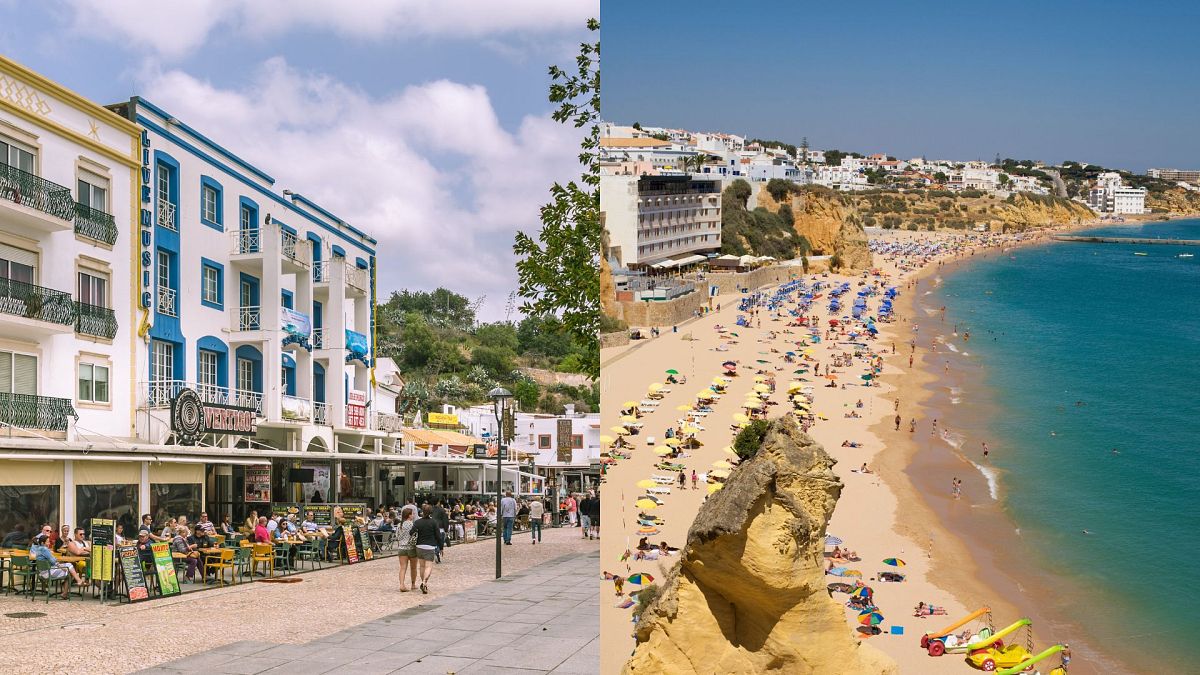
Located on the southern Algarve coast, it’s common to find tourists who’ve spent a day at the beach wandering the city ‘partially naked’ in swimwear or even ‘completely naked’, which has been a problem for the city’s family-friendly image.
Visitors will still be free to wear swimwear such as bikinis or swimming trunks on beaches and in popular bathing spots, as well as in external hotel areas such as pool areas.
However, anyone who is ‘scantily clad’ outside of these exceptions could receive a hefty fine of up to €1,500. And if tourists are caught completely naked, the fine issued could extend up to €1,800.
Albufeira is a popular holiday hotspot for families with its beautiful beaches, fun waterparks, and golf courses. It has also, however, adopted a holiday drinking culture with a buzzing nightlife.
At the heart of the town lies The Strip, a so-called party street filled with themed bars and nightclubs. It attracts many hen and stag parties from elsewhere in Europe.
The proposed document says that “urgent” change is needed to tackle tourist misbehaviour, particularly in the wake of an incident last year when eight British male tourists were identified dancing naked – during the day – on top of a bar at Rua da Oura.
The proposed rules will also address other issues to deal with “abusive behaviour”, such as banning alcohol consumption in the street, public urination, defecation and spitting, as well as public sex acts, including from within businesses and terraces (such as open beach bars) that can be seen from public areas.
It’s hoped that the fines will act as a “preventative measure”.
Are the new rules targeted at British tourists?
The Algarve received 5.2 million visitors last year – a record-breaking number, according to the Algarve Tourism Board (RTA).
Of these, 4.4 million tourists came from Britain, followed by 1.13 million German and 967,000 Irish tourists. The nightlight and beaches of Albufeira are particularly popular with Brits.
Local mayor Rolo first proposed a new tourism strategy in April 2024 when he said that while the sun and beaches of Albufeira would continue to be a draw for visitors, the town needed to be promoted outside of its popular summer season.
ADVERTISEMENTRolo added that he wanted to revert or demystify “the widespread image of Albufeira as a mass tourism destination”, “reduce the dependence on the British market” and encourage the town to become an “internationally-leading sustainable tourist destination”.
The public has 30 days to share their opinions on Albufeira’s proposed code of conduct. The expectation is that these rules will be in place ahead of the peak summer season.
So-called bikini bans are rising among Europe’s holiday hotspots
Albufeira is not the only tourist destination to propose introducing dress code laws.
Some parts of Spain, such as Barcelona and Majorca already have rules stating that you cannot go topless or wear swimwear in local shops and restaurants. If you do, you face a fine of up to €300.
ADVERTISEMENTIn Malaga, the city hall has put up signs in English reminding visitors that local rules around littering, states of undress, rowdiness and reckless driving of e-scooters also apply to them.
In the coastal towns of Split, Dubrovnik and Hvar in Croatia, ‘disturbances to public order’ laws have been passed against anyone walking around bare-chested or in swimwear. Again, if you do, you face a fine of up to €150 - and up to €4,000 if you’re visibly drunk in public.
In Nice, France, anyone - tourists and locals alike - going topless around town can be fined €35 on the spot, or face a €38 fine if bathing topless where it’s prohibited. However, you’re more likely to be reprimanded, as only “around 5 per cent of police stops” result in a fine, deputy mayor Anthony Borré told local news outlets last year.
Italy was one of the first destinations to tackle tourist clothing when, in 2022, the mayor of Sorrento on the southwestern Amalfi Coast introduced a €500 fine for anyone found wandering around in a two-piece swimsuit.
ADVERTISEMENT