

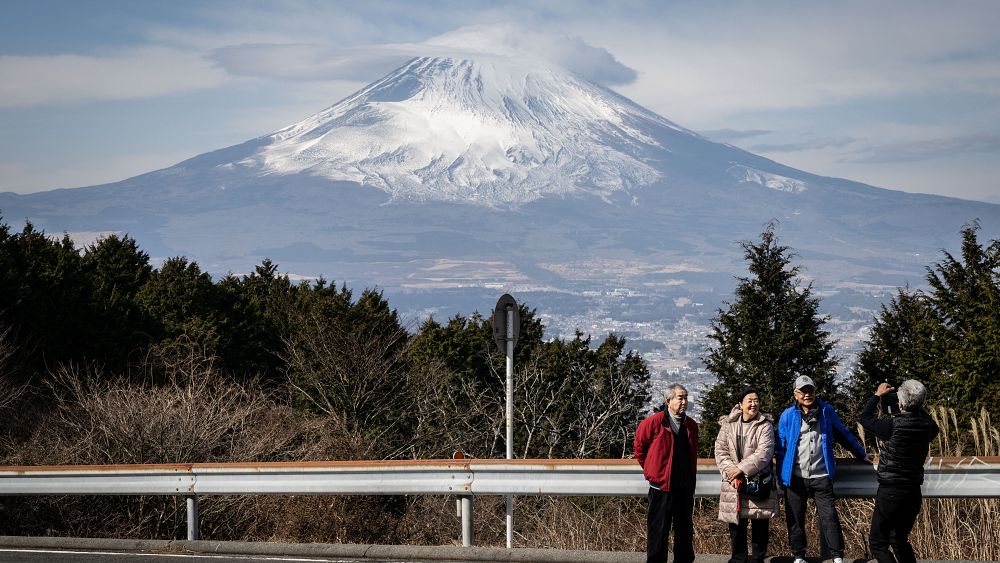
Japan's iconic Mount Fuji is struggling with overtourism.
 ADVERTISEMENT
The governor of the local region described it as if the world-famous summit is"screaming".
While UNESCO recognised Mount Fuji's religious and cultural significance in 2013, increased tourism has created both benefits and problems.
Visitor numbers more than doubled from 2012 to 2019, reaching 5.1 million in Yamanashi prefecture alone, where most hikers start their journey.
Tour buses bring a constant stream of foreign tourists to the base station, creating conflict with the mountain's sacred status.
Pollution has reached extreme levels and authorities are considering drastic measures, such as restricting access to the mountain via a new railway system.
Overtourism leads to human traffic jams on Mount Fuji.
The swarms of international visitors raise concerns about human traffic jams on the pathways up Mount Fuji too.
“Overtourism also entails numerous risks, including the safety of hikers,” explains Masatake Izumi, a Yamanashi prefecture official.
“For example, if large numbers of people end up in a human traffic jam below the summit, there could be jostling and falls or falling rocks, which could lead to serious accidents. This is a very worrying possibility for us."
Some hikers aren't prepared for the strenuous climb causing a rise in rescue requests.
Tourist, Rasyidah Hanan saw these concerns first-hand while making her own way to the top. “I think people should be filtered a little bit because some people were not ready to climb Mount Fuji,” she says.
“They were like in light clothes until the 8th station and some of them looked sick, so I was worried about that also I think."
ADVERTISEMENTIs Mount Fuji limiting visitor numbers?
Government ministers are discussing measures to address overcrowding and etiquette breaches at Japan’s most heavily visited sites, including Mount Fuji.
Authorities have considered crowd control measures, but the mere announcement led to a reduction in visitor numbers.
While numbers are expected to dip slightly in 2023, a rebound is anticipated in 2024, especially from Chinese tourists.
"I don’t feel it should ever be shut down but I feel like maybe it could be limited, maybe on the numbers,” Australian climber Tod Horton concludes.
“It has to be good for the people and environment, the actual people who live on the mountain, it’s good for their economy. So I know it’s a good thing, but we did mention that there are a couple of sections that it felt like it was overcrowded."