

 ADVERTISEMENT
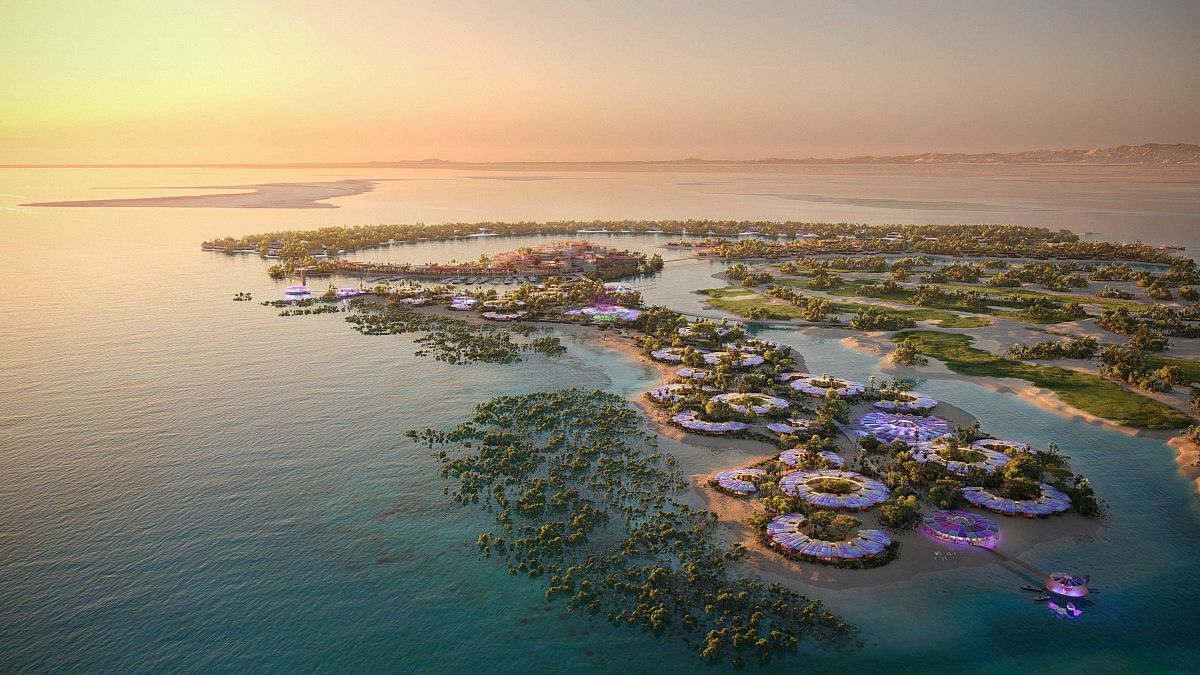
An ambitious regenerative tourism project is taking shape on Saudi’s western coastline where Red Sea Global is building three luxury tourism projects.
It has a focus on renewable energy, social responsibility, and scientifically-led protection of fragile ecosystems.
The already open Thuwal Private Retreat is a small, exclusive buyout island with five keys, a one-hour drive from the city of Jeddah.
The Red Sea project is set on a pristine crystal water archipelago of 90 islands, of which only five are being developed. Four islands already welcome visitors at the 5-star St Regis resort, the Ritz Carlton Reserve and Shebara, the first luxury resort wholly owned and operated by Red Sea Global.
Complementing that is Red Sea Global's Six Senses Southern Dunes Resort which opened in November 2023.
What John Pagano, CEO of Red Sea Global, describes as "the main event" will take place next year with the construction of 11 new resorts at Red Sea. The AMAALA destination on the northern fringe of the coastline will be a cluster of eight more resorts.
Saudi’s regenerative tourism plans
“We described it as one of the last hidden gems in the world, but it came with a huge responsibility. How do we develop in a manner that not only protects but seeks to enhance this destination?” Pagano explains.
Red Sea Global brought in scientific partners to understand the area's biodiversity, mapping out the entire destination and assigning conservation values for each part of it. The goal is to increase the net conservation value by 30 per cent over the coming decades.
Part of that includes preserving the fourth-largest barrier reef system in the world, with a coral regeneration facility using micro fragmentation techniques to replicate the coral spawning environment.
Since plants protect the island landscape against sea level rise and erosion and help sequester carbon, the goal is to plant 50 million mangroves by 2030. One million mangroves were planted last year and two million this year.
50 per cent of all resort operations run on renewable energy, including a UV charging network powered by renewable energy. Water is produced by reverse osmosis.
The aim is to save up to five million tons of CO2 emissions annually across the Red Sea and AMAALA destinations once fully complete.
Pagano says the project is “inspired by nature, led by science” in “the largest tourism destination in the world, powered 100% by sunshine” 365 days of the year.
Activities at the luxury resorts are designed to further support the regeneration of the local ecosystem, including responsible diving to protect coral reefs, eco-friendly water sports and adventures on land, including hiking trails and ziplines.
How is Red Sea Global investing in the local community?
The projects prioritise hiring local workers, with 30-40 per cent of all hires coming from the surrounding local areas.
ADVERTISEMENTFurther community investment comes through vocational programs and upskilling young Saudis via scholarship programmes to study International Hospitality Management at the University in Medina, a big hospitality school. These programmes are designed to eventually lead to being employed directly by Red Sea Global or partner hotel companies.
"You can't develop sustainably and in a regenerative way if you don't bring your local community," says Pagano.
Aligning with the Saudi Green Initiative
Saudi has highly ambitious targets with its green initiative. "Our values and mission were to put Saudi Arabia on the global tourism map, but also do it in a manner that made it the most regenerative destination in the world," Pagano explains, emphasising the move from oil dependence to prioritising sustainable, long-term industries.
“They want to be what fossil fuels were to the world, but with green hydrogen,” adding that Saudis are committed to having 50 per cent of their energy derived from renewable energy by 2030.
ADVERTISEMENTPagano says people are willing to pay more for this type of tourism, especially the younger generations who are more environmentally aware. “There aren't many of those options available in the world, and we're creating that option.”
The project, which will see 50 hotels at Red Sea and another 30 at AMAALA, is expected to be fully complete by 2030.