

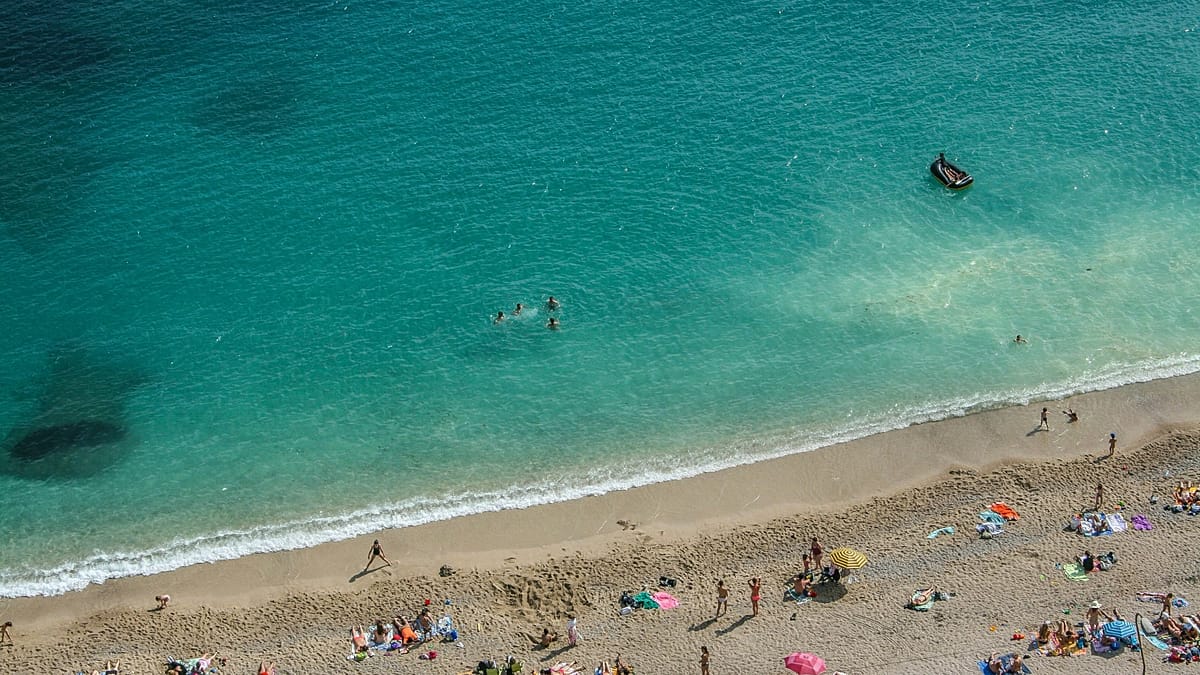
The season of dreamy days by the sea is in full swing in Europe. But as the pressure from overtourism and the danger to coastal environments mounts, many beaches on the continent are introducing increasingly strict regulations.
 ADVERTISEMENT
ADVERTISEMENT
ADVERTISEMENT
To avoid having possessions confiscated or paying fines, here are all the rules you might not know about spending time on the sand.
Bans on beach equipment
Some beaches prohibit the use of beach equipment to protect the natural environment.
In Sardinia, Punta Molentis in Villasimius has brought in restrictions on the use of umbrellas, tents and gazebos on the beach.
The local mayor initially announced that only those over 65 or with children under 10 were allowed to use one. After a backlash, this has been changed to one per family or group, as long as it is placed where beach attendants indicate.
On Pelosa beach, also in Sardinia, regulations state that visitors can only use beach towels if they place mats underneath them, which trap less sand. This rule will reportedly be more strictly enforced this year, with possible €100 on-the-spot fines.
In Greece, there are now 251 beaches which do not permit any kind of building, including sunbeds and umbrellas for hire and temporary wooden structures.
No smoking on the sand
More than 600 beaches in Spain have banned smoking and vaping, including those in Barcelona, San Sebastián and many in the Canary Islands and Balearics.
Last year, France brought in a nationwide prohibition on lighting up on beaches bordering bathing waters, with fines of €135 for violations.
Many coastal areas in Italy have also banned cigarettes, particularly in the Veneto, Emilia-Romagna, Sardinia, and Puglia regions.
Skip the swimwear in the streets
Urban centres near beaches have become increasingly strict about swimwear in the streets.
In Sorrento, in southern Italy, wandering around town in a bikini or swimming trunks can land you a fine of up to €500.
In Portugal’s resort town of Albufeira, anyone caught wearing only swimwear outside of designated beach areas, hotel zones, or pools faces fines ranging from €300 to €1,500.
Some parts of Spain, such as Barcelona and Majorca, have rules stating that you cannot go topless or wear swimwear in local shops and restaurants. If you do, you face a fine of up to €300.
In Malaga, the city hall has put up signs in English reminding visitors that local rules around behaviour, including states of undress, also apply to them.
In the coastal towns of Split, Dubrovnik and Hvar in Croatia, ‘disturbances to public order’ laws have been passed against anyone walking around bare-chested or in swimwear. Again, if you do, you face a fine of up to €150.
In Nice, France, anyone – tourists and locals alike – going topless around town can be fined €35 on the spot, or face a €38 fine if bathing topless where it’s prohibited.
The Lake Como town of Varenna in Italy has taken a cue from seaside centres, with fines of up to €200 on tourists with bare chests or in swimwear.
No peeing in the sea
Vigo in the northern Spanish region of Galicia has had a €750 fine for what it calls ‘physiological evacuation on the beach or in the sea’ – peeing – since 2022.
In 2024, Marbella followed suit, prohibiting underwater urination at 25 beaches in the Malaga municipality.
Keep the music down
Beachgoers in Portugal face fines of thousands of euros for playing their music too loudly.
Portable speakers blasting out tunes at high volumes, which bother locals and tourists, were banned by the country’s National Maritime Authority (AMN) beginning in 2023.
The fines could be anywhere between €200 and €4,000 for individuals and between €2,000 and €36,000 for groups. The offending ‘accessory’ – such as a speaker – could also be confiscated.
Don’t bring elephants to the beach
There are several rules around Europe for bringing animals to the beach.
Dogs are not allowed on many beaches in Italy, Spain, France and Croatia during high season, especially Blue Flag areas, or are only allowed at certain times of day in the early morning or late evening.
Horses are also similarly banned in many places in Europe during the summer months.
And if you were thinking about taking your elephant to the beach, just make sure to avoid Granville in Normandy, France. The animals have been prohibited since 2009 when a travelling circus let their elephants bathe in the sea, leaving behind droppings in the water.