

A holiday is about more than just taking time off work. Many of us use travel to seek out adventure.
But with the stresses of daily life ever-growing, maybe it’s time to consider a trip to nourish mind, body and soul.
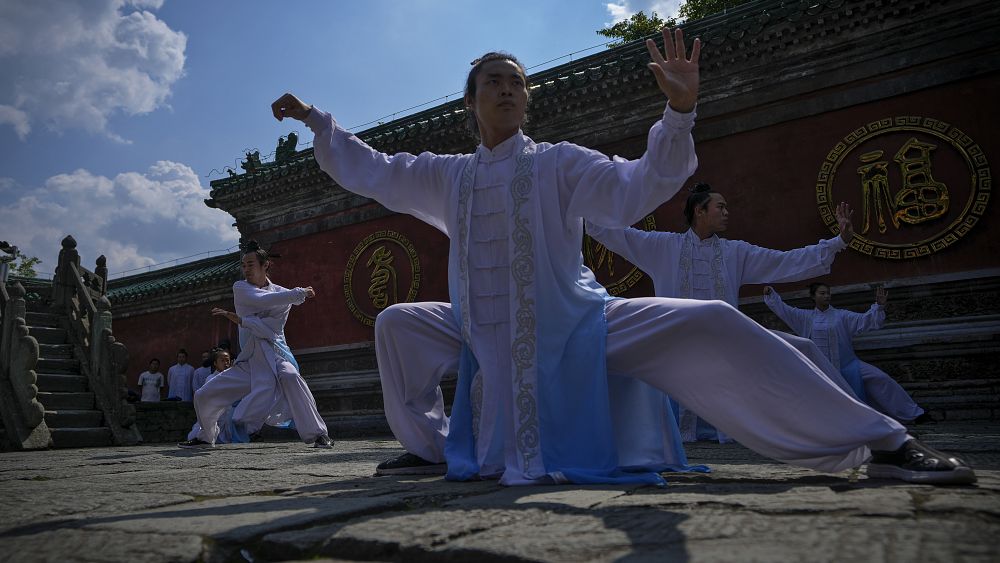
Wudang, a beautiful mountain range in central China is the cradle of Tai Chi, a martial art that comes from the ancient philosophies of Taoism.
“Practising Tai Chi makes people slow down physically and mentally,” explains Wu Shize, a Tai Chi master in Wudang.
According to Wu, practising Tai Chi together with Qigong - a breathing exercise to mobilise one’s internal power - makes people feel relaxed and happy.
What is Tai Chi?
Tai chi is a Taoist martial art which consists of a series of gentle motions aiming to train one’s internal energy. There are eight basic techniques and thirteen forms: quiver, stroke, squeeze, press, pick, spar, elbow and lean.
Often referred to as “moving meditation”, Tai chi is becoming popular in fast-paced Chinese cities, where an awareness of mental and physical well being is growing.
The core philosophy of Tai Chi is Ying-Yang - the pairing of polar opposites. In Taoism, these are interdependent and complementary rather than separate and conflicting, says Liu Wenguo, head of the Taoism Association of Wudangshan.
“It has very good flexibility and its basic concept is to teach people how to overcome hardship with softness,” he adds.
Is a Tai Chi holiday for me?
Jake Pinnic from Illinois, in the US came to Wudang for a five year programme studying Tai Chi, Qigong and Taoist culture.
He says practitioners of Tai Chi learn to relax, flow smoothly with the changing postures, and maintain balance in the face of pressure and strikes.
“I feel more relaxed. I'm more stress-free. I'm able to handle a difficult situation better,” Jake explains.
"So I think this is a big principle in Tai Chi, you know, being able to redirect pressure, being able to redirect conflict."
The Chinese government has made an ambitious plan to create a special zone in the Wudang Mountains to promote health preservation, martial arts and Taoist medicine. It’s hoped this will help drive tourism to the area.
The Wudang mountains are located in central China, just south of Shiyan.
The most convenient way to get there is to go by train. The bullet train from Wuhan to Shiyan takes around 3.5 - 4.5 hours.
What is Taoism?
The Wudang mountains are one of the centres of Taoism, a Chinese religion.
The most commonly known element of Taoism, or pronounced Daoism in Chinese, is the Yin-Yang symbol. The philosophical religion focuses on the idea of living in harmony with the universe.
Watch the video above to see more of the stunning Wudang mountains.