

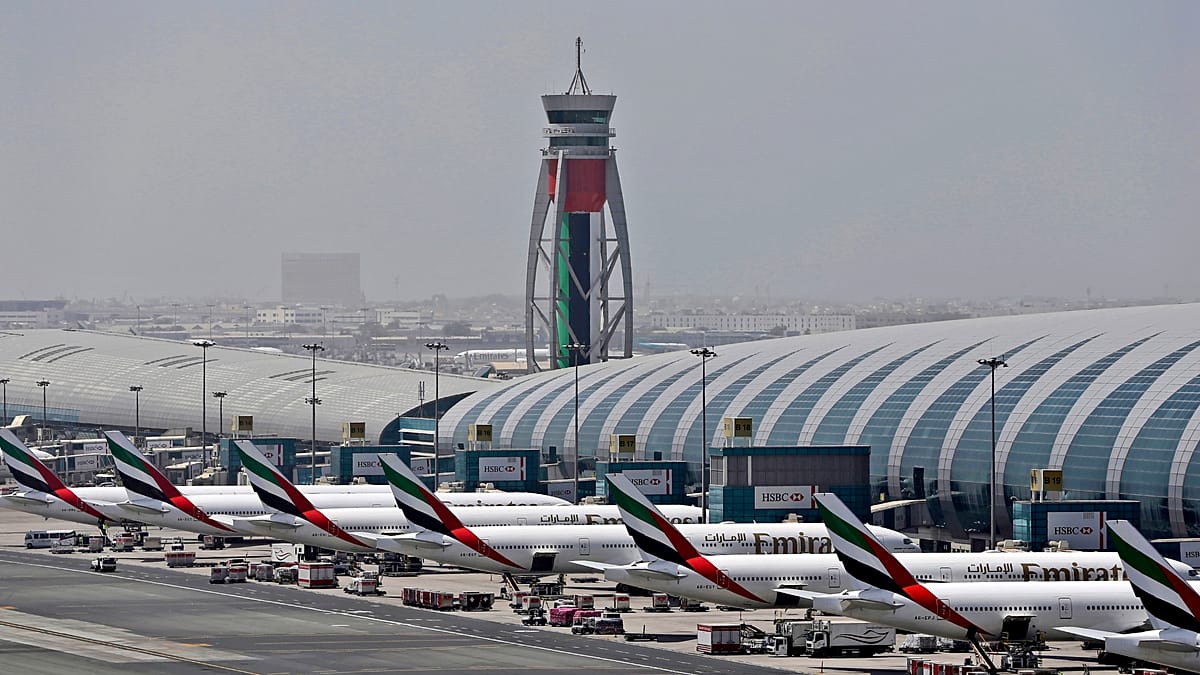
Every day of war with Iran stops international tourists from spending €550 million in the Middle East, according to the World Travel & Tourism Council (WTTC). Many are now looking to Europe as a safe destination.
 ADVERTISEMENT
ADVERTISEMENT
ADVERTISEMENT
The blow to tourism in the Middle East and Gulf opens up both an opportunity and a risk for Europe: to absorb some of this flow of travellers. WTTC estimates that the Middle East accounts for 5% of global international arrivals and 14% of international transit traffic, so the impact could be very strong on demand worldwide, particularly in Europe.
"Historically, Europe has been seen as a stable and reliable destination during periods of global uncertainty, and there are early signs that this perception remains intact," says Eduardo Santander, CEO of the European Travel Commission.
In his opinion, one of the competitive advantages of the European continent is security, hence "in uncertain times, this reputation reinforces Europe's position as a reliable travel option for international visitors".
The Mediterranean, the main beneficiary
Within Europe, Santander points out,"Mediterranean destinations that offer sun and beach holidays and destinations that excel in luxury experiencesare most likely to benefit".
"We are going to see in the coming months a shift in tourist flows towards destinations perceived as safer in the western Mediterranean, Latin America and Asia-Pacific," says Juan Molas, president of the Spanish Tourism Board, for whom "we will see the consolidation of some emerging destinations such as Albania and Montenegro".
Spain is one of the main beneficiaries of this situation. "The main European issuers, the United Kingdom, Germany, France and Italy, are going to look towards Spain with even more interest than usual," confirms Molas.
Santander highlights further trends. " Europe could benefit from stronger intra-European travel and continued demand from international visitors," he says. "In addition, we may see more Europeans choosing to holiday closer to home rather than travelling long-haul, especially if flight routes become longer or more expensive".
More tourists, but at what cost?
But will Europe be able to absorb this demand despite tourist saturation? For European Travel Commission chief Santander, this new influx of international travellers fleeing conflict may de-seasonalise tourism on the continent.
"Travel patterns in the Gulf region often differ seasonally from peak travel periods in European Mediterranean destinations," he says. "In fact, this could help to extend the tourist season and spread demand more evenly throughout the year, supporting destinations outside the traditional peak months."
The Spanish Tourism Board is committed to decentralising tourism and, as Molas points out, "redoubling efforts in terms of seasonality, territory, regulation of flows and public-private governance".
WTTC highlights the "resilience" of the tourism sector despite crises and conflicts and the great impact on demand with losses of €550 million a day in international tourist spending in the Middle East.
Gloria Guevara, president and CEO of the WTTC, stresses that travel and tourism is often one of the first sectors to feel the impact of geopolitical tensions. Short periods of disruption can quickly translate into significant economic losses for destinations, businesses and workers in the region.
However, Guevara is confident that government support for travellers (in the form of hotel assistance or repatriation), as well as working with the industry, can restore tourist confidence. She says: "Our analysis of previous crises shows that security-related incidents tend to have the fastest recovery times for tourism, in some cases in as little as two months."
Recent history shows that tourism tends to recover quickly after crises. But in the meantime, geopolitical conflicts are once again redrawing the global travel map.