

 ADVERTISEMENT
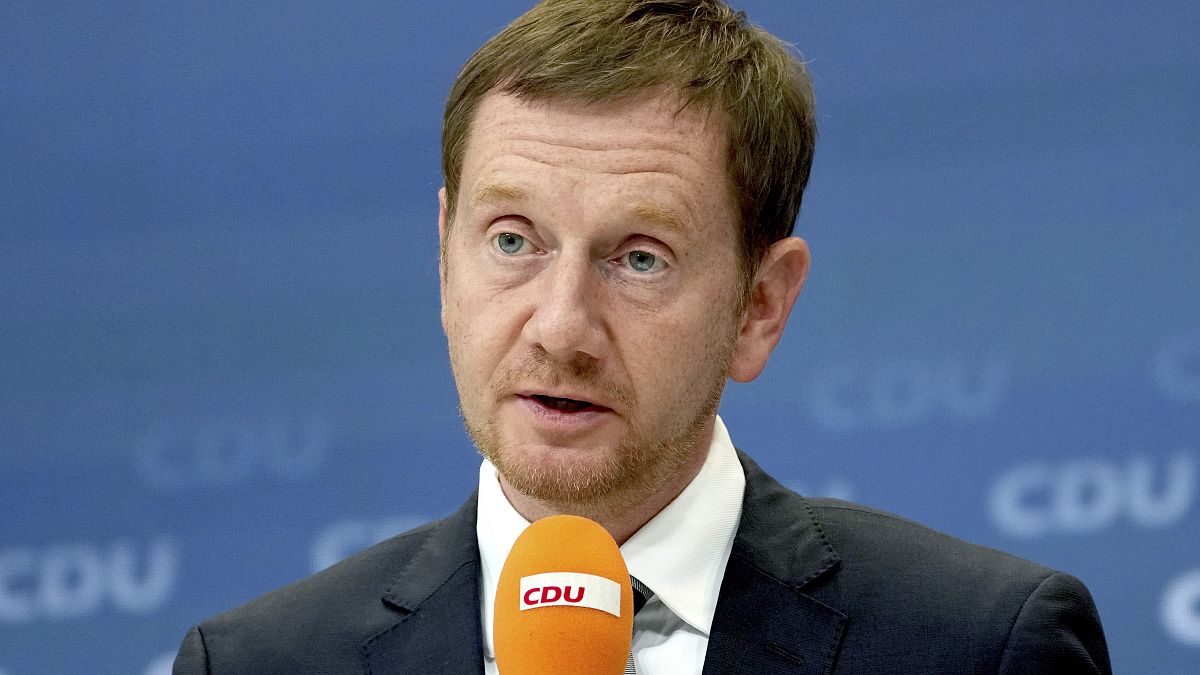
"Part-time work must be the exception, not the rule," said politician Michael Kretschmer in an interview with German newspaper The Handelsblatt published earlier this week.
As part of his campaign to be re-elected to the state parliament this year, the centre-right CDU minister homed in on the question of Germany's productivity.
"We have to ensure that we come out of the crisis with growth and full employment - for me that means a 40-hour week for everyone," he said.
"It was a mistake that the option of part-time has gone from being an exception to a legally secured rule."
Since 2001, when Germany introduced its "Part-Time and Fixed-Term Employment Act", most employees have had the right to work fewer hours than originally agreed in their contract.
Employers are also forbidden from discriminating against part-time workers.
According to Germany"s Federal Statistical Office, 31% of employees worked part-time in 2023, a slight uptick from the previous year.
Looking at the number of hours worked, Germany ranked last place in a comparative study of OECD countries, using data from 2022.
Another study from Eurostat showed that Germany was the nation with the second fewest number of working hours in the EU, recording an average of 35.3 hours per week.
It was only undercut by the Netherlands, with 33.2 hours a week.
Increasing these working hours, according to Kretschmer, is the "only way to maintain Germany's prosperity".
Although other nations have also been hit by high interest rates, the German economy is doing particularly badly.
The nation's GDP declined by 0.2% last year (adjusted from 0.3%), making it the worst performing major economy in the eurozone.
One key driver of Germany’s downfall is that it was hit particularly hard by Europe's energy price spike, given the nation's former dependence on Russian power.
The reliance of Germany's economy on heavy industry also made it particularly vulnerable to rising fuel costs.
Given the sluggish conditions, the country's labour market is now taking a hit.
At the end of April, the German Economic Institute (IW) released a study predicting that unemployment will rise to an average of just under 2.8 million this year, the highest level since 2015.
If there is weak underlying demand, moving part-time workers to full-time contracts will not be the sole solution to Germany’s economic problems.
ADVERTISEMENT"As the period of weakness extends, it is increasingly likely that staffing levels will have to be adjusted, as permanent declines in productivity will undermine the competitiveness of companies," said IW.
A move to reduce part-time work could also interfere with caring responsibilities.
Data from Germany's statistics office published at the end of last month noted that 50% of women had a part-time job in 2023, compared to 13% of men.
27% of part-time employed women cited childcare duties as the reason for reduced working hours.
This was the case for just under 6% of men in part-time roles.
ADVERTISEMENT