

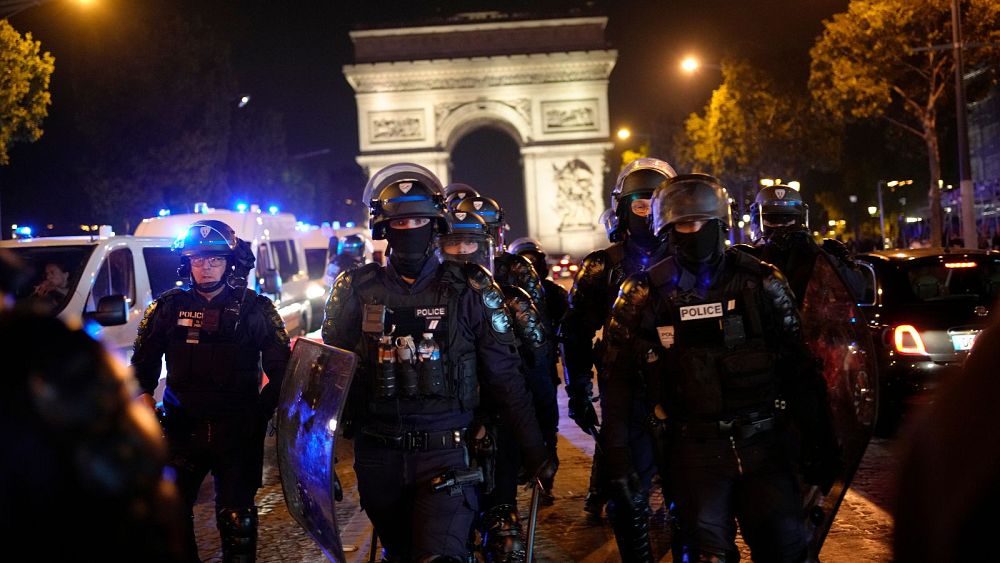
Riots across France earlier this month left some holidaymakers feeling unsure about their upcoming trips to the country.
After the fatal shooting of 17-year-old Nahel Merzouk during a police traffic stop on 27 June, Paris and other major cities saw nightly, violent protests.
Six says of riots culminated in 850 people being arrested on the weekend of 1-2 July. Since then, the most serious unrest seems to have abated.
But there are concerns that it could be ignited again after a peaceful protestor was tackled to the ground by police on Saturday. Youssouf Traoré joined the annual march in Paris in memory of his brother Adama, who died in custody in 2016.
Police are particularly concerned that tensions could flare up during Bastille Day on 14 July.
On Sunday, the French government banned the sale, possession and use of fireworks ahead of the national day celebrations. Fireworks were used in violent clashes with police earlier this month. The ban will be enforced until 15 July.
Nahel’s death has sparked long-simmering anger about policing and racial profiling in France's low-income and multi-ethnic suburbs. A record 13 people were killed during police traffic stops last year, the majority of the victims of black or Arab origin.
In Paris, Marseille, Lyon, Grenoble, Lille and Toulouse, recent demonstrations spilled over into violence. There were heavy clashes with police, cars set alight and shops looted.
But there have not been any more incidents since early this month.
If you’re planning on travelling to France, here’s what you need to know.
Are riots still happening in France?
Around 17 million UK citizens visit France every year, the vast majority soaking up the old country’s culture and sunny coastlines without incident.
The UK government’s advice to holidaymakers as of 10 July advises, "While the situation is now calm, you should monitor the media, check the latest advice with operators when travelling and follow the advice of the authorities."
At the end of last month, when the riots were still going on, it warned that their locations and timing could be unpredictable and advised travellers to avoid areas where riots are taking place.
If France experiences further unrest, there may be disruptions to road travel and local transport options may be reduced. Some local authorities may also impose curfews.
During the riots, buses and trams stopped at 9pm or 10pm in some cities, to prevent them from being targeted by protesters. Trains continued running as normal, along with Paris’s metro system.
The German Foreign Office also urges holidaymakers to stay informed and avoid areas where violent riots may be taking place. It recommends using its Safe Travel app to stay up to date with the latest developments.
It follows a security alert from the US state department last month, likewise urging its citizens to avoid trouble hotspots.
Should you cancel your trip to France?
If you’re preparing to travel to France, there’s no need to change course.
Though you might need to stay flexible with restaurant bookings and evening plans depending on the situation, there’s still plenty to explore at this popular time of year.
The beauty of being in a big city means there are always options, while smaller tourist towns along the Cote d’Azur and elsewhere have been largely unaffected.
There have been no reported cases of members of the public or tourists being attacked by rioters, who have directed their anger at buildings, parked cars and the police.
Since foreign offices like the UK and Germany have not advised against travel to France, holiday providers are unlikely to provide a refund if you decide not to go.
“It is more important than ever to get travel insurance and check it provides sufficient cover,” the FCDO adds.
There’s some indication that rail and airlines may be flexible, however, if riots do spark up again. During the height of the unrest at the end of last month, Eurostar said that passengers wanting to postpone their journeys could exchange tickets, after warning that domestic transport was “extremely limited” between 9pm to 5am.
And a spokesperson for easyJet told the Independent that customers who were due to fly could, if they wish, “transfer to an alternative flight and we will waive the change fee.”