

Iceland is preparing for a huge tourism boom after witnessing a record-breaking number of visitors so far this year.
Known as “the land of fire and ice”, the Nordic country has become famed for its geothermal hot springs, glaciers and waterfalls.
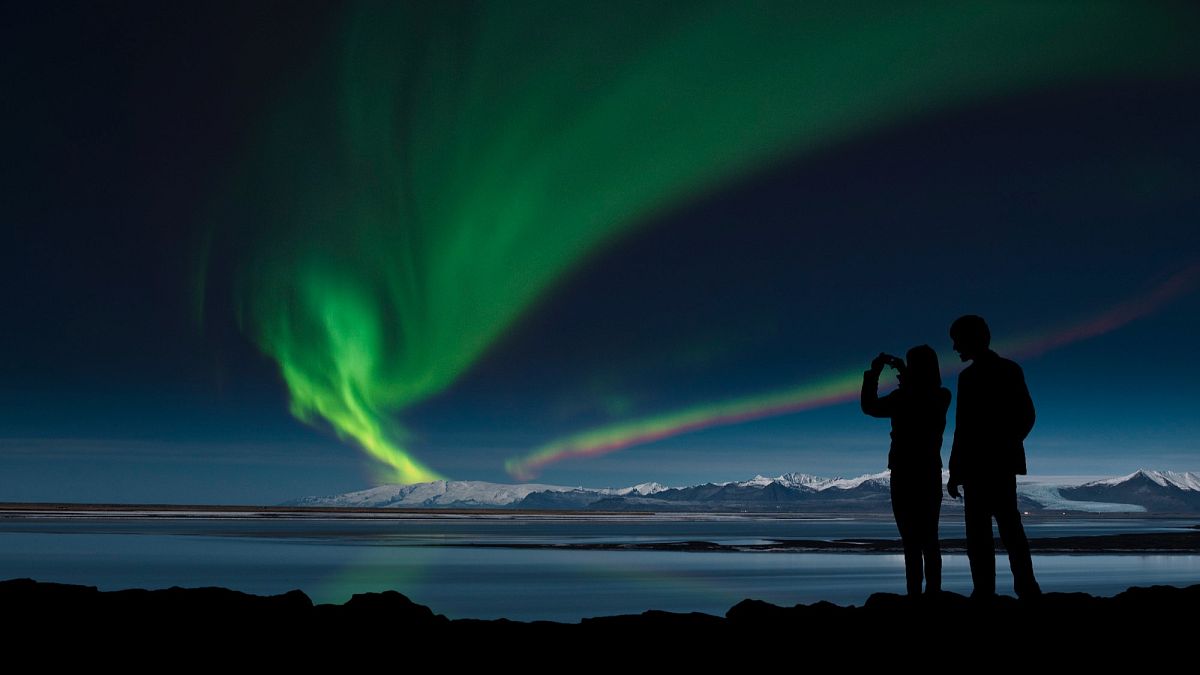
It’s also one of the best destinations to spot the elusive Northern Lights, and holds year-round appeal thanks to non-stop sunlight in the summer.
While some reports argue travellers are getting cold feet, it seems Iceland’s tourism sector is heating up.
Iceland’s tourism sets a new record
Despite claims that Iceland’s tourism bubble has “burst”, statistics shared with Euronews Travel show the country is on target for a record-breaking year of international visitors.
Reports published earlier this week suggest that the country has seen a six per cent drop in foreign tourists in the last year, citing a slump caused by Iceland’s high cost of living.
However, data from Statistics Iceland show the number of foreign visitors increased by 2.2 per cent from 2023 to 2024, while the last 12 months to September 2025 have seen an additional 3.5 per cent spike.
From January to September this year, Iceland has welcomed 1.792 million international visitors, an increase from 2024 (1.743 million) and a significant jump from 2019 (1.597 million).
The first eight months of 2025 have also seen the largest number of booked rooms at hotelsand B&Bs so far, while turnover in tourism-related sectors has been “especially high” from 2023 to 2025.
The tourist boom has come to light in spite of several setbacks, including the closure of budget airline Play and the volcanic eruption at Sundhnúksgígar fissure.
How Iceland lures in tourists
Jóhann Viðar Ívarsson, an analyst at Ferðamálastofa Icelandic Tourist Board, says cross-border tourist numbers have been increasing for decades internationally and that all forecasts assume that growth will continue - with the “dramatic exception” of the Covid pandemic.
“Iceland is part of that,” he tells Euronews Travel. “The fact that growth has been considerably higher in Iceland than the international/European average comes down to a few factors coming together.”
Ívarsson explains how Iceland’s “unspoilt nature and rural settings” are setting it apart from the rest, offering tourists something “unique and different from everything they’ve seen before”.
He also argues that it has become “fashionable” for higher-income travellers to visit Iceland and cross it off their bucket list, adding that social media influencers “play a part in this”.
To prepare for further growth, Iceland is expanding its KEF international airport to improve the customer experience.
The hub’s masterplan includes better facilities for bikes, buses and taxis, as well as a new circular junction designed to help traffic flow and increase capacity in the area.
Covered walking paths and a new 4-star hotel will also be built, while the airport’s South Building and new East Wing terminal will also be expanded.
Is Iceland increasing its tourist tax?
According to EITIAS, Iceland reinstated its accommodationtax for tourists on 1 January, 2024, to reduce tourism’s environmental impact.
Hotels and guesthouses now charge ISK 600 (around €4.24) per room, while campsites and mobile homes charge half the price.
There is also an ISK 1,000 (€7.06) tax for cruise passengers calling at Icelandic ports.
However, Ívarsson says that these fees do not bring “large sums to the coffers of government”, and finding the connection between taxation and contributions to the sustainability of tourism can be difficult due to them being sent to the overall government budget.
He adds that the current government is planning to propose a “considerably” higher tourism tax in the coming weeks.
“The sector is a success story and the authorities want to have a bigger share of the value added,” says Ívarsson.
How to avoid the crowds in Iceland
Amid Iceland’s growing popularity, the country’s tourist board is highlighting areas outside the main hotspots like Reykjavík.
Jóhann recommends visiting the Westfjords, particularly in the summer when the snow has cleared, describing it as a “gem”.
“Some of our most magnificent coastal mountains and fjords are there and the nature is beautiful and majestic, with small fishing villages huddling by the coast, below steep mountainsides,” he adds.
The north of the country is also easily accessible year-round thanks to Iceland’s ring road infrastructure.
“It is actually a unique experience, which I recommend to all travelers, to stay awake during a summer night in the north and watch the sun come down until it nearly touches the ocean on the horizon but then it decides to rise again without setting at all,” the analyst says.
Euronews Travel has contacted the Government of Iceland for comment.
*This article was updated on 16 October after Ferðamálastofa Icelandic Tourist Board provided statistics on international tourists from January to September.