

 ADVERTISEMENT
Air transport in Germany was hit by freezing temperatures and extreme weather earlier this week with hundreds of flights grounded.
Airports warned of severe disruption due to the extreme cold which created dangerous conditions for aircraft on the ground and in the air.
Hundreds of flights were delayed or cancelled on 17 and 18 January.
Travellers were advised to check the status of their flights before heading to airports.
Flights cancelled at German airports due to ‘extreme’ conditions
Travellers intending to fly from airports in Germany this week were warned to expect disruption after icy conditions and snowfall hit the country.
The freezing temperatures were causing hazardous conditions for pilots with Frankfurt airport is impacted the most. The travel hub was thrown into chaos with significant delays and cancellations of flights.
On Wednesday, 570 of the 1,047 scheduled arrivals and departures were cancelled. More than 300 of the 1,000 flights scheduled for Thursday were also grounded.
Travellers were asked not to come to the airport if their flights were cancelled.
Munich airport was also affected, with 254 flights grounded.
In western Germany, Saarbruecken airport closed for the day on Wednesday, and Dusseldorf and Cologne/Bonn airports were also affected by delays and cancellations.
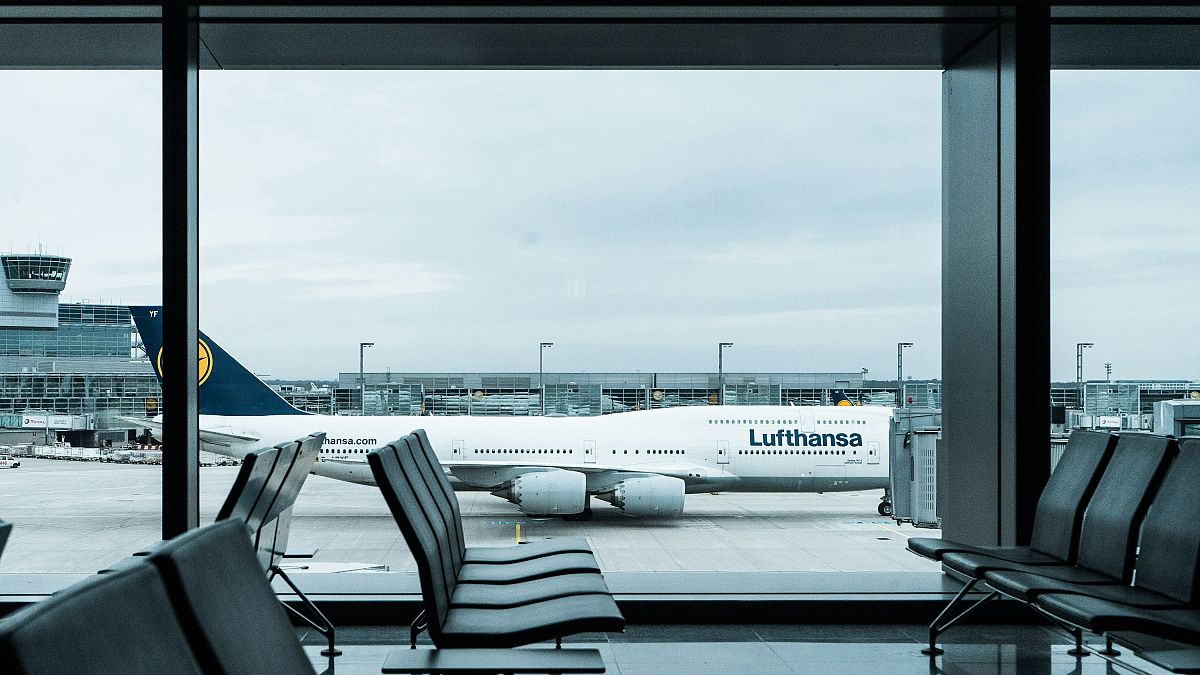
Lufthansa flights saw the most disruption as the airline has its bases at Frankfurt and Munich airports.
It was asking passengers to check the status of their flights on the company or airport websites in advance and not to go to the airport in the case of cancellations.
How does ice and snow affect flights?
For several days this week, the German Weather Service increased weather warnings for some areas to level four, or ‘extreme severe’.
At Frankfurt airport, warnings were issued of black ice. When this builds up on runways, it reduces the traction of aircraft and risks accidents.
Furthermore, although planes can be de-iced, they risk icing up again while taxiing along the runway, the airport said.
Freezing rain is also a problem for pilots when in the air. If ice builds up on aircraft wings it can destabilise the plane.
In December, Munich airport was forced to close for several days due to snowy conditions. One aircraft not in use at the time tipped backwards after snow built up on the fuselage.
German rail travel disrupted by icy conditions
German state rail operator Deutsche Bahn (DB) also warned of delays and cancellations due to the freezing conditions.
ADVERTISEMENTThe company scrapped several long-distance connections and limited the maximum speed for its high-speed ICE trains to 200 kilometres per hour on Wednesday as a precautionary measure.