

Home to some of the world’s most impressive natural wonders, from the 1,600 islands of Hạ Long Bay to the world’s largest cave, Vietnam is now taking steps to make its future more sustainable.
Throughout 2023, Visit Vietnam is working in partnership with Binh Thuan - a province in the country’s southeast - to focus on green products, clean energy and sustainable development.
“Of course, we try to develop, but we try to develop in a very sustainable way,” says Dinh Ngoc Duc, Director of Marketing at the Ministry of Culture, Sports and Tourism, Vietnam Tourism.
“Firstly, it means that we are trying to encourage local destinations and even travel agent tour operators to develop a package which is part of the green deal. This means sustainable, responsible and nature-based tourism but with environmental protections,” he explains. “Our goal is to get more nature based tourists.”
Is Vietnam a good destination for eco tourism?
Attracting nature lovers is unlikely to be a problem for Vietnam - a country rich in biodiversity.
Alongside its mountains, forests, intricate cave systems and glorious white sand beaches, Vietnam is also home to around 800 species of bird and 270 types of mammal, including the snub-nosed monkey and the Indochinese tiger.
While the emphasis is on sustainable development, the nation is keen to attract the same number of tourists as it did in pre-pandemic times.
“Last year (2022) we received only 3.5 million international arrivals, compared to 2019, when we received a record of 18 million. It means that we have more to do, but so far this year we have received almost 1 million visitors per month, which is a very positive signal,” says Duc.
So whether you’re planning to visit this year or next, here are some of our favourite places to explore Vietnam’s epic ecosystems.
What can I see in Hạ Long Bay, Vietnam?
Though it might be one of Vietnam’s most famous destinations, don’t let Hạ Long’s popularity stop you from visiting. This UNESCO World Heritage Site in Quảng Ninh Province is home to thousands of craggy and verdant limestone islets and islands, shaped over 500 million years, making it a must-see on any trip to the country.
A boat trip is the best way to see the bay in all its glory, with overnight cruises recommended if you want to truly appreciate the size and scale of its coves, grottos and lagoons. If you’re feeling a bit more adventurous though, why not go kayaking, or even cruise 300 metres above the bay in a seaplane.
Where is the world’s biggest cave?
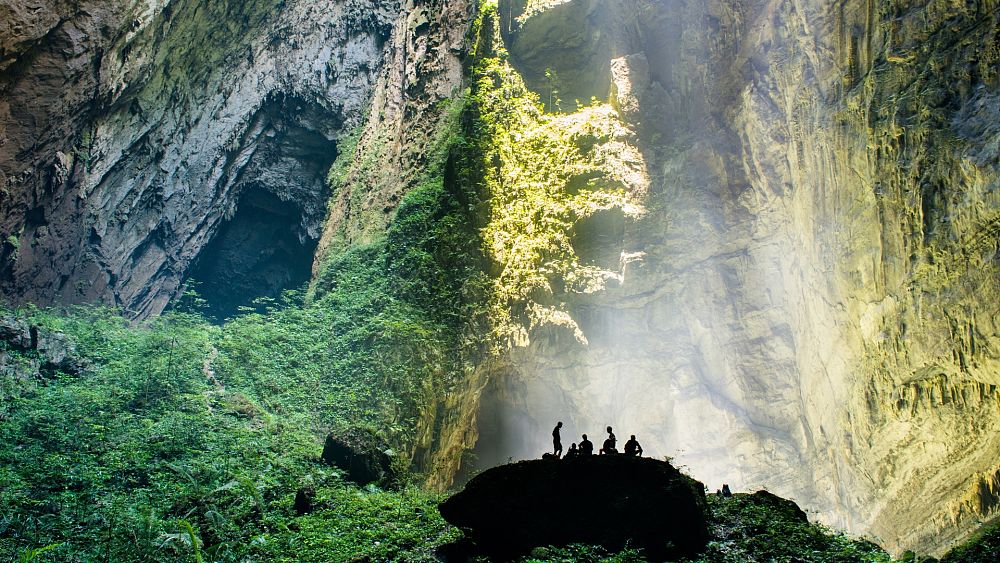
If you’re looking for the adventure of a lifetime, then Hang Son Doong cave should go straight to the top of your list. Discovered in 1990 by local man Ho Khanh, the cave wasn’t explored until 19 years later, when Khanh led a team of Vietnamese and British explorers to the entrance.
So big that it has its own ecosystem, the cave contains clouds, mist and primeval forest. The world’s largest stalagmites can be found here, and on sunny days visitors can witness the enormous sunbeams that shoot down to the cave floor.
Currently, the cave is only accessible by guided tour, with just 1,000 visitors a year allowed to explore its depths. The six day adventure comes in at a pricey $3,000 (€2,799) per person, but hikes don’t get much more epic than this.
What can I do in Ba Be National Park?
Slightly off the beaten track of Vietnam’s usual tourist trail, Ba Be National Park in the north of the country is another must-see if you’re up for adventure.
Here you can trek, kayak, cycle, or take a gentle boat cruise past lakes, waterfalls and caves. This UNESCO Natural World Heritage Site is full of rare flora and fauna, as well as one of the 20 largest natural freshwater lakes in the world.
Book yourself onto a hike or boat tour with a local guide and explore the limestone cliffs, before trying some local cuisine in one of the villages dotted around the park.
Is Phu Quoc Island worth visiting?
Another popular destination on the Vietnam tourist trail is Phu Quoc Island, which sits off the southern coast of Cambodia in the Gulf of Thailand. The island has developed rapidly in recent years, with the curved, white sand bay Sao Beach attracting travellers from far and wide. If you want to lounge somewhere a little more secluded, visit the rocky bay of Ganh Dau Cape in the northern part of the island, around 26 kilometres from Duong Dong.
While you’re in the area, make sure to check out Duong Dong’s night market to sample some local seafood dishes, including grilled squid and shrimps.