

Three years ago today, the Brexit transition period ended and Britain officially exited the European Union.
The fallout has touched every facet of British life, with many blaming the current cost of living crisis on Brexit.
Travel has also been unalterably changed, with freedom of movement impeded and new visa restrictions to contend with..
So how have things changed - and what’s next for British travellers to the bloc?
What is the 90-day rule and how does it apply to Brits?
Before Brexit, Brits could stay as long as they liked in the EU provided they abided by a country’s rules. Now, they’re subject to the ’90 day rule.’
For trips to the Schengen area - covering most EU nations plus Switzerland, Norway, Iceland and several micro-states - you can stay a maximum of 90 days in any 180.
If you’re uncertain whether or not your trip falls within the guidelines, the European Union has an online short stay visa calculator.
In general travellers are given three days’ grace on breaking the 90-day limit - but breaches could lead to a one-year entry ban.
Read this article for full details on what could happen if you overstay the 90-day limit.
Do British people need a visa for the EU? How ETIAS and EES will work
Currently, Brits do not have to apply in advance to visit the European Union. But that will change when the new European Travel Information and Authorisation System (ETIAS) scheme launches in November 2023.
This system will require Brits to register online and pay in advance for an ETIAS permit to visit the bloc. This permit is a ‘visa waiver’ rather than a visa.
Visitors will need to apply for ETIAS online before their trip at a cost of €7. If they are accepted, the authorisation will be valid for three years.
This system will be managed through the Entry-Exit System (EES). Travellers will need to scan their passports or other travel document at a self-service kiosk each time they cross an EU external border. It will not apply to legal residents or those with long stay visas.
Read this article for full details on the ETIAS and EES schemes.
UK passports: What’s changed since Brexit?
Before Brexit, you didn’t need a passport to travel to and from the bloc - any type of ID like a driver’s licence sufficed.
Now, travellers do need to pack their passports. On top of this, your passport must comply with the validity requirements for “third country” visitors to the European Union.
Your passport will need to be valid for at least three months after the date you intend to leave the EU country you are visiting.
The passport is also only valid up to 10 years from the date of issue. Be careful - this can be earlier than the stated expiry date on the passport.
Read this article to make sure you don’t fall foul of new EU rules for British passport holders.
Are British passports more or less powerful since Brexit?
The 2022 passport index - which ranks the mobility power of every passport - describes the UK as one of 2022’s “losers” due to ramped up European restrictions.
A passport is ‘powerful’ if the people who hold it can travel visa-free to plenty of countries.
United Arab Emirates passport holders, for example, can travel visa-free - or ‘visa-on-arrival’ - to 180 countries. Citizens of Afghanistan can do so to just 38.
Brits still currently enjoy a visa-on-arrival to EU countries, a privilege they will enjoy until the ETIAS system comes in. This means they have more freedom of movement than many other country nationals when it comes to visiting Europe.
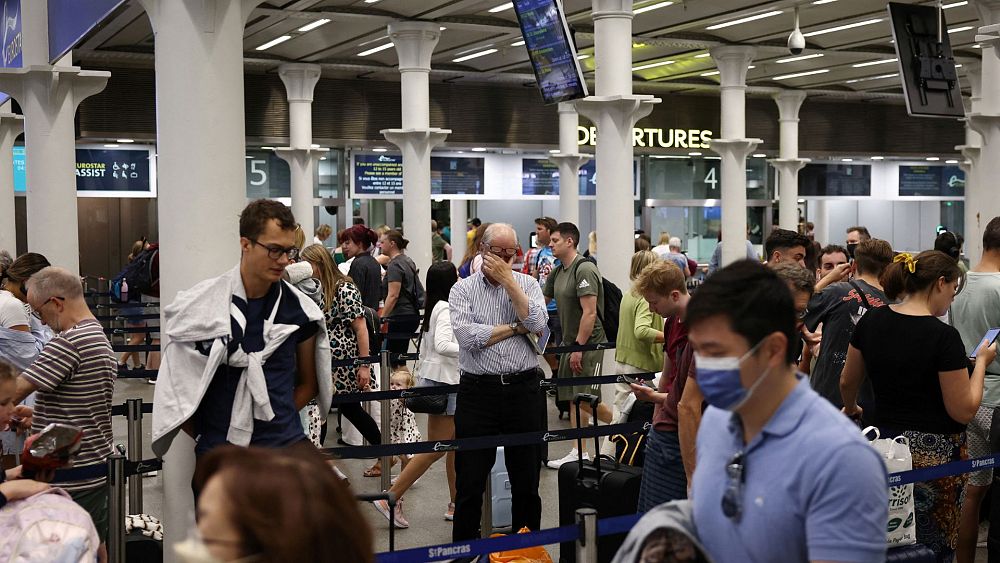
Have there been longer border queues and delays since Brexit?
For those who voted for Britain to stay in the EU, restricted movement between countries was one of their biggest fears.
When travelling through EU airports, fast-track lanes for passport control are no longer open to British travellers, meaning longer queues.
This has had knock-on impacts for travel providers. Rail operator Eurostar have been vocal on post-Brexit impacts on their services and customers.
Most recently, Eurostar has intentionally been leaving hundreds of tickets unsold as it struggles to deal with the bottlenecks caused by more rigorous passport checks.
As a result, trains from London to Paris or London to Amsterdam are running with nearly one-third of their seats empty.
In July, French border control blamed long queues for the ferry channel crossing on Brexit passport check requirements.
However, not all countries are abiding by EU rules. In April last year, Portugal started fast-tracking UK travellers at its airports, defying bloc regulations to allow British tourists access to e-gates.
Are British travellers subjected to special rules since Brexit?
Some countries have subjected British passport holders to new requirements. For example, under post-Brexit rules, Spanish border officials can ask travellers to show that they have ‘economic resources’ to cover the cost of their trip.
This amounts to €100 for each day of their trip.
The Spanish Tourism Office come out and said that the rule is not “systematically applied” to each traveller and that they apply to all third-countries.
What are your experiences of post-Brexit travel? Has it been worse or better than before 31 January 2020? Let us know via Twitter or Instagram.