

 ADVERTISEMENT
An 18-kilometre tunnel will soon link southern Denmark with northern Germany beneath the Baltic Sea.
When it opens in 2029, the ambitious immersed road and rail link will be the longest of its kind worldwide, slashing travel times for tourists and commuters between the two countries.
As construction gets underway, Euronews Travel speaks with the team behind the Fehmarnbelt tunnel to find out more.
How will the Fehmarnbelt tunnel benefit travellers?
Currently, travelling between the Danish island of Lolland and the German isle of Fehmarn involves a 45-minute ferry ride.
Connecting Rødbyhavn on the Danish side with Puttgarden on the German side, the Fehmarnbelt tunnel promises to cut this journey to 10 minutes by car and just seven minutes by train.
“For commuters, it means a faster and more reliable connection between Denmark and Germany, significantly reducing travel time and making daily commutes much more convenient,” Denise Juchem, a spokesperson from Femern A/S - the Danish company preparing the project - tells Euronews Travel. It will also reduce congestion on existing road and rail routes.
For tourists, the tunnel will make it easier to explore both countries, they add.
Connecting with onward travel north to Copenhagen via the Danish island of Zealand, “the Fehmarnbelt tunnel will revolutionise travel between Scandinavia and Central Europe by providing a faster, more reliable and direct connection.”
The tunnel’s road will also connect to Germany’s motorway network for convenient access by car.
Why was an underwater tunnel chosen to connect Denmark and Germany?
Several options were explored, including a bridge and a bored tunnel - running through the earth - before settling on an underwater tunnel to connect the two countries.
“Ultimately, the 18-kilometre immersed tunnel was deemed the best solution due to its lower environmental impact, reduced sensitivity to weather conditions, and cost-effectiveness,” Juchem explains.
The tunnel must adhere to strict environmental standards, ensuring minimal impact on local ecosystems and biodiversity. This is being monitored by specialised ships. Natural landscapes unavoidably affected by the project will be offset by the creation of new natural areas elsewhere - on Lolland, these will be at least double the size.
The project is expected to cost 55.1 billion kroner (€4.8 billion). The EU has granted around €1.1 billion for its construction, while associated railway facilities have input €117 million.
Ultimately, it will be user-financed with revenue from tolls and tickets used to repay remaining loans. This is a similar model to the successful Øresund link, a bridge and immersed tunnel connecting Denmark and Sweden.
The cost of using the Fehmarnbelt tunnel will be decided by Denmark’s Transport Minister in the lead-up to its opening.
How is the immersed tunnel being built?
“The design of the Fehmarnbelt tunnel was a complex process that required extensive planning,” says Markus Just, Tunnel Design Quality Manager at Femern A/S.
One of the biggest challenges was figuring out how to transport the huge, heavy tunnel elements from the factory to the immersion site.
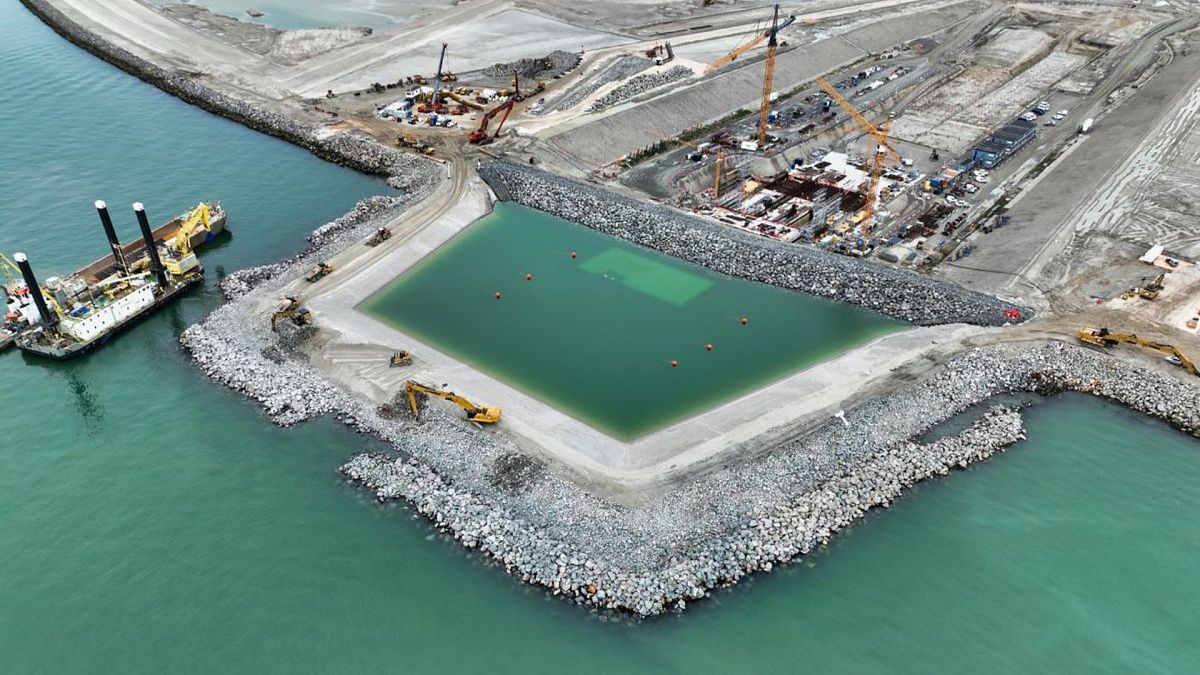
“We decided to build basins in front of each of the three factory halls so that the tunnel elements could float up like in a lock and be transported to the work harbour,” explains Just.
ADVERTISEMENTSpecially designed marine equipment and work vessels are then used to transport and lower the elements into position in a watertight manner.
“The system makes it possible to lower and connect the tunnel elements for the world's longest immersed tunnel with an accuracy of just a few millimetres,” says Just.
One of the project’s biggest technical innovations, however, focuses on safety and maintenance.
“The Fehmarnbelt tunnel will be the first immersed tunnel worldwide with basements,” Just reveals. Placed every two kilometres and connected by tubes, these deeper and wider segments will allow space for service vehicles so that maintenance personnel can access areas within the tunnel safely and swiftly, improving the availability of traffic.
What safety measures will be in place for people using the tunnel?
As well as building in easy access for maintenance and operations staff, the tunnel will feature various elements to make it “just as safe to use as equivalent routes on land”, according to Juchem.
ADVERTISEMENTDrawing on experience from other major tunnel projects, including the Øresund link, it will feature full emergency lanes in both directions of the motorway within the tunnel, with vehicles driving in separate tubes per direction. This will allow vehicles to pull over in case of breakdowns or emergencies.
The well-lit tunnel will also be equipped with emergency exits throughout its length, providing safe escape routes in case of incidents.
A local control centre and a train traffic control centre in Copenhagen will monitor the tunnel around the clock ensuring a fast response to any issues.
How will the Fehmarnbelt tunnel make travel more sustainable?
It is hoped the tunnel will promote a shift from road to train transport.
“This shift is expected to reduce CO2 emissions substantially, as rail transport is more efficient and less polluting compared to road transport,” says Juchem.
ADVERTISEMENTEnvironmental groups have welcomed this news.
“We see the Fehmarnbelt link as a very important project as far as the climate is concerned,” says Michael Løvendal Kruse, a representative of the Danish Society for Nature Conservation NGO. “It will strengthen the transport of freight and passengers by means of the most climate-friendly transport currently in existence, i.e. electric trains.”
The tunnel will also create a more direct route for international trains and trucks, “saving approximately 160 kilometres of travel and thereby reducing fuel consumption and emissions”, Juchem adds.
“By establishing a fully electrified rail corridor, the tunnel supports the use of green energy and sustainable transport solutions, further integrating Europe's transport network and promoting a greener future.”