

 ADVERTISEMENT
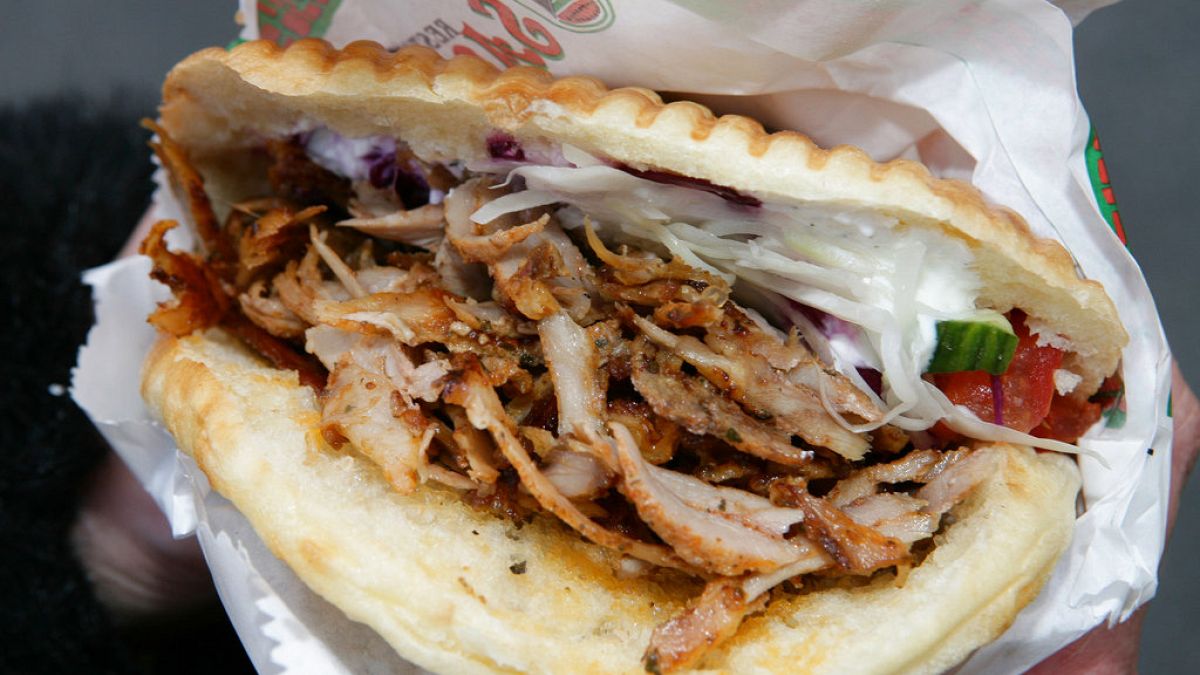
Over the years, the doner kebab, introduced to Germany by Turkish immigrants, has established itself as a staple of low-cost street-food. However, the affordability of this dish has recently been undermined, with prices more than doubling within two years.
Factors such as rising wages and energy costs, compounded by geopolitical tensions, including the Ukraine war, have contributed to what German Chancellor Olaf Scholz himself has called "donerflation".
Politics and society, all concerned by ‘dönerflation’.
German politicians, particularly left-wing ones, have taken up the issue, proposing a 'donerpreisbremse', or price cap on doner kebabs, similar to existing measures that control high rents in certain regions. The Die Linke party, for example, suggests capping prices at €4.90, with even a reduced rate of €2.90 for younger generations from disadvantaged backgrounds.
Kebab sales in Germany are estimated at €7 billion a year, with 1.3 billion doners consumed every year in the country, such a subsidy programme would cost €4 billion a year, according to Die Linke estimates.
The idea of a subsidy program with daily doner vouchers for households has also been considered by the far-left party.
If the rising price of donerflation has reached the highest political echelons, it's because it's become a particularly explosive issue for the German people, especially their younger citizens.
Social media platforms are overflowing with discussions and memes about donerflation, ranging from humour and nostalgia to genuine frustration.
The Germans most fond of this cheap street-food are reminiscing about Angela Merkel's time (the former Chancellor can be seen cutting up meat on a spit in many photos) when kebabs used to cost €3.
Following a message from Chancellor Olaf Scholz on social media explaining the reasons for the donerflation, that was partly the consequence of reduced dependence on Russian gas after Vladimir Putin's invasion of Ukraine.
A young German-Turk citizen declared: ''I pay €8 euros... talk to Putin, I want to pay €4 euros''. But the Chancellor dismissed price controls as "impossible to implement" in a free market.
Instead, he praised the "good work of the European Central Bank" in fighting inflation.
Doner at a reasonable price, between utopia and nostalgia.
On the other hand, doner vendors themselves lament their inability to influence prices, citing factors such as rent, energy and food costs, which are beyond their control.
Deniz, a doner seller near Berlin's Friedrichstrasse station, where the price has risen from €3.90 euros to €7 euros in over two years, said to the Guardian: "People talk to us all the time about donerflation, as if we were diddling them, but it’s completely out of our control." He added: 'We have been forced to push up the price, due to exploding rent, energy and food prices." He and other kebab sellers are pessimistic that prices will return to normal in the near future.
Indeed, beyond its simple economic dimensions and the amusing side of debating over a simple dish, the phenomenon of donerflation raises broader issues - such as the difficulties faced by people with low incomes, for whom even modest price increases can have truly negative consequences.
Hanna Steinmüller, an MP for Alliance 90/The Greens, had already raised the issue in Parliament earlier this year, demonstrating the social importance of the problem.
"For young people, it's just as important as where they're going to move to when they leave home. I know it's not an everyday issue for many people here ... it's also something that could be ridiculed, but I think that as representatives of the electorate, we are obliged to highlight these different perspectives."
The discourse on kebab prices reflects changing attitudes to food affordability, and the role of state intervention in market dynamics.
If it becomes difficult for some households to afford a doner, what will happen to the rest?