

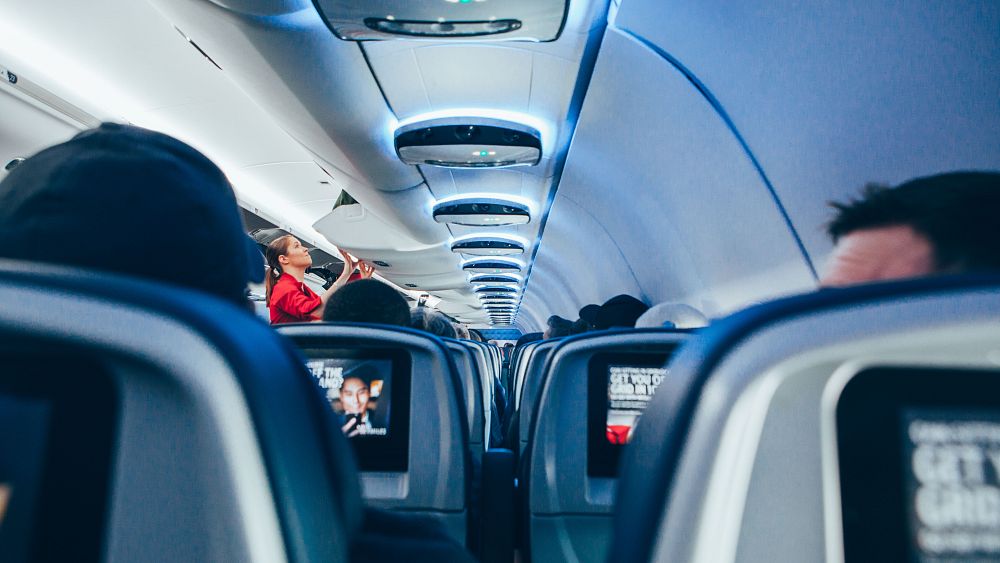
If you’ve suffered a bumpy plane ride recently, you can blame climate change.
Scientists have long suspected that an increase in turbulence is consistent with warming air temperatures.
Now, a new study by meteorologists at the University of Reading in the UK has found that skies are up to 55 per cent bumpier than four decades ago.
The researchers also predict that clear-air turbulence is set to worsen as climate change progresses.
Climate change is causing increased turbulence
The study analysed climate and atmospheric data from a four decade period to determine how climate change is affecting clear-air turbulence, the movement of air masses without any visual clues.
The researchers have produced the most detailed picture yet of how turbulence patterns are changing.
At a typical point over the North Atlantic, one of the world’s busiest flight routes, the total annual duration of severe turbulence increased by 55 per cent between 1979 and 2020, the scientists found.
The team found that severe clear-air turbulence increased from 17.7 hours during 1979 to 27.4 hours in 2020 for an average point over the North Atlantic.
Moderate turbulence in the area increased by 37 per cent from 70.0 to 96.1 hours, and light turbulence went up 17 per cent from 466.5 to 546.8 hours.
While the North Atlantic has experienced the largest increases, the new study found that other busy flight routes over the United States, Europe, the Middle East and the South Atlantic have also seen a significant rise in turbulence.
The study, published in the journal Geophysical Research Letters, confirms previous research that bumpier flights are consistent with the effects of climate change.
Warmer air resulting from carbon dioxide emissions is altering the air currents in the jet stream, exacerbating clear-air turbulence in the North Atlantic and globally.
“Following a decade of research showing that climate change will increase clear-air turbulence in the future, we now have evidence suggesting that the increase has already begun,” says Paul Williams, an atmospheric scientist at the University of Reading who co-authored the study.
“We should be investing in improved turbulence forecasting and detection systems to prevent the rougher air from translating into bumpier flights in the coming decades.”
Is turbulence dangerous?
"Turbulence makes flights bumpy and can occasionally be dangerous,” says Mark Prosser, a meteorologist at the University of Reading who led the study.
Clear-air turbulence can be particularly hazardous because, unlike turbulence during a storm, it is almost impossible for aviation remote sensing tools to pick up.
It is also difficult to predict when it will hit because it is caused by small-scale eddies that are too localised for most weather models to calculate.
“Airlines will need to start thinking about how they will manage the increased turbulence, as it costs the industry $150 to $500 million [€134 to €465 million] annually in the United States alone,” said Prosser.
“Every additional minute spent travelling through turbulence increases wear-and-tear on the aircraft, as well as the risk of injuries to passengers and flight attendants.”