

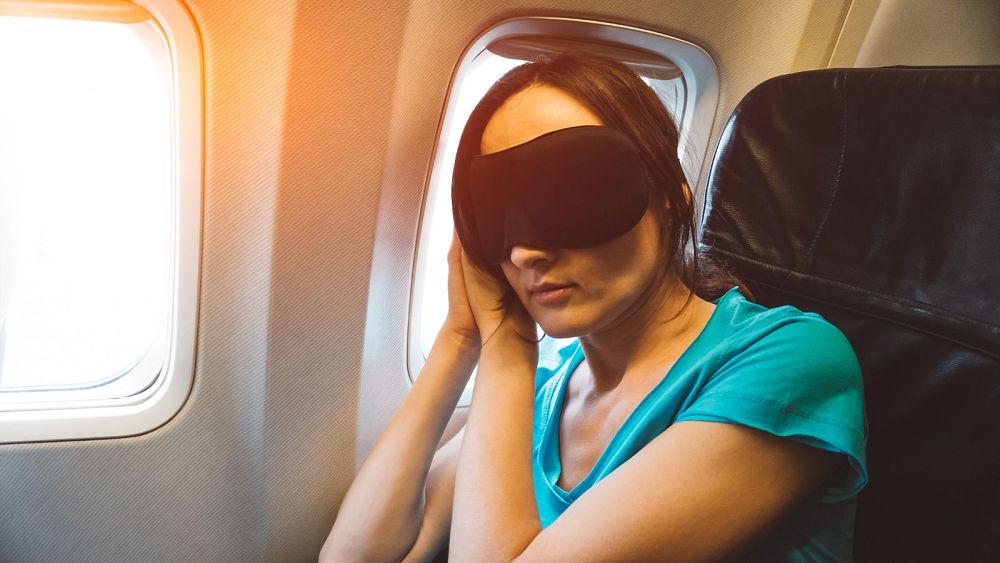
It’s the bane of frequent flyers’ lives and an unfortunate feature of long-distance trips for the rest of us, but what if there was something we could do about jet lag?
 ADVERTISEMENT
There could soon be a solution as scientists are reportedly narrowing in on what causes the condition which hits when humans travel a long way east or west in a short space of time.
As with other sleep-related issues, everyone’s got their own approach and advice. But a new study gives scientific backing to the idea that eating is key. Here’s why.
The body is like clockwork
Jet lag occurs when the body’s internal clock, known as the circadian system, is out of sync with its surroundings. Also known as desynchronosis, it’s a familiar concept for many; being on “New York time” in the UK, for example.
But look closer (as scientists did around the turn of the century) and humans are actually made up of many internal clocks, little timekeepers present in almost every cell and tissue.
These internal clocks respond to different signals. The brain’s clock takes note of sunlight, while the clocks of peripheral organs - like nerves - depend on meal times.
But little is known about how the body’s various clocks interact with each other, and what causes them to sync up.
Scientists from Northwestern University and Santa Fe Institute in the US have tried to answer that question in a new study, published in the journal Chaos.
“Most studies primarily focus on one particular time cue or a single clock,” says study author Yitong Huang. “Important gaps remain in our understanding of the synchronisation of multiple clocks under conflicting time cues.”
To learn more, Huang and her colleagues built a mathematical framework to recreate the complex interplay between our body’s systems.
When should you eat to avoid jet lag?
The researchers’ model helped them determine what makes jet lag worse.
Common symptoms of ageing - such as weaker signals between circadian clocks and a lower sensitivity to light - result in a system that is more vulnerable to disruptions and slower to recover, they found.
ADVERTISEMENTAnd prioritising your stomach is the surest way to acclimatise.
"Having a larger meal in the early morning of the new time zone can help overcome jet lag," says Huang.
"Constantly shifting meal schedules or having a meal at night is discouraged, as it can lead to misalignment between internal clocks."
The scientists are now focussing their research on the factors that make our internal clocks more resilient, which could lead to recommendations that prevent jet lag in the first place.