

Crypto Hackers Target Trezor And Ledger Users In Theft Campaign

Crypto hackers are sending physical letters impersonating Trezor and Ledger to steal cryptocurrency wallet recovery phrases.
Summary
- Hackers mail fake Trezor and Ledger letters with phishing QR codes.
- Sites request recovery phrases and grant attackers full wallet control.
- Hardware wallet firms never ask users to share seed phrases.
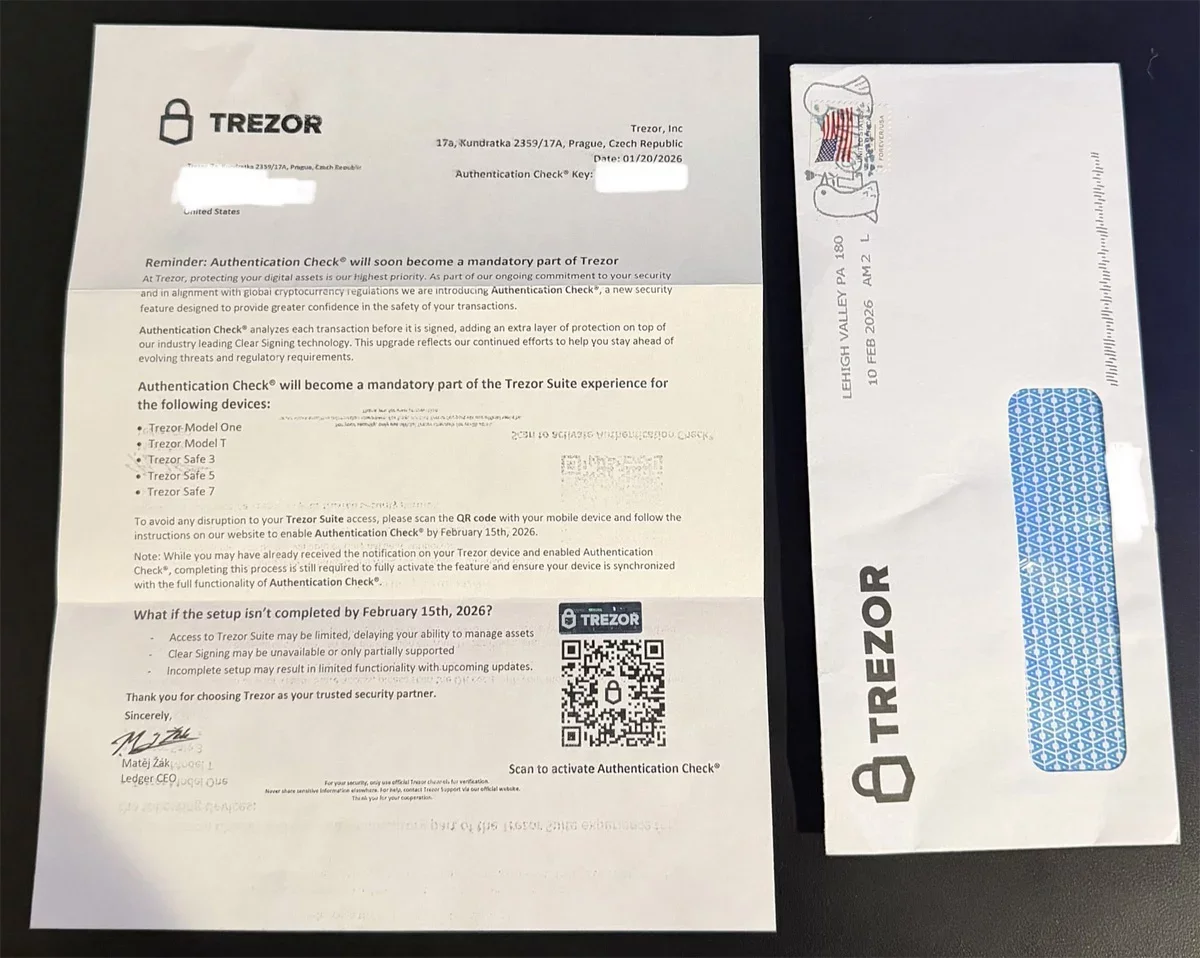
The phishing campaign claims recipients must complete mandatory “Authentication Check” or “Transaction Check” procedures.
The hackers are also creating urgency through deadlines of February 15, 2026 for Trezor. Letters printed on official-looking letterhead direct users to scan QR codes leading to malicious websites.
The phishing sites request 24-, 20-, or 12-word recovery phrases under the pretense of verifying device ownership.
Once entered, recovery phrases transmit to threat actors through backend API endpoints, granting attackers full control over victims’ wallets and funds.
Both hardware wallet companies suffered data breaches in recent years that exposed customer contact information.
Phishing sites create urgency through functionality warnings
Cybersecurity expert Dmitry Smilyanets received a fake Trezor letter warning that failure to complete authentication would result in lost device functionality.
“To avoid any disruption to your Trezor Suite access, please scan the QR code with your mobile device and follow the instructions on our website,” the letter stated.
The Trezor phishing site displays warnings about limited access, transaction signing errors, and disruption with future updates.
A similar Ledger-themed letter circulated on X, claiming Transaction Check would become mandatory.
The phishing pages allow users to enter recovery phrases in multiple formats, falsely claiming the information verifies device ownership and enables authentication features.
Once victims enter recovery phrases, data transmits to the phishing site. Attackers import the wallet onto their own devices and drain funds.
The letters create false urgency by claiming devices purchased after November 30, 2025 come pre-configured, pressuring earlier buyers to act.
Crypto hardware wallet companies never request recovery phrases
Physical mail phishing campaigns targeting hardware wallet users remain relatively rare. Crypto hackers mailed modified Ledger devices in 2021 designed to steal recovery phrases during setup. A similar postal campaign targeting Ledger users was reported in April.
Anyone possessing a wallet’s recovery phrase gains full control over the wallet and all funds. Trezor and Ledger never ask users to enter, scan, upload, or share recovery phrases through any channel.
Recovery phrases should only be entered directly on hardware wallet devices when restoring wallets, never on computers, mobile devices, or websites.
The targeting criteria for the physical letters remains unclear. However, both companies’ past data breaches exposed customer mailing addresses and contact information to potential attackers.
Major Players In Crypto Hacked
Crypto's Billion-Dollar Blind Spot: Inside the Bitget Heist and the Revolut Extortion PlotThere is a particular kind of ... Read more
Bitcoin Suisse Turns Regulation Into Growth
For much of crypto’s short history, growth was measured in trading volumes, token prices and the number of customers w... Read more
Circle Wins Landmark US Banking Licence
Circle Internet Group has finally secured the regulatory prize it has been chasing for more than a year, with the Office... Read more
Crypto Treasuries Chase A New Kind Of Capital
There is a peculiar irony at the heart of the crypto treasury movement. Companies that staked their futures on digital a... Read more
What Strategy's Bitcoin Sale Really Tells Us
There is a moment in every bull run when the narrative starts to fray. Not with a crash, not with a scandal, but with so... Read more
The Clock Is Ticking On UK Stablecoins
The world is not waiting for Britain to make up its mind. While the United States and the European Union have spent the ... Read more